 Hangbo Alloy Group
Bending Stainless Tube and Pipe: Methods, Min Radius and Springback
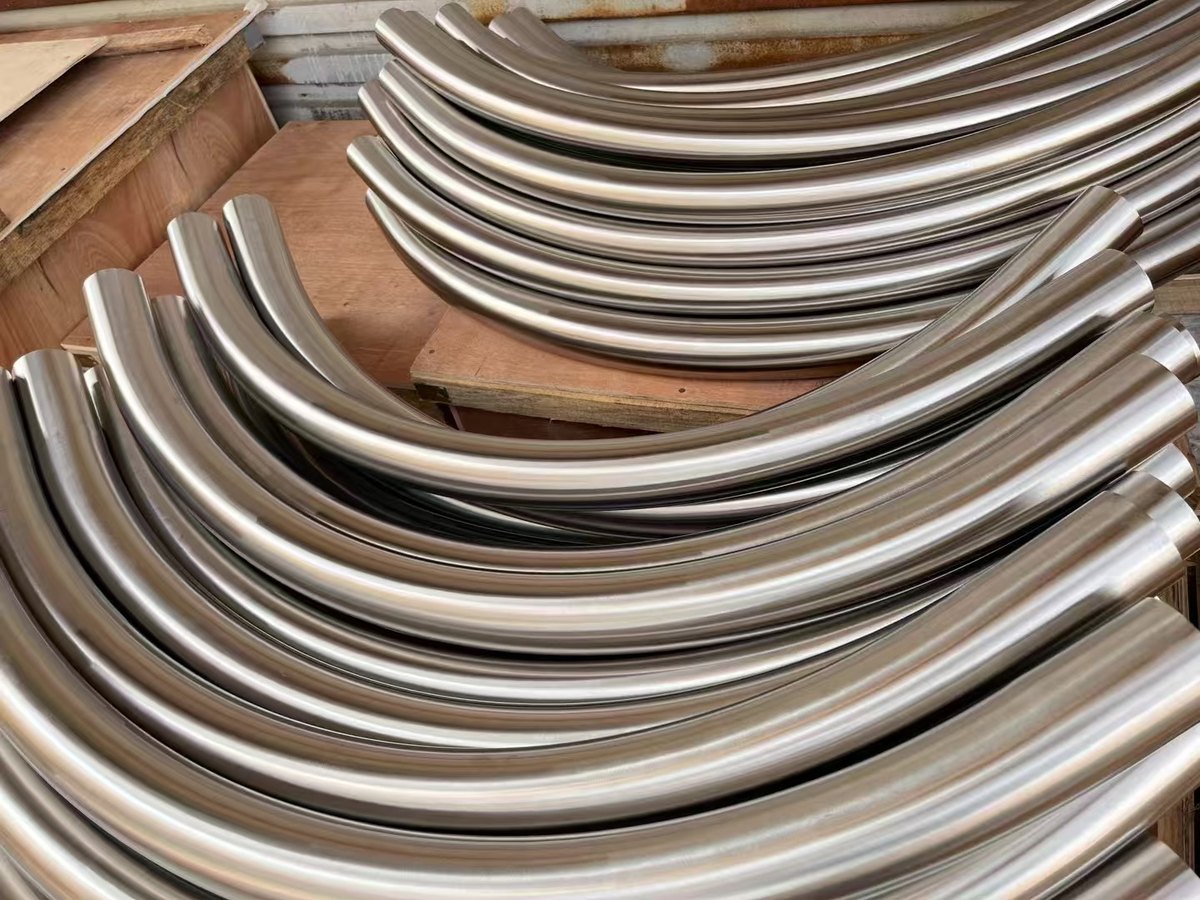
Quick answer: Bending stainless tube and pipe is almost always done cold — rotary-draw bending for tight, clean radii, roll bending for large sweeps — and the three things that decide success are the minimum bend radius (roughly 1.5× OD for thin-wall, more for thick), springback (austenitic stainless springs back more than carbon steel), and wall collapse, which you control with the right mandrel and fill method. Weld seams must sit on the neutral axis or they crack.
Why bending stainless is different from bending steel
Austenitic stainless (304/316) has high yield and work-hardens fast, so it springs back more and needs more tonnage than carbon steel. It also strain-hardens in the bend, raising the local hardness. Ferritic and duplex grades behave closer to steel but duplex work-hardens and can lose some corrosion margin if over-bent. The practical result: use a properly rated bender, allow for springback in the tooling, and don't expect steel bending parameters to transfer directly.
The methods, and which radius each handles
| Method | Best for | Typical min radius |
|---|---|---|
| Rotary-draw (mandrel) | Tight, accurate, polished tube | ~1.5× OD |
| Compression bending | Simple sweeps, no mandrel | ~2× OD |
| Roll bending | Large radii, sweeps, coils | several × OD |
| Press / CNC | Repeatable production | depends on tooling |
For anything that must stay round and bright (handrail, hygienic tube), rotary-draw with an internal mandrel is the standard; for big gentle curves, roll bending is cheaper.
Minimum bend radius and why it matters
The minimum radius is set by the wall collapsing or wrinkling, not by a hard rule. As a guide:
- Thin-wall tube (wall/OD < ~3%): needs a mandrel and wiper to avoid flattening; min radius ~1.5–2× OD.
- Standard pipe schedule: holds shape better; can go tighter without a mandrel.
- Too tight a radius causes the outside to thin and crack and the inside to wrinkle — both rejectable on pressure or hygienic work.
Springback: the part you have to over-bend
Stainless springs back after the load comes off, so the bender over-bends by a few degrees and the tooling is set to the final angle. Austenitic grades need more over-bend than steel; the exact amount is tuned per material and radius. Knowing this saves the classic first-article "it came out flat" surprise.
Wall collapse and how to prevent it
- Mandrel + wiper die inside the tube supports the wall through the bend.
- Sand or fill bending for large radii where a mandrel won't reach.
- Packing the bore for polished tube so the bright finish survives the bend without denting.
Seam placement and welding after bending
For welded tube, the seam should be positioned at the neutral axis (the side of the bend) so it neither stretches nor compresses excessively — a seam on the outside of a tight bend is a crack waiting to happen. Where bends are welded afterward, keep the heat input moderate and remember stainless's sensitization rule: 316L base and clean procedure keep the bend corrosion-resistant. Surface finish is covered separately in the pipe surface finish guide.
What should the bending RFQ include?
- Grade and standard (304/316, A269/A270 tube or A312 pipe).
- OD, wall, and the centerline radius — radius, not just angle, is what the shop quotes.
- Number of bends, plane (single-plane or 3-D), and tolerances.
- Finish requirement: bright/as-bent vs polished after bending; for sanitary, specify Ra.
- Ends and length, plus whether cut-to-length and deburred.
FAQ
Q: Will my polished tube stay shiny after bending? A: With a mandrel and wiper, yes — but sharp bends can mark the outside. For mirror handrail, specify post-bend polishing; for hygienic tube, bright-annealed drawn tube bends cleanest.
Q: How tight can I bend a 2" Schedule 40 pipe? A: Several times OD with roll or press bending; a true rotary-draw tight radius on heavy-wall pipe is uneconomic — most tight bends on pipe are made from prefabricated elbows, not field-bent.
Q: Why did my bend wrinkle on the inside? A: No mandrel or wiper support on thin-wall tube. Add a mandrel and correct boost, or open the radius.
Q: Can I bend duplex or 400-series the same way? A: Mechanically yes with adjusted springback, but duplex loses some corrosion allowance if over-strained, and 400-series can crack if cold-worked too hard — flag the grade so the shop sets parameters accordingly.
Shanghai Hangbo Alloy Group
🌐 Website: www.hangbo-metal.com
📧 Email: Craliey1382@gmail.com
💬 WhatsApp: +86 19169850074
📞 Tel: +86 19169850074
📍 Address: No. 388 Songhuang Rd, Qingpu District, Shanghai, China
👤 Contact Person: Tiffany Luo