 Hangbo Alloy Group
Brass vs Bronze vs Copper-Nickel: How to Choose the Right Copper Alloy
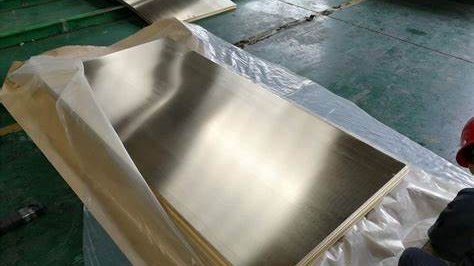
Brass vs Bronze vs Copper-Nickel: How to Choose the Right Copper Alloy
Quick answer: Choose copper-nickel (90/10 or 70/30) for seawater piping, condensers and anything in continuous contact with salt water; choose bronze (tin or aluminum bronze) for bearings, bushings and high-load sliding wear; choose brass for low-cost machined fittings, valves and decorative work in fresh water or non-marine environments. The decision usually comes down to three questions: what corrosive media is present, whether the part slides or rotates under load, and what budget applies. Copper alloys are not interchangeable — a brass fitting in a seawater line will dezincify and fail within months, while specifying copper-nickel for a dry indoor bearing wastes money on corrosion resistance you do not need.
Copper alloys occupy a specific niche in industrial supply: they are the go-to materials where you need simultaneously good corrosion resistance, thermal or electrical conductivity, antifouling behavior, and low friction against steel. This guide compares the three main families, gives you the data to shortlist a grade, and flags the failure modes that catch out buyers who treat "copper alloy" as one thing.
The Three Families at a Glance
| Property | Brass (Cu-Zn) | Bronze (Cu-Sn / Cu-Al) | Copper-Nickel (Cu-Ni) |
|---|---|---|---|
| Typical grades | C36000, C46400 | C90500, C95400, C63000 | C70600 (90/10), C71500 (70/30) |
| Color | Golden yellow | Red-gold to bronze | Silvery-copper |
| Tensile strength | 340–550 MPa | 300–900 MPa (aluminum bronzes highest) | 300–420 MPa |
| Corrosion in seawater | Poor (dezincification) | Good (Ni-Al bronze excellent) | Excellent (best-in-class) |
| Biofouling resistance | Moderate | Moderate | Excellent |
| Machinability | Excellent (C36000 = 100% rating) | Moderate | Moderate |
| Wear resistance | Fair | Excellent | Fair |
| Relative cost | Lowest | Moderate–high | High (driven by nickel price) |
| Weldability | Fair ( brazing preferred) | Good | Excellent |

Brass: The Machinable Workhorse
Brass is copper alloyed primarily with zinc, usually 15–40%. Adding zinc strengthens the copper dramatically while keeping it cheap, and the small lead addition (0.5–3.5%) in free-machining grades makes C36000 the benchmark against which all machinability is rated.
Where brass wins:
- High-volume machined fittings, valve bodies, and threaded components where cost per part dominates
- Fresh-water plumbing, low-pressure gas, instrument fittings
- Decorative and architectural work (the color is a feature, not a bug)
Where brass fails:
- Dezincification: in chloride-bearing or acidic waters, zinc selectively dissolves out, leaving a porous, weak copper sponge. A brass fitting that looked fine can crumble in months. If your water is aggressive, specify dezincification-resistant (DZR) brass such as C69300 or CW602N.
- Ammonia stress-corrosion cracking: brass exposed to ammonia (fertilizer plants, some cooling waters) cracks intergranularly under residual stress. Stress-relief annealing helps but does not eliminate the risk.
- Temperatures above ~200 °C, where zinc begins to migrate and strength drops.
Naval brass (C46400) adds ~1% tin, which meaningfully improves seawater behavior — it is the minimum grade for marine hardware in brass, and even then only for splash-zone and above-water service, not continuous immersion.
Bronze: The Bearing and Wear Specialist
"Bronze" covers copper-tin and copper-aluminum alloys, and the family splits into two practical camps.
Tin bronzes (C90500 gunmetal, C90700, phosphor bronze C51000): excellent castability and sliding-wear behavior against steel. This is the family for bushings, worm gears, pump impellers and valve components in water service. Phosphor bronze also carries good spring properties and corrosion fatigue resistance.
Aluminum bronzes (C95400, C95900, nickel-aluminum bronze C63000): the strength champions of the copper world. C63000 (Ni-Al bronze) reaches 690–760 MPa tensile — comparable to some steels — while retaining useful corrosion resistance and a low magnetic signature. Applications: heavy-duty bearings, propeller shafts, pump shafts in seawater, non-sparking tools for explosive atmospheres, and hydraulic components for offshore equipment.
Key bronzes data:
| Grade | UNS | Tensile (typ.) | Yield (typ.) | Elongation | Best known for |
|---|---|---|---|---|---|
| Gunmetal | C90500 | 310 MPa | 150 MPa | 25% | Cast valves, fittings |
| Phosphor bronze | C51000 | 340–550 MPa | 170–450 MPa | 8–50% | Springs, bushings |
| Aluminum bronze | C95400 | 585 MPa | 240 MPa | 16% | Bearings, gears, wear plates |
| Ni-Al bronze | C63000 | 690 MPa | 415 MPa | 15% | High-strength shafts, aerospace bushings |
The failure mode to know: aluminum bronzes can form brittle alumina inclusions if melted poorly, and in stagnant seawater they can suffer crevice corrosion under deposits — not as badly as stainless steel, but not immune.
Copper-Nickel: The Seawater Champion
Copper-nickel is the family purpose-built for marine immersion. Two grades dominate:
- 90/10 Cu-Ni (C70600): 10% Ni, 1.4% Fe. The standard for ship seawater piping, fire mains, and desalination brine lines. Iron is deliberately added to refine the protective film.
- 70/30 Cu-Ni (C71500): 30% Ni, 0.5–1.0% Fe. Higher strength and better erosion-corrosion resistance for higher water velocities; used in power-station condensers and high-velocity seawater systems.
Why copper-nickel outperforms everything else in flowing seawater:
- The film. Cu-Ni develops a compact, adherent cuprous-oxide inner layer plus an outer enrichment layer of nickel and iron. This film self-repairs and tolerates flow velocities up to ~3 m/s (90/10) and ~3.5–4 m/s (70/30) continuously.
- Antifouling. Copper ions leaching at the surface are toxic to barnacle and mussel larvae. Cu-Ni piping stays fouling-free for decades without chlorination in many services — a maintenance advantage no stainless steel, titanium, or GRP offers.
- Galvanic compatibility. In a mixed-alloy seawater system, Cu-Ni sits mid-scale — nobler than steel and aluminum, less noble than titanium and Hastelloy — so it neither aggressively attacks valves of ordinary bronze nor is destroyed by small stainless insertions the way aluminum components are.
The trade-offs: Cu-Ni is expensive (nickel drives the price), it is vulnerable to sulfides (polluted harbors, anoxic mud) which poison the film, and design velocities must be respected — a 90/10 line run at 6 m/s will erode-corrode at bends within a year.
For readers deciding between Cu-Ni and high-nickel alloys for seawater, our comparison of Monel 400 vs Inconel 625 vs Hastelloy C-276 for seawater service covers the high-end options and where the extra cost buys real performance.
Selection Logic: A Practical Decision Path
Work through these questions in order:
- Is the environment continuously immersed in seawater or brine? → Copper-nickel 90/10 as default; 70/30 if velocities are high or wall-life targets are aggressive. Not brass. Aluminum bronze is acceptable for static immersed components.
- Is the part a bearing, bushing or sliding surface under load? → Bronze. Aluminum bronze (C95400/C63000) for high loads; phosphor bronze for moderate loads with better corrosion.
- Is it a high-volume machined fitting in benign media? → Brass (C36000 for machining, C46400 if any marine exposure). Verify water chemistry for dezincification risk.
- Does the part see ammonia, sulfides or HF? → Stop: none of the standard families handle these well. Ammonia rules out brass; sulfides poison Cu-Ni films; HF needs Monel 400 — see the seawater guide linked above.
- Is thermal or electrical conductivity a driver? → Move toward the coppers (C11000) or dilute alloys; all three families lose conductivity quickly with alloying.
Fabrication Notes That Change the Choice
- Weldability: Cu-Ni welds beautifully with matching Cu-Ni filler (no preheat, easy GTAW/SMAW). Aluminum bronze welds well too. Brass is a poor arc-welding candidate — zinc fumes, porosity — so assemblies are usually brazed or soldered. If your design needs welding, that alone often decides Cu-Ni or bronze over brass.
- Machining: if the part lives on a CNC lathe at volume, C36000 brass halves cycle time versus most bronzes. Cu-Ni machines like a tough austenitic stainless — work-hardening, needs rigid setups and sharp tooling.
- Cast vs wrought: gunmetal and C95400 are casting families; C63000, C70600, C71500 are wrought (plate, bar, pipe, tube). A component design should start from the making-process it will use.
Cost Reality Check
Prices move with the metals market, but as a rough ordering per kilo of semi-finished product: C36000 brass (cheapest) < C95400 aluminum bronze < C63000 Ni-Al bronze < C70600 90/10 Cu-Ni < C71500 70/30 Cu-Ni (most expensive). Nickel content is the main driver — 70/30 carries 30% nickel versus zero in brass. When budgets are tight, remember that the installed cost of a premature failure (downtime, rework, secondary damage) dwarfs the per-kilo delta, which is why seawater systems keep justifying Cu-Ni despite the premium.
FAQ
Q: Can I use brass fittings in a seawater cooling line if the water is treated? A: Above-waterline connections sometimes, immersed no. Even treated seawater dezincifies standard brass at threaded joints where stresses concentrate. Use naval brass as a floor, or step up to Cu-Ni or aluminum bronze for anything submerged.
Q: Why is my "bronze" bushing wearing out against a hardened steel shaft? A: Bronze is the sacrificial softer partner by design — but if the bronze is C90500 gunmetal (a casting grade, moderate strength) under heavy loads, step up to C95400 or C63000, check surface finish and hardness of the mating shaft (Ra ≤ 0.8 µm helps), and confirm lubrication grooves are present.
Q: Is copper-nickel magnetic? Will it affect my sensor or compass installation? A: Cu-Ni is essentially non-magnetic, as are brass and most bronzes. Ni-Al bronze C63000 has a low but non-zero magnetic permeability — for magnetic-signature-critical naval work, specify certified low-permeability heats.
Q: What is the maximum temperature for copper-nickel piping? A: 70/30 Cu-Ni is commonly used to ~300 °C in feedwater and desalination service; above about 150 °C in seawater systems the risk lies in the water chemistry, not the alloy. For dry, non-marine heat transfer, C71500 stays ductile and sound at moderate elevated temperatures.
Q: How do I prevent dezincification in brass components? A: Specify DZR grades (CW602N / C69300), keep pH 6.5–8.5, avoid stagnant chlorinated water, and stress-relieve machined parts. If the water analysis shows > 30 mg/L chloride with high bicarbonate, DZR is mandatory, not optional.
Q: Which copper alloy is best for potable water? A: Gunmetal (C90500) and DZR brass are the traditional choices for fittings; Cu-Ni is used where hot water and high velocity coexist. Always check local drinking-water approvals — lead content in old-specification brasses is the usual blocker.
Shanghai Hangbo Alloy Group
🌐 Website: www.hangbo-metal.com
📧 Email: Craliey1382@gmail.com
💬 WhatsApp: +86 19169850074
📞 Tel: +86 19169850074
📍 Address: No. 388 Songhuang Rd, Qingpu District, Shanghai, China
👤 Contact Person: Tiffany Luo