 Hangbo Alloy Group
Hastelloy C276 (UNS N10276): Where It Wins and How to Buy It
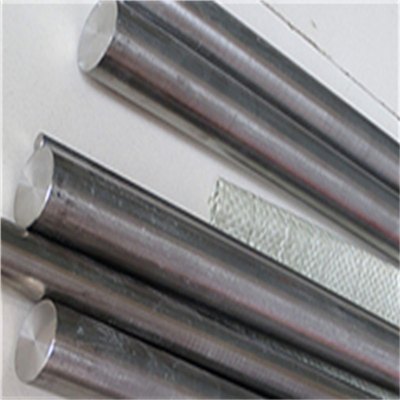
Quick answer: Hastelloy C276 (UNS N10276) is the default corrosion-resistant nickel alloy for the worst oxidizing-plus-reducing environments — hot, mixed-acid and chloride-pitting service where 316L, 904L and even Inconel 625 fall short. The trade-offs are price (roughly 4–7× 316L), poor machinability, and a narrow, non-negotiable solution-annealing window that must appear on the MTR.
What is Hastelloy C276 and where does it actually win?
C276 is a nickel–chromium–molybdenum alloy (16 Cr, 16 Mo, ~57 Ni) with tungsten added for solid-solution strengthening. Its strength is breadth: it resists pitting and crevice corrosion in hot chlorides, and it survives concentrated oxidizing acids (ferric/hydrochloric/nitric mixtures) that destroy stainless. The single most common use is flue-gas desulfurization, where flue gas, scrubber liquor and chlorides coexist at temperature — exactly the mixed environment that defeats single-mechanism alloys.
| Alloy | Pitting resistance (PREN) | Best at | Rough cost vs 316L |
|---|---|---|---|
| 316L | ~25 | Ambient chloride, general corrosion | 1× |
| 904L | ~35 | Warm sulfuric, high Cr+Ni | 2–3× |
| Alloy 625 | ~48 | High temp + seawater | 4–6× |
| C276 | ~68 | Mixed hot acid + chloride | 4–7× |
PREN is a guide, not a spec; C276's edge is reducing-acid resistance, not just the number.
Forms, standards and what to buy
- Bar: ASTM B574 (UNS N10276), commonly supplied in hot-finished, forged or cold-drawn condition; machined rounds up to large diameters.
- Plate and sheet: ASTM B575, with B564 forgings and B622/B619 seamless and welded pipe for the same alloy.
- Condition: C276 is supplied solution-annealed only. There is no age-hardening condition to specify — the heat treatment is what gives it corrosion resistance.
The solution-anneal line is the whole ballgame
C276 is a single-phase, solid-solution alloy. Its corrosion resistance comes entirely from a uniform, wrought-microstructure heat treatment — typically 1120–1170 °C followed by rapid quench. If the MTR does not show a completed solution-anneal (temperature, soak time, quench medium), do not accept the material: a cold-worked or improperly annealed C276 can corrode far below its rated performance. This is the one quality gate that separates good C276 from decorative C276.
Machining and welding cautions
- Machining: C276 work-hardens aggressively and has low thermal conductivity, so use rigid setups, low speeds, positive rake and flood coolant. Treat it like Inconel, not steel.
- Welding: It is weldable with matching N10276 filler or ERNiCrMo-4 wire, but the weld must not sensitize; keep interpass temperatures low and avoid re-heating the heat-affected zone. Post-weld heat treatment is not required and usually not wanted.
- Pickling: after welding, a proper pickling passivation restores the surface — relevant to the same surface-finish logic used on stainless pipe.
What should the C276 RFQ include?
- Form and standard: bar per ASTM B574, plate per B575, etc.
- Dimensions, tolerance class and whether machined surfaces are required.
- Quantity, with the note that minimum melts make small orders expensive.
- MTR requirement: solution-anneal parameters, chemistry per heat, UTS/elongation, and UT if the section is thick.
- End use in one line — "RFQ: FGD scrubber nozzle, 90 °C, wet Cl⁻" tells the supplier which inspection depth to quote.
FAQ
Q: Is C276 better than Inconel 625? A: For mixed hot acid and pitting, yes — C276 has more molybdenum and tungsten and resists stronger oxidizers. For high-temperature strength and seawater fatigue, 625 is the better pick; the choice is driven by the dominant corrosion mechanism.
Q: Why is C276 so much more expensive than stainless? A: The molybdenum and tungsten content plus low, alloy-specific production volumes. On a whole-life basis it is often cheaper than replacing stainless equipment that corrodes out in months.
Q: Can C276 be used for seawater? A: It is excellent in seawater, but for pure seawater without acid many engineers use 625 or 6Mo (254SMO) at lower cost; reserve C276 for seawater that is also hot or chemically aggressive.
Q: How do I verify I got real C276? A: Positive material identification (PMI) for Ni/Cr/Mo/W, confirmed against the heat MTR, plus a check that the solution-anneal heat treatment is documented. PMI is cheap insurance on a 6×-cost material.
Shanghai Hangbo Alloy Group
🌐 Website: www.hangbo-metal.com
📧 Email: Craliey1382@gmail.com
💬 WhatsApp: +86 19169850074
📞 Tel: +86 19169850074
📍 Address: No. 388 Songhuang Rd, Qingpu District, Shanghai, China
👤 Contact Person: Tiffany Luo