 Hangbo Alloy Group
How to Calculate the Weight of Stainless Steel & Nickel Alloy Bars, Plates and Pipes
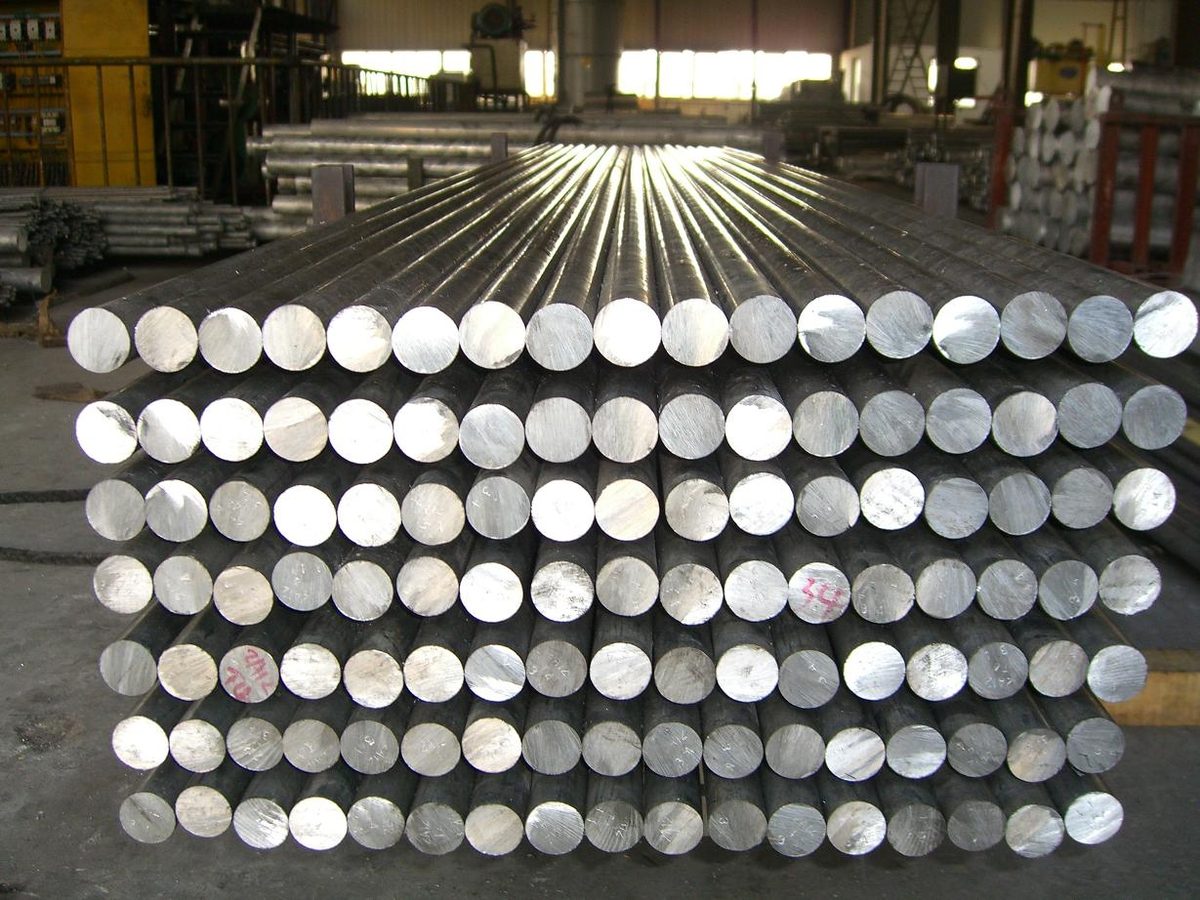
How to Calculate the Weight of Stainless Steel & Nickel Alloy Bars, Plates and Pipes (With Formulas and Worked Examples)

Quick answer: Weight = Volume × Density. For a round bar: W (kg) = 0.00617 × d² × L for steel at 7.85 g/cm³ (d and L in mm and m — see formula derivation below). For nickel alloys, multiply by the density ratio: Inconel 718 is 8.19/7.85 ≈ 1.043× heavier than the same carbon-steel volume; Monel 400 is 8.80/7.85 ≈ 1.121×. Always add 2–5% for mill tolerance on dimensions and, for bars, check whether your supplier quotes nominal or measured size.
When you are pricing a shipment, planning freight, or verifying a mill test certificate, the single most common calculation in our industry is weight. It drives cost, logistics and even the MTR check (theoretical vs. actual weight). This guide gives you the exact formulas we use in daily quoting, density values for the most-ordered grades, and fully worked examples you can copy.
1. Densities You Should Memorize (or Bookmark)
| Material | Grade (typ.) | Density (g/cm³) | kg/m² per mm thickness (plate) |
|---|---|---|---|
| Carbon steel | A105 / S355 | 7.85 | 7.85 |
| Austenitic stainless | 304 / 304L | 7.90 | 7.90 |
| Austenitic stainless | 316L | 7.98 | 7.98 |
| Duplex | 2205 (S31803/S32205) | 7.80 | 7.80 |
| Super austenitic | 904L | 7.95 | 7.95 |
| Ni-Cu | Monel 400 | 8.80 | 8.80 |
| Ni-Cr-Mo | Hastelloy C-276 | 8.89 | 8.89 |
| Ni-Cr-Fe | Inconel 600 | 8.47 | 8.47 |
| Ni-Cr-Fe-Mo (PH) | Inconel 718 / GH4169 | 8.19 | 8.19 |
| Ni-Fe-Cr | Incoloy 825 | 8.14 | 8.14 |
| Ti (reference) | Gr. 2 | 4.51 | 4.51 |
Tip: for mixed lots, the ±0.1 g/cm³ spread between 304 and 316L (7.90 vs 7.98) is ~1% — small, but it matters on full-container plate orders.
2. Round Bar — The Formula and a Shortcut
Exact formula:
W (kg) = π/4 × d² (mm) × L (m) × ρ (g/cm³) ÷ 1,000
Shortcut constants (per metre, d in mm):
| Material | Shortcut factor | Example: 50 mm bar, 1 m |
|---|---|---|
| 304/316L (ρ≈7.9–8.0) | d² × 0.00625 | 50² × 0.00625 = 15.6 kg |
| Inconel 718 (ρ=8.19) | d² × 0.00643 | 50² × 0.00643 = 16.1 kg |
| Monel 400 (ρ=8.80) | d² × 0.00691 | 50² × 0.00691 = 17.3 kg |
| Hastelloy C-276 (ρ=8.89) | d² × 0.00698 | 50² × 0.00698 = 17.5 kg |
Worked example 1 — Inconel 718 round bar, 50 mm × 3,000 mm:
- Volume = π/4 × 50² × 3,000 mm = 5,890,486 mm³ = 5,890.5 cm³
- Weight = 5,890.5 × 8.19 g = 48,239 g ≈ 48.2 kg per bar
- A bundle of 20 bars ≈ 965 kg — quote freight accordingly.
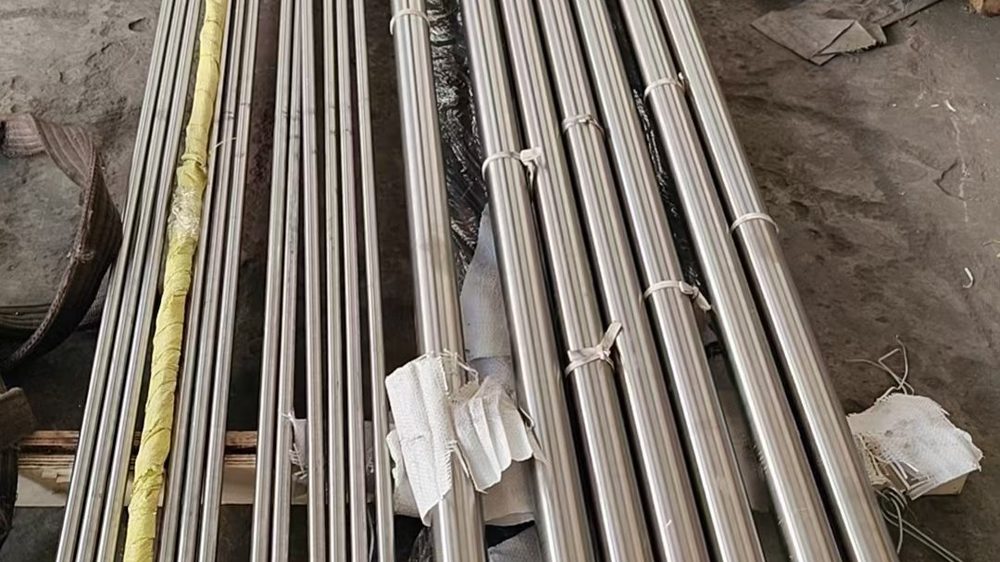
3. Plate and Sheet
W (kg) = L (m) × W (m) × T (mm) × ρ (g/cm³)
(The 0.001 factors cancel neatly in this unit combination.)
Worked example 2 — 316L plate, 1,500 × 3,000 × 6 mm:
- 1.5 × 3.0 × 6 × 7.98 = 215.5 kg per sheet
- Add cutting loss: guillotined blanks typically consume 1–3%; plasma/laser nests, 5–15%.
Tolerance note: ASTM A480 permits plate thickness tolerances of roughly ±0.25 to ±0.45 mm depending on thickness and width. On 6 mm plate at nominal tolerance, sheet weight can vary ±7% — the reason serious buyers verify with calipers at goods-in and reconcile against the MTR's theoretical mass.
4. Pipe and Tube
W (kg/m) = π/4 × (Do² − Di²) × ρ ÷ 1,000 (mm units)
Equivalently, using wall thickness t: W (kg/m) = π × (Do − t) × t × ρ ÷ 1,000.
Worked example 3 — Inconel 625 seamless pipe, 88.9 × 5.2 mm (NPS 3 Sch 40S):
- Mid-diameter = 88.9 − 5.2 = 83.7 mm
- W = π × 83.7 × 5.2 × 8.44 ÷ 1,000 = 11.5 kg/m (ρ of Alloy 625 = 8.44 g/cm³)
- A 6 m length ≈ 69.2 kg; a 40 ft container of nested bundles, plan on ~24–26 tonnes max for this size.
5. Why Theoretical Weight and Weighed Weight Differ
- Dimensional tolerance — bars are rolled/ground to ± tolerance; hot-rolled bar can be oval.
- Density band — standards state nominal density; actual heat chemistry shifts it ±0.5%.
- Length tolerance — mill lengths are typically +10/−0 mm; cut-to-length ±5 mm.
- Weighbridge vs. platform scale calibration — always compare on the same scale.
Procurement tip: if your contract prices "per kg theoretical," specify the formula and density in the PO (we do this on request and state it on the MTR). Ambiguity here is the #1 source of invoice disputes in alloy trading.
6. Fast Bulk Estimation (Container Level)
| Product | Rule of thumb |
|---|---|
| 20 ft container, pipe | max ~24 t nested, less for large OD |
| Round bars in bundles | bundle weight ≈ n × π/4 × d² × L × ρ (n = bars/bundle) |
| Plates on skids | stack height × 0.98 packing factor |
Use our on-site weight calculator for instant results across all stocked grades, or send us your cutting list for a same-day quoted weight.
Frequently Asked Questions
Q: Does the weight formula change for hexagonal bars? Yes. For hex bar across-flats size s (mm): W (kg/m) = (√3/2) × s² × ρ ÷ 1,000 ≈ 0.866 × s² × ρ ÷ 1,000. A 30 mm AF 316L hex ≈ 0.866 × 900 × 7.98 ÷ 1000 = 6.2 kg/m.
Q: What density do I use for Inconel 718 vs GH4169? They are the same alloy family — use 8.19 g/cm³ for both (see our GH4169 vs Inconel 718 comparison).
Q: Is galvanized or polished surface weight different? Zinc coating adds 1–3% for typical hot-dip; polished bar weight loss is negligible (<0.2%), but bright-polished bar is measured on ground diameter, so order size accordingly.
Q: How do I verify supplier weight claims? Count and measure a sample (diameter with caliper, length with tape), compute theoretical weight, and compare with the declared gross/net. A deviation over 3% on bars usually means undersize material — check the MTR and our MTR reading guide.
Q: Do you quote per kg or per piece? Both. Standard stock sizes are quoted per kg with a kg minimum; cut-to-size parts are quoted per piece, weight-verified before shipment.
Shanghai Hangbo Alloy Group
🌐 Website: www.hangbo-metal.com
📧 Email: Craliey1382@gmail.com
💬 WhatsApp: +86 19169850074
📞 Tel: +86 19169850074
📍 Address: No. 388 Songhuang Rd, Qingpu District, Shanghai, China
👤 Contact Person: Tiffany Luo