 Hangbo Alloy Group
Small-Diameter Stainless Tube: A269 Sizes, Seamless vs Welded-Drawn, Coiled Supply
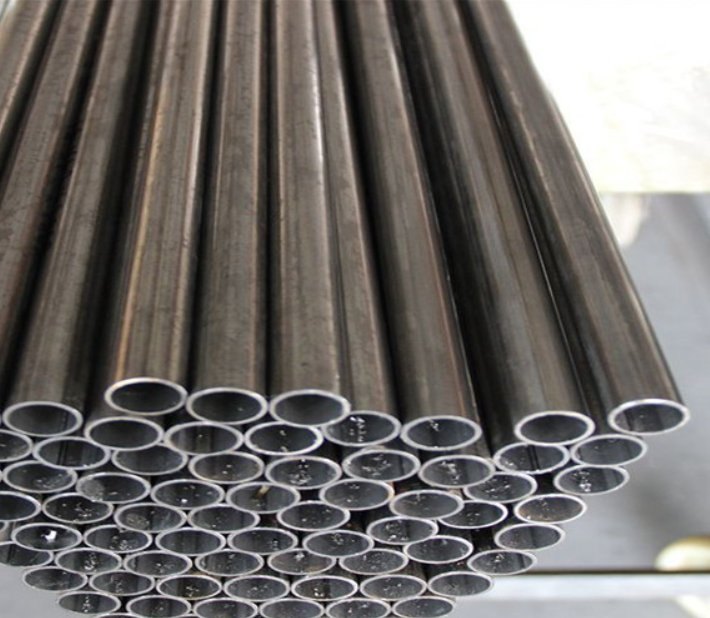
Quick answer: Small-diameter stainless tube — roughly 3 to 25 mm OD, down to capillary sizes below 1 mm — is a different product from pipe in almost every respect: it is made in seamless or welded-and-drawn form to ASTM A269/A213 rather than pipe standards, supplied in straight lengths or coils, and specified by OD × wall in millimeters with much tighter tolerances. The three decisions that dominate an RFQ are seamless vs welded-drawn, straight vs coiled, and how the ends and cleanliness are controlled.
What sizes count as "small diameter", and which standard applies?
The industry line between tube and pipe is nominal size: once you are below about NPS 1/2 (DN 15), everything is tube, ordered by actual OD and wall. The controlling standards:
| Product | Standard | Notes |
|---|---|---|
| Seamless + welded tube, general | ASTM A269 | The workhorse spec for 3–25 mm OD |
| Seamless tube, high temp/pressure | ASTM A213 | Boiler and superheater grades, TP316/TP321 etc. |
| Sanitary tube | ASTM A270 | Food, pharma — surface finish specified in Ra |
| Capillary tube | ASTM A632 | Precise small bore, often supplied coil |
Tolerances tighten as diameters shrink: a 6 mm OD tube typically carries ±0.05 mm on OD and a wall tolerance of ±10%, which is far stricter than anything in the pipe world.
Seamless or welded-and-drawn: which one for small tube?
At small sizes the price gap narrows and the decision is mostly about the application:
- Seamless (A269/A213 seamless): no weld seam at all — preferred for high pressure, instrumentation lines, and anything where the customer spec simply says seamless.
- Welded-and-drawn: a strip is rolled, welded, then cold-drawn through dies one or more times. The drawing refines the weld and the whole wall becomes homogeneous; for most hydraulic and pneumatic service, welded-and-drawn is fully equivalent and cheaper.
Welded-and-drawn also wins on wall concentricity — the drawing process centers the wall better than many seamless routes — which matters for capillary work and coiling.
Straight lengths or coils?
- Straight lengths (typically 4–6.5 m): easier handling, fitting-compatible, standard for instrumentation and structural uses.
- Coiled tube: continuous lengths of tens or hundreds of meters with no intermediate welds or fittings — the standard for chemical injection lines, downhole umbilicals and long instrument runs. Every fitting you eliminate removes a leak point.
Coiling requires material with controlled yield and no flare: specify the coil diameter and whether the tube must be annealed for re-straightening on site.
What tolerances and finishes can you actually demand?
Realistic, checkable requirements for a small-tube RFQ:
- OD tolerance ±0.05 mm down to ±0.025 mm for precision grades.
- Wall tolerance ±10% standard; ±5% available at a premium.
- Surface finish — pickled for industrial, or bright-annealed/polished to a stated Ra for sanitary and gas lines (see the pipe surface finish guide).
- Cleanliness — for oxygen, semiconductor or gas service: degreased, blown dry, capped ends, sometimes bagged per length.
- Eddy-current or hydro test — A269 requires one of these on the finished tube; state which your inspector expects.
Common delivery problems and how the RFQ prevents them
- Dents and ovality on tube ends — preventable with end caps and individual sleeving; same discipline as the general export packing rules.
- Contamination inside the bore — plastic caps at both ends plus a cleanliness line in the PO.
- Wrong temper — tube supplied too hard will flare or bend-crack on site; specify "annealed" explicitly when fittings will be attached.
- Mixed heats in one bundle — demand heat separation and per-bundle tagging so the MTRs match what your inspector measures.
FAQ
Q: Is A269 tube code-compliant for pressure piping? A: For the pressure side, A269/A213 tube is widely used in instrumentation and small-bore systems, but whether your code jurisdiction accepts tube depends on the design code you are working to — check with your engineer before specifying tube where a pipe spec exists.
Q: Why is my 6 mm tube slightly oval at the ends? A: Cutting leaves some distortion, and ends are where damage happens. If ovality at the connection point matters (compression fittings), ask for protected ends or pre-flared/prepared ends at supply.
Q: Can small tube be delivered in exact lengths instead of randoms? A: Yes — cut-to-length with deburred ends is a standard service, usually priced per cut. It saves significant shop time on instrument assemblies.
Q: Does welded small tube show the seam? A: After full drawing and annealing, the seam is metallurgically identical to the base metal and usually invisible; a faint line may remain in pickled finish, which is normal and not a defect.
Shanghai Hangbo Alloy Group
🌐 Website: www.hangbo-metal.com
📧 Email: Craliey1382@gmail.com
💬 WhatsApp: +86 19169850074
📞 Tel: +86 19169850074
📍 Address: No. 388 Songhuang Rd, Qingpu District, Shanghai, China
👤 Contact Person: Tiffany Luo