 Hangbo Alloy Group
Stainless Decorative and Handrail Tube: Mirror vs Satin, Grade and Wall
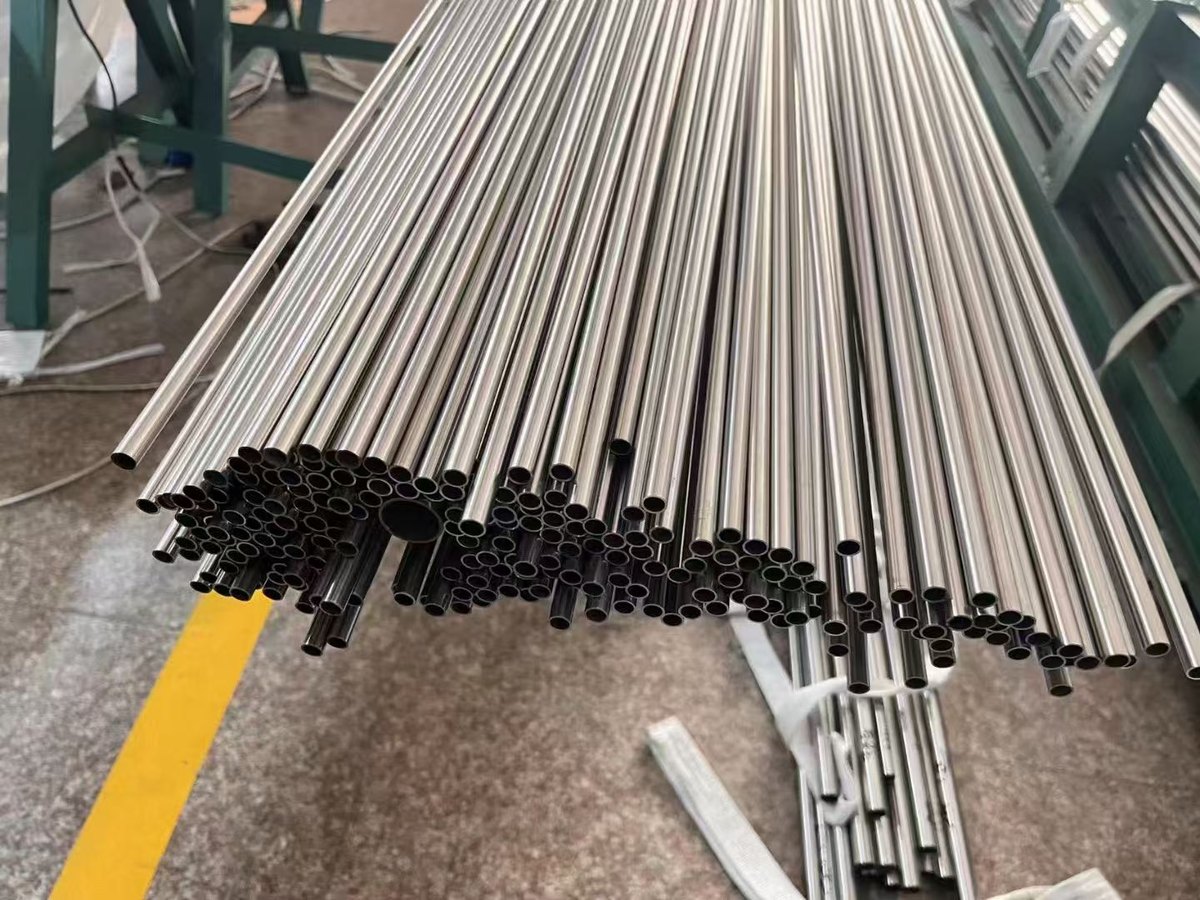
Quick answer: Decorative and handrail stainless tube is sold on its finish, not its pressure rating — mirror (No. 8) or satin (No. 4 / brushed) 304 or 316, in light wall, made for railings, balustrades, furniture and architecture. The three things to specify are the finish (and grain direction for brushed), the grade (316 for outdoor/coastal, 304 for indoor), and the wall thickness, because decorative tube is rarely stress-designed and the wall is chosen for stiffness and look.
What "decorative tube" actually is
It is the same 304/316 austenitic stainless as structural tube, but supplied in bright-annealed or polished condition in light walls, cut to length, and graded on appearance rather than pressure. The families:
- Round handrail tube — the most common, with matching bends, elbows and brackets.
- Satin (No. 4 / brushed) tube — directional grain, the standard for interior handrails.
- Mirror (No. 8) tube — reflective, for high-end architecture and furniture.
- Rectangular and square decorative tube — for frames, balustrade infill, shopfitting.
Mirror vs satin: which finish, and why it matters
| Finish | Look | Best use | Care |
|---|---|---|---|
| No. 4 / brushed | Soft directional grain | Indoor handrails, most architecture | Hides fingerprints |
| No. 8 / mirror | Reflective, polished | Feature architecture, furniture | Shows every mark |
| BA (bright annealed) | Smooth, low-reflective | Hygienic-adjacent, mild decor | Low maintenance |
For brushed finishes, grain direction matters on bends and welds — a visible cross-grain line at a joint is the classic defect, so specify whether the grain runs along or around the tube.
Grade: 304 indoors, 316 outdoors
The same rule as everywhere else applies with extra weight here, because railings live in the weather:
- 304 for indoor and dry-climate handrails — perfectly adequate and cheaper.
- 316 / 316L for coastal, poolside, and any outdoor railing exposed to chlorides — the PREN gap that prevents pitting at crevices and welds. Choosing 304 for a seaside balcony is the most common decorative-tube failure.
Wall thickness: look and stiffness, not pressure
Decorative tube walls run light (roughly 0.8–2.0 mm for handrail diameters) because the load is hand-force, not pressure. The wall is chosen for:
- Stiffness — a slender post needs enough wall not to feel flimsy.
- Weld and polish — too thin a wall burns through on welding and dents in handling.
- Cost — wall is the biggest price lever after finish.
Fabrication cautions for a clean result
- Bending should be mandrel-assisted to keep the bright surface round (see the tube-bending guide); sharp bends mark the outside of mirror tube.
- Welding at joints needs 316L filler and a clean pass; then the weld is ground and repolished to match — mirror joints reveal bad welds instantly.
- Contamination from carbon-steel tools leaves rust spots on decorative stainless; keep dedicated tooling.
What should the decorative-tube RFQ include?
- Grade: 304 or 316/316L — and state indoor vs outdoor.
- Diameter, wall (or "handrail standard"), and shape (round/square/rect).
- Finish: No. 4 satin or No. 8 mirror, with grain direction if critical.
- Length: cut-to-length with deburred ends; quantity.
- Accessories: bends, elbows, brackets, and whether they must match the finish.
FAQ
Q: Can I use 304 handrail near the sea? A: Not recommended — chlorides pit 304 at crevices and welds within a few years. Spend the delta on 316L; for coastal railings it is the right call.
Q: Why does my mirror tube show a seam line? A: Welded-and-drawn decorative tube keeps a faint longitudinal line; it is normal and not a defect, but specify "seamless" if the application is fully exposed mirror and the line would show.
Q: Will the brushed grain run the wrong way at my bends? A: It can — grain is set by the polishing direction and crosses on a bend. Specify grain orientation and matching polished bends to avoid the tell-tale cross line.
Q: Is decorative tube rated for structural load? A: Generally no — it is appearance-graded, not pressure- or load-certified. For load-bearing posts, use structural tube or specify a wall and grade the engineer approves.
Shanghai Hangbo Alloy Group
🌐 Website: www.hangbo-metal.com
📧 Email: Craliey1382@gmail.com
💬 WhatsApp: +86 19169850074
📞 Tel: +86 19169850074
📍 Address: No. 388 Songhuang Rd, Qingpu District, Shanghai, China
👤 Contact Person: Tiffany Luo