 Hangbo Alloy Group
Stainless Flat Bar and Square Bar: Tolerances, Edges and When to Specify
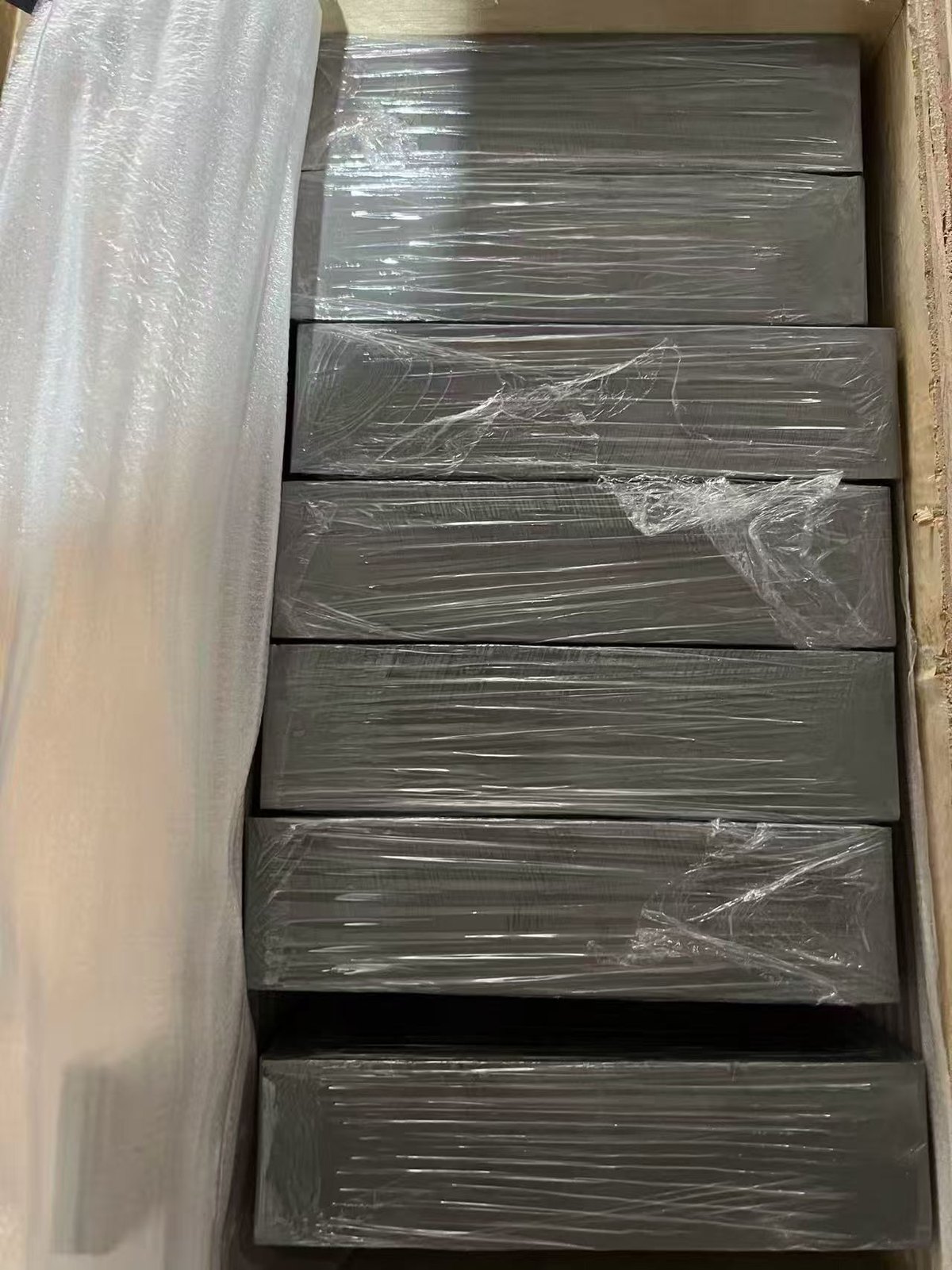
Quick answer: Stainless flat bar and square bar are the rectangular siblings of round bar — specified by actual dimensions (thickness × width, or side × side), usually to h11 or a mill edge tolerance, and bought when a part's geometry favors a straight edge or a machined rectangle over a turned round. The decisions that matter are edge condition (mill/rounded vs sawn/square), whether you need the bar hot-rolled or cold-drawn, and how much machining stock to leave for your operation.
What counts as flat and square bar?
- Flat bar: a rectangular section, thickness × width, from a few mm to ~25 mm thick and up to 200 mm wide (wider becomes plate strip).
- Square bar: equal sides, typically 6–100 mm.
- Both are supplied hot-rolled (lower cost, scale, looser tolerance) or cold-drawn (tighter size, better surface, more expensive), and they share the tolerance logic of round bar.
Flat/square vs round: when the rectangle wins
| Situation | Choose | Why |
|---|---|---|
| Brackets, flanges, keyways | Flat bar | Straight edges, no turning |
| Gates, frames, structural | Square bar | Ready corner geometry |
| Shafts, pins, round parts | Round bar | Cheaper to turn, better grain |
| Parts cut from rectangular blanks | Flat bar | Less machining than from round |
The rule of thumb: if the finished part is closer to a rectangle than a cylinder, start from rectangular bar and you remove less metal.
Tolerances and edges
- Size: cold-drawn flat/square typically to h11 or h9; hot-rolled to mill edge, broader.
- Edge: hot-rolled bars have a rounded mill edge; if the part needs a sharp corner, specify sawn/square-cut or sheared edges.
- Camber and twist: long bars can bow or twist; state a straightness class if the part is long and the fit is tight (same straightness thinking as round bar).
- Length: standard random lengths or cut-to-length with deburred ends.
Hot-rolled vs cold-drawn: the cost/surface trade
Hot-rolled rectangular bar is the economical default for structural and machined blanks where scale removal or machining takes the surface anyway. Cold-drawn gives a bright, dimensionally tight bar for parts that use the surface as-finished — handrail, fasteners, fittings. For stainless, cold-drawn 304/316 is common; for duplex and precipitation-hardening grades, hot-rolled-plus-machined is often the practical route.
Machining stock and the "why buy bigger" question
As with round bar, buying one stock size up beats ordering a special mill size for small quantities — the extra machining stock is cheaper than a minimum mill run. Leave ~1–3 mm per side for turned/milled features, matching the rule used on round bar diameter selection.
Packing and delivery
Rectangular bar packs flat and stacks well but its corners and edges dent easily — the export packing rules (bundling, sleeving, edge protection, ISPM-15 wood) apply with extra attention to edge protectors. Sharp corners also tear plastic sleeving, so edge caps matter more here than on round bar.
What should the flat/square-bar RFQ include?
- Grade and standard (304/316/A182 for forgings, A276 for bar).
- Dimensions: thickness × width (or side), with tolerance class.
- Condition: hot-rolled or cold-drawn; edge condition (mill/sawn/square).
- Length: random, fixed, or cut-to-length with machining allowance.
- Straightness and inspection needs; quantity.
FAQ
Q: Is flat bar the same as strip or plate? A: Strip is thin and usually coil-supplied (see the strip slitting guide); flat bar is thicker and bar-length. Above ~200 mm wide it crosses into plate territory. The boundary is thickness and supply form.
Q: Why is my cold-drawn flat bar slightly cambered? A: Drawn bar can carry residual bow; for long, tight-fit parts state a straightness class and the supplier will select or straighten — the same discipline as buying straight round bar.
Q: Can I get square bar in duplex or 17-4 PH? A: Yes, but expect hot-rolled-and-machined rather than drawn for the harder grades; drawn square in those alloys is a specialty item with longer lead time.
Q: Does the edge tolerance affect my weld prep? A: Yes — a rounded mill edge needs more prep than a sawn square edge. If you weld the bar as a flange or frame, specify the edge condition so the fit-up is predictable.
Shanghai Hangbo Alloy Group
🌐 Website: www.hangbo-metal.com
📧 Email: Craliey1382@gmail.com
💬 WhatsApp: +86 19169850074
📞 Tel: +86 19169850074
📍 Address: No. 388 Songhuang Rd, Qingpu District, Shanghai, China
👤 Contact Person: Tiffany Luo