 Hangbo Alloy Group
Bright and Polished Stainless Steel Round Bar: Peeled, Ground and h9 Tolerance Explained
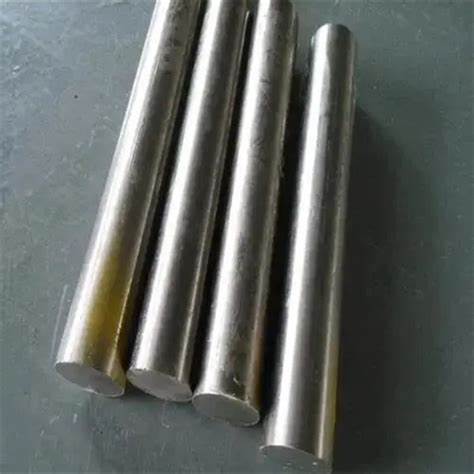
When a buyer asks for "bright stainless steel round bar", three different products could match: peeled (turned) bar, ground and polished bar, and cold-drawn bright bar. They look similar in photos but differ in tolerance, surface quality and price — and ordering the wrong one is one of the most common mistakes in bar procurement.
This guide explains how each bar product is made, what tolerance class to expect (h9, h10, h11), which grades and standards apply, and how to write a bar enquiry that gets you exactly the surface and accuracy your machining shop needs.
The Three "Bright Bar" Products Compared
| Product | How it's made | Diameter range | Typical tolerance | Surface |
|---|---|---|---|---|
| Peeled / turned bar | Outer skin machined off hot-rolled bar on a peeling lathe | 16–200 mm | h11 (±0.05–0.2 mm by size) | Smooth, bright machined, faint longitudinal tool marks |
| Ground bar | Peeled bar further ground on centerless grinders | 3–100 mm | h9 (±0.018–0.087 mm) | Fine, uniform, matte-bright |
| Polished bar | Ground bar polished with belts/cloth to gloss | 3–100 mm | h9 | Mirror or satin gloss, visible in decorative use |
| Cold-drawn bright bar | Room-temperature drawing through a die | 3–50 mm | h9–h10 | Bright, work-hardened surface |
Rule of thumb: if your part is CNC-turned with tight finished dimensions, order peeled h11 and machine to size yourself — it's the cheapest. If bars feed into automatic lathes, Swiss machines or go straight to assembly without machining, order ground or polished h9.
Why Tolerance Class Matters (h9 vs h11)
The "h" tolerances (ISO 286-2) define how far the actual diameter can deviate below nominal. For a 50 mm bar:
- h11: 50.00 / 49.85 mm — a 0.15 mm band, fine for machining stock
- h9: 50.00 / 49.962 mm — a 0.038 mm band, needed for ready-to-use shafts
Buying h9 when you will fully machine the bar wastes money; buying h11 for a shaft that slides into a bearing without machining means rework or scrap. Always match the tolerance class to your process.
Grades Most Commonly Ordered as Bright Bar
| Grade | UNS | Typical bright-bar use |
|---|---|---|
| 303 | S30300 | Highest machinability, automatic screw machine parts |
| 304/304L | S30403 | General machined components, fasteners |
| 316/316L | S31603 | Marine, chemical, food machinery shafts |
| 416 | S41600 | Martensitic, valves and machining-heavy parts |
| 17-4 PH | S17400 | High-strength shafts, aerospace pins |
| Duplex 2205 | S32205 | High-strength corrosion-resistant shafts |
| 904L / Alloy 825 | N08904 / N08825 | Severe corrosion service |
303 vs 304 note: 303 machines dramatically faster thanks to added sulfur, but its corrosion resistance is one notch below 304. For food-contact or chloride-exposed parts, stay with 304/316 even though tooling costs rise.
Standards and Certification
- ASTM A276 — general purpose bar (hot/ cold worked), most common for bright bar
- ASTM A479 — bar for pressure vessel and ASME code use
- ASTM A582 — free-machining stainless bar (303, 416)
- EN 10088-3 — European bars standard
- EN 10204 3.1 MTC — mill certificate with chemistry and mechanicals, heat-traceable
For polished decorative bar, also agree the gloss level (mirror vs satin) and whether a clear protective film is applied.
Straightness, Length and Machining Stock
Three practical specs buyers forget:
- Straightness — standard is ~1 mm per meter run; precision bar can be 0.5 mm/m. Automatic feeding needs the tighter class.
- Lengths — random lengths 3–6 m, or fixed lengths (e.g., 3000 +0/−5 mm) for lean manufacturing. Fixed lengths reduce your offcut waste.
- Machining stock allowance — if you want machining allowance guaranteed on diameter, order "peeled + stock" and state the allowance (e.g., +0.5 mm over nominal).
Quality Checks to Demand
- Diameter measured with micrometer at multiple points along each bar (eccentricity in peeled bar is the classic defect)
- Surface free of seams, laps and decarb — peeling removes these from the hot-rolled skin, ask for a seam-free guarantee
- Heat number stamped on every bar end
- For 17-4 PH and duplex: request mechanical test results per heat, not just chemistry
Frequently Asked Questions
Is bright bar weaker or stronger than black bar? Cold-drawn bright bar is actually stronger (work-hardened). Peeled bar has the same strength as the parent hot-rolled bar since only surface is removed.
Can I get polished 316 bar for architectural handrails? Yes — satin (No.4-type) or mirror polish, typically 6 m fixed lengths, with protective film. State gloss level and film in the order.
What's the minimum order quantity for ground h9 bar? Common diameters in 303/304/316 are stocked and available in small lots (even 100–500 kg). Exotic grades and special sizes usually carry MOQ from mills, but stockists bridge the gap.
Why does 303 bar cost about the same as 304 if it machines better? The value of 303 shows in your machining cost, not the bar price — tool life and cycle time improve enough to offset a small bar premium.
Order Bright and Polished Stainless Round Bar
Shanghai Hangbo Alloy Group supplies peeled, ground and polished round bar in 303, 304/304L, 316/316L, 416, 17-4 PH, duplex 2205 and nickel alloys, diameter 3–200 mm, tolerance h9/h11 per ISO 286-2, to ASTM A276/A479 with EN 10204 3.1 certification. Send your diameter, tolerance class, length and quantity — we quote within 24 hours and can provide bar samples for machining trials.
Shanghai Hangbo Alloy Group
🌐 Website: www.hangbo-metal.com
📧 Email: Craliey1382@gmail.com
💬 WhatsApp: +86 19169850074
📞 Tel: +86 19169850074
📍 Address: No. 388 Songhuang Rd, Qingpu District, Shanghai, China
👤 Contact Person: Tiffany Luo