 Hangbo Alloy Group
Stainless Heat Treatment: Solution Annealing, Sensitization and Why 316L Welds Don't Rust
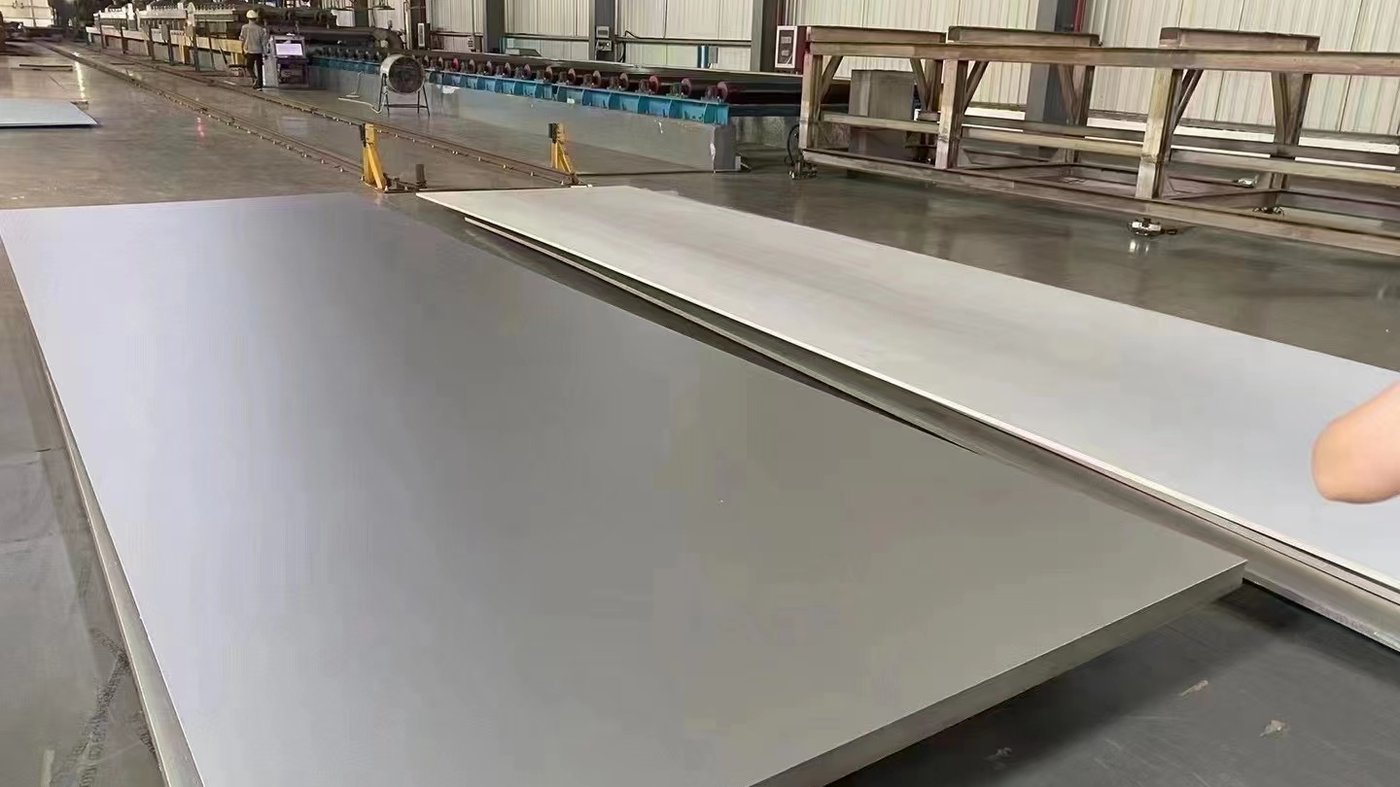
Quick answer: Stainless steel's corrosion resistance comes from a chromium-rich passive film, and most of the failures buyers see — rust at welds, intergranular attack, sensitization — are heat-treatment problems, not grade problems. The three heat treatments that matter are solution annealing, stress-relief, and quench, and the one rule that prevents most field corrosion is: never let 304/316 sit in the 425–815 °C (800–1500 °F) sensitization range for long without being low-carbon (the "L" grade) or stabilized (321/347).
Why heat treatment governs stainless performance
Unlike carbon steel, you do not heat-treat stainless to make it stronger — you heat-treat it to keep it corrosion-resistant. The chromium in the alloy forms a thin oxide film that self-heals in air; the whole game of stainless metallurgy is keeping that chromium in solution and in the grain, not tied up as chromium carbide at the grain boundaries.
The three heat treatments, in plain terms
| Treatment | What it does | When it applies |
|---|---|---|
| Solution anneal | Dissolves carbides, homogenizes structure | After hot work, welding of certain grades, all mill anneal of 300 series |
| Stress relief | Reduces residual stress without sensitizing | Before service in chloride/stress-corrosion risk |
| Quench | Locks in the solutioned structure | Essential fast cool after annealing |
Solution annealing is typically 1010–1120 °C for 304/316 followed by rapid quench — slow cooling lets carbides precipitate and undoes the benefit.
Sensitization: the failure mode everyone should know
If austenitic stainless is held in roughly 425–815 °C — during welding, hot forming, or slow cooling — chromium migrates to grain boundaries and forms carbides, depleting chromium right at the boundary. That boundary then corrodes selectively (intergranular corrosion) even in mild environments. The fixes are built into the grades:
- Low-carbon "L" grades (304L, 316L): carbon low enough that sensitization is slow even in the danger zone.
- Stabilized grades (321 with Ti, 347 with Nb): the stabilizer grabs the carbon first, sparing chromium.
Welding is where it shows up
Welding heats the heat-affected zone through the sensitization band. Using 316L (not 316) for welded construction is the single most common corrosion-proofing decision — it lets the joint pass through the danger zone without sensitizing. For heavy sections or critical service, post-weld solution anneal restores full resistance; for most piping, choosing 316L and a clean weld is enough.
Hardenable grades behave differently
The precipitation-hardening and martensitic families (17-4 PH, 410) are heat-treated for strength, not just corrosion, with aging steps like H900/H1025. Those need their own condition control — see the 17-4 PH condition guide — and their corrosion resistance is a function of the aged condition, not just the alloy.
What should the RFQ say about heat treatment?
- For 300-series product: "solution-annealed and quenched" with the anneal temperature on the MTR; for welded parts, specify 316L and a clean procedure.
- For sensitization-risk service: state the exposure temperature band so the supplier picks an L or stabilized grade.
- For hardenable grades: name the condition (H900, H1025...) and ask for hardness verification on delivery.
- End use in one line — "RFQ: welded 316L tank, 60 °C chloride wash" is enough to confirm the grade choice is right.
FAQ
Q: My 316 rusted at the weld but the plate is fine — why? A: Classic sensitization or a carbon-steel-contaminated weld. The fix is to use 316L (not 316) for welded work and keep the weld area free of carbon-steel tools and grit — the plate was never the problem.
Q: Does 304L need solution annealing after welding? A: Usually not — the low carbon content makes welding it safe. Full annealing is reserved for heavy hot-work or when the part saw long exposures in the sensitization range.
Q: Can I heat-treat stainless to make it harder like steel? A: The 300 series, no — hardening them ruins corrosion resistance. The 400 series and PH grades (17-4, 410) are designed to be heat-treated for strength, with controlled corrosion trade-offs.
Q: Is stress-relief annealing safe for stainless? A: Done correctly at the right temperature it reduces stress-corrosion risk; done in the sensitization band it creates the opposite problem. Specify the temperature band and let the supplier avoid the 425–815 °C window.
Shanghai Hangbo Alloy Group
🌐 Website: www.hangbo-metal.com
📧 Email: Craliey1382@gmail.com
💬 WhatsApp: +86 19169850074
📞 Tel: +86 19169850074
📍 Address: No. 388 Songhuang Rd, Qingpu District, Shanghai, China
👤 Contact Person: Tiffany Luo