 Hangbo Alloy Group
Stainless Steel Plate & Sheet: Grades, Standards, Thickness and How to Choose the Right One
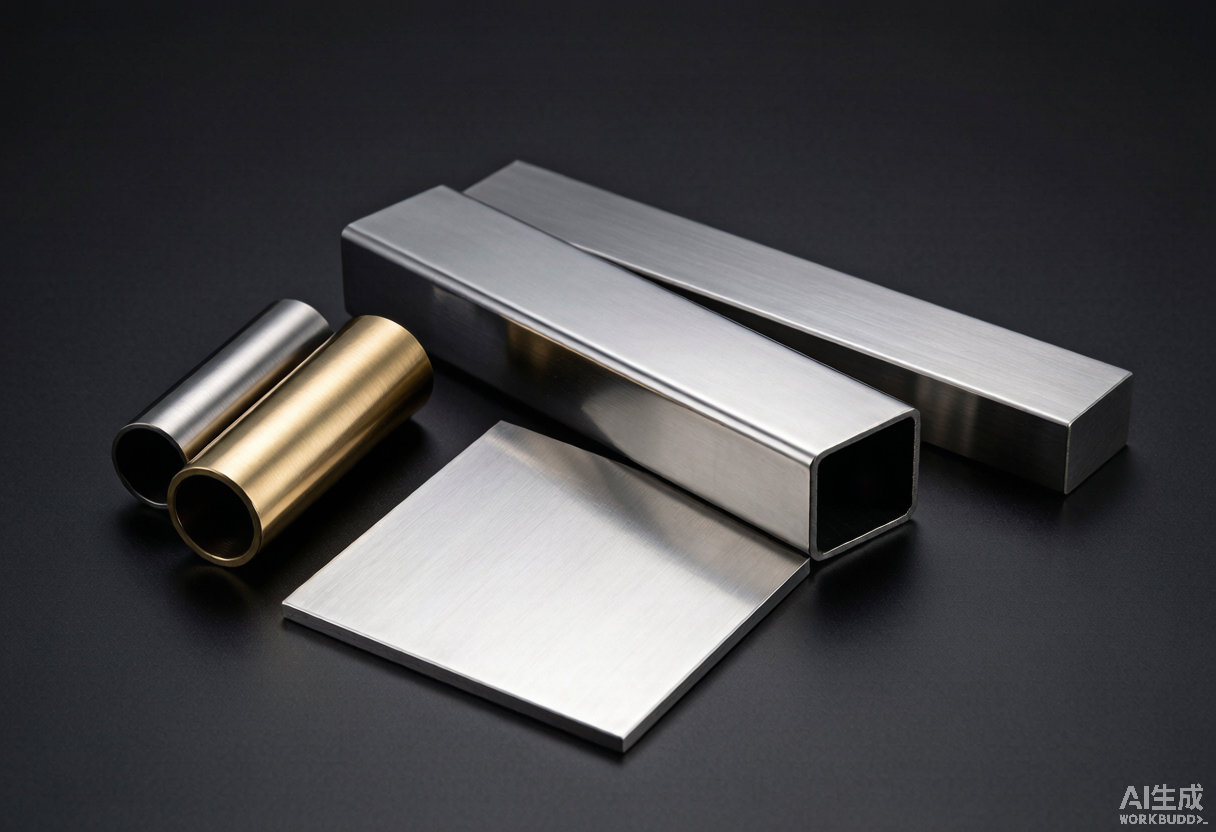
Stainless steel plate and sheet are flat-rolled corrosion-resistant steel products: "sheet" is cold-rolled material under 4.76 mm (3/16 in.) thick, while "plate" is material at or above that thickness, typically produced hot-rolled and annealed. Both are covered by the same material standards — most commonly ASTM A240 / A480 in the US system and EN 10028-7 in Europe — and both are among the most requested product forms in industrial procurement.
This guide explains the grades, standards, finishes and selection criteria that buyers and engineers actually need — no fluff, just the details that decide whether a part lasts two years or twenty.
On this page: 1. Sheet vs. Plate vs. Strip: The Official Definitions 2. The Grades That Matter (and When to Use Them) 3. Standards You Should Specify 4. Surface Finishes Explained 5. How to Choose: 4 Questions That Decide It 6. Frequently Asked Questions 7. Get a Quote from Stock
1. Sheet vs. Plate vs. Strip: The Official Definitions
| Product | Typical Thickness | Production Route | Common Use |
|---|---|---|---|
| Sheet | < 4.76 mm (3/16 in.) | Cold rolled + annealed | Cladding, kitchen equipment, panels |
| Plate | ≥ 4.76 mm up to 200 mm+ | Hot rolled + annealed | Pressure vessels, structural parts |
| Strip | Thin, supplied in coils | Cold rolled | Stamping, roll forming, tubing |
The boundary numbers come from ASTM A480, the general requirements standard that accompanies A240 chemistry and mechanical requirements.
2. The Grades That Matter (and When to Use Them)
| Grade | UNS | Key Chemistry | Min Tensile | Best Known For |
|---|---|---|---|---|
| 304 / 304L | S30400 / S30403 | 18–20 Cr, 8–10.5 Ni | 515 MPa | General purpose, food & architectural |
| 316L | S31603 | 16–18 Cr, 10–14 Ni, 2–3 Mo | 485 MPa | Chloride & chemical resistance |
| 321 | S32100 | 17–19 Cr, 9–12 Ni, Ti-stabilized | 515 MPa | Welded equipment, 400–800 °C service |
| 310S | S31008 | 24–26 Cr, 19–22 Ni | 515 MPa | Heat resistance to ~1,050 °C |
| 904L | N08904 | 19–23 Cr, 23–28 Ni, 4–5 Mo, 1–2 Cu | 490 MPa | Sulfuric/phosphoric acid |
| 2205 | S31803/S32205 | 22 Cr, 5 Ni, 3 Mo, 0.17 N | 620 MPa | Duplex strength + chloride resistance |
| 254SMO | S31254 | 19.5–20.5 Cr, 6–6.5 Mo, 0.2 N | 650 MPa | Seawater, PREN ≈ 43–45 |
Rule of thumb: move up this table as chloride content, temperature, or acid concentration rises. 304 handles indoor and fresh-water service; 316L is the chemical-industry default; the super grades (904L, 254SMO, duplex 2205) exist for conditions where 316L fails — pitting, crevice corrosion, and stress-corrosion cracking.
3. Standards You Should Specify
- ASTM A240 / A480 – plate, sheet and strip for pressure vessels (US)
- EN 10028-7 – flat products for pressure purposes (Europe)
- GB/T 24511 – Chinese pressure-equipment equivalent
- ASME Sec. II – when the plate feeds ASME-stamped vessels
A proper mill certificate should list heat number, chemistry, tensile/yield/elongation, and — for welded equipment — intergranular corrosion (IGC) test results per ASTM A262.
4. Surface Finishes Explained
| Finish | Appearance | Typical Application |
|---|---|---|
| No. 1 | Hot-rolled, annealed, scaled | Industrial plate, weldments |
| 2B | Smooth, dull grey matte | The general-purpose cold-rolled finish |
| BA | Bright annealed, reflective | Decorative, architectural |
| No. 4 / HL | Brushed | Elevators, appliances, panels |
| 8K Mirror | Highly reflective | Decorative and luxury applications |
5. How to Choose: 4 Questions That Decide It
- What's the medium? Chlorides, acids and temperature drive grade selection more than anything else.
- Is it welded? Stabilized (321/347) or low-carbon (304L/316L) grades avoid weld-zone sensitization.
- What thickness and tolerance do you actually need? Overspecifying thickness wastes money; underspecifying fails inspection.
- Do you need certified traceability? Pressure-vessel and aerospace work requires full heat-to-part traceability and third-party reports.
6. Frequently Asked Questions
What is the difference between stainless steel sheet and plate?
Per ASTM A480, sheet is under 4.76 mm (3/16 in.) thick and usually cold rolled; plate is 4.76 mm and above, usually hot rolled. Chemistry and standards (ASTM A240) are identical — only thickness and production route differ.
Which stainless steel plate grade is best for seawater?
For direct seawater exposure, 254SMO (6% Mo) or super duplex 2507 offer the highest pitting resistance. 2205 duplex suits brackish water; 316L is only suitable for splash zones and low-chloride service.
Is 316L better than 304 for chemical tanks?
Yes — 316L adds 2–3% molybdenum, roughly doubling chloride pitting resistance (PREN ≈ 25 vs 18), and its low carbon content prevents weld corrosion. It is the standard choice for chemical and pharmaceutical equipment.
What test reports come with stainless steel plate?
Every batch from Shanghai Hangbo Alloy Group ships with CNAS / CMA / SGS accredited bilingual (EN/CN) reports covering chemistry, tensile properties and, where required, intergranular corrosion testing.
7. Get a Quote from Stock
Shanghai Hangbo Alloy Group supplies stainless steel sheet and plate in 304/304L, 316L, 321, 347H, 309S, 310S, 253MA, 904L, 254SMO, 2205 and 2507 — with 14,000+ tons in stock, CNAS/SGS certified testing, and fast delivery to Europe and North America via our Düsseldorf and Houston offices.
Shanghai Hangbo Alloy Group
🌐 Website: www.hangbo-metal.com
📧 Email: Craliey1382@gmail.com
💬 WhatsApp: +86 19169850074
📞 Tel: +86 19169850074
📍 Address: No. 388 Songhuang Rd, Qingpu District, Shanghai, China
👤 Contact Person: Tiffany Luo