 Hangbo Alloy Group
Stainless Welding Wire: ER308L vs ER316L vs ER309L Filler Selection
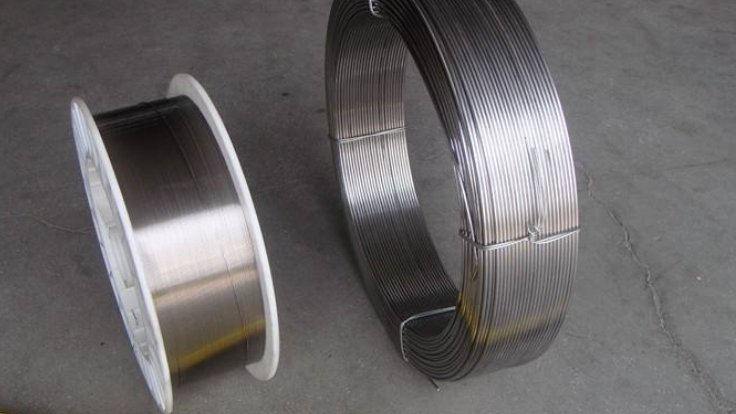
Stainless Welding Wire: ER308L vs ER316L vs ER309L Filler Selection
Quick answer: Match the filler to the base metal: ER308L for welding 304/304L, ER316L for 316/316L, and ER309L for dissimilar joints — stainless to carbon steel, or when the base metal grade is unknown. All three are low-carbon ("L") to prevent weld corrosion. If you remember nothing else: 308 for 304, 316 for 316, 309 for "I don't know" and mixed-metal joints.
Pick the wrong stainless filler and the weld may look perfect — then fail months later from corrosion the base metal would have shrugged off. This guide keeps filler selection simple, explains why the "L" matters, and lists what to check before you buy spools or cut lengths.
The Matching Logic
Stainless fillers are deliberately over-alloyed by one step relative to the base metal, to survive dilution (the weld pool picks up base metal as it fuses). That's why 304 gets 308L — not "304 wire", which doesn't exist as a standard filler. The molybdenum-bearing 316L matches 316 base metal's chloride performance, and 309L's high chromium-nickel buffer absorbs the dilution shock of dissimilar joints.
| Filler | Weld this base metal | Typical jobs |
|---|---|---|
| ER308L | 304 / 304L / 321 | Food equipment, tanks, general fabrication |
| ER316L | 316 / 316L | Chemical, marine, pharma lines |
| ER309L | Unknown grades; stainless-to-carbon-steel | Repair work, cladding, dissimilar joints |
Why the "L" Is Non-Negotiable
The L (low carbon, ≤0.03%) prevents sensitization: at welding temperature, carbon in ordinary grades migrates to grain boundaries and combines with chromium, creating chrome-depleted zones that rust in service. Low-carbon filler keeps those zones from forming in the weld. If a supplier offers you cheaper non-L wire, the savings will be paid back in weld-line rust — especially on anything that sees moisture or chemicals.
MIG, TIG and Saw Forms
The same ER-designated chemistry comes in different product forms:
- MIG wire (GMAW): 0.8–1.2 mm spools, usually with a slight silicon addition (e.g., 308LSi) for wetter puddles and better bead wetting. This is what most fabrication shops run daily.
- TIG rods (GTAW): 1.6–3.2 mm cut lengths for precision root passes and thin sections.
- SAW wire + flux: for heavy plate and long seams.
Our stainless and nickel alloy wire guide covers the wider wire family, including nickel alloys for extreme temperature, and the nickel alloy wire overview explains the Exotics.
Shielding Gas Notes
For MIG on stainless, run 98% Ar / 2% O2 or Ar + 1–2% CO2 mixes — never the 75/25 Ar/CO2 mix used for carbon steel, which adds carbon and can burn molybdenum out of 316L welds. For TIG, pure argon on both torch and backing gas for open-root work; omitting backing gas on stainless root passes causes sugaring (oxidized, weak root).
Buying Checklist
- Match the grade certificate to the standard: ER308L per AWS A5.9 — the certificate should list chemistry heat-by-heat. Our MTR reading guide shows what to check line by line.
- Spool condition: stainless MIG wire is soft — kinked or rust-flecked spools feed badly. Buy sealed spools, store them dry.
- Diameter vs base thickness: 0.8 mm for sheet and thin work, 1.0–1.2 mm general purpose, larger for heavy deposition.
- For repair shops: stock ER309L — it covers the widest range of unknown-base-metal repairs, plus every stainless-to-mild-steel joint.
FAQ
Q: Can I use ER308L on 316 base metal? A: It will weld fine but the weld will have less corrosion resistance than the 316 around it — in chloride service the weld line corrodes first. Use ER316L to match.
Q: When must I use ER309L instead of 308L? A: Two cases: the joint joins stainless to carbon or low-alloy steel (dilution would crack a 308 weld), or you don't know the base grade. 309L's higher alloy content tolerates both.
Q: 308L vs 308LSi — interchangeable? A: For MIG, the Si version feeds and wets better with no downside for most work. For TIG, plain 308L rod is standard. Chemistry of the deposit is essentially identical.
Q: Does filler choice affect high-temperature service? A: Yes — for sustained service above ~400 °C, ask about 308H/316H fillers with controlled carbon for creep strength, or stabilized 321/347 wires. The L grades trade high-temperature strength for weld-corrosion safety.
Q: My welds on 304 rust at the weld line — wrong filler? A: Usually not the wire: it's contamination (carbon-steel brushes, grinding wheels) or missing pickling/passivation after welding. Clean with stainless-only tools and passivate per ASTM A967.
Shanghai Hangbo Alloy Group
🌐 Website: www.hangbo-metal.com
📧 Email: Craliey1382@gmail.com
💬 WhatsApp: +86 19169850074
📞 Tel: +86 19169850074
📍 Address: No. 388 Songhuang Rd, Qingpu District, Shanghai, China
👤 Contact Person: Tiffany Luo