 Hangbo Alloy Group
Thin Stainless Sheet: Protective Film, Export Packing and Realistic Flatness
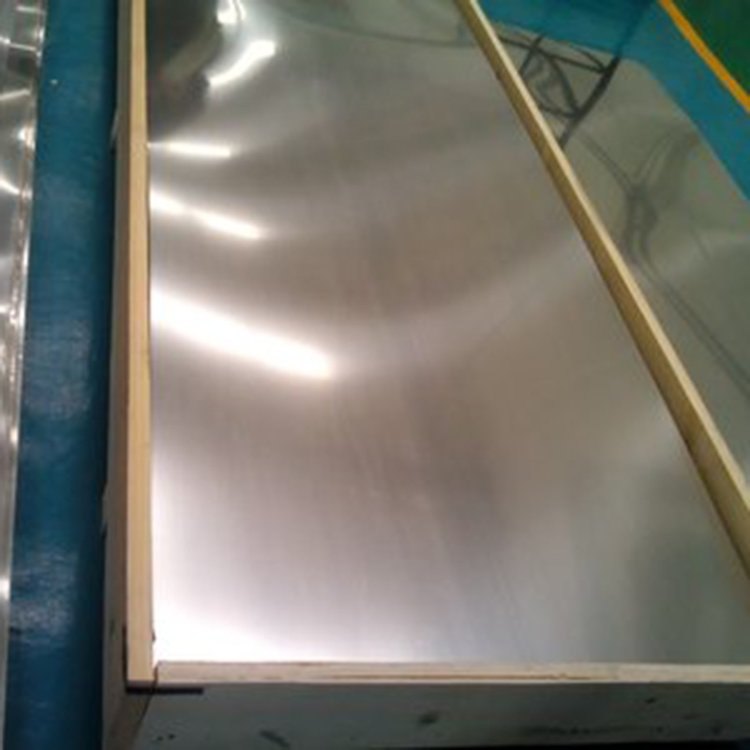
Quick answer: Thin stainless sheet — roughly 0.3–3.0 mm — is the easiest gauge to damage and the hardest to inspect. The three things that decide whether it arrives usable are surface protection (PVC film on one or both sides), interleaving and rigid packing (plywood cases, never loose bundles), and realistic flatness expectations, because thin sheet is always supplied to the mill's flatness class, not dead flat.
What counts as "thin" sheet, and why does it behave differently?
Thin sheet, typically 0.3 mm to 3.0 mm, is produced on cold-rolling mills in coils and either supplied as coil or levelled and cut into sheets. Because the material is only a fraction of a millimetre thick, it has almost no bending stiffness: it picks up handling creases, edge damage and rolling marks far more easily than 6 mm plate. That is why the whole supply chain — mill, service center, exporter, forwarder — has to treat it as a fragile product even though the metal itself is tough.
| Thickness range | Typical supply form | Common end use |
|---|---|---|
| 0.3–0.8 mm | Coil or sheet, film both sides | Shims, deep-drawn parts, filtration |
| 1.0–2.0 mm | Sheet, film one/both sides | Kitchen equipment, panels, cladding |
| 2.5–3.0 mm | Sheet, film usually one side | Tanks tops, machine covers, brackets |
Why does PVC film matter so much on thin sheet?
On thin gauges, surface scratches are the single most common claim reason. A visible scratch on a 10 mm plate can often be ground out and blended; on a 1 mm decorative panel the sheet is frequently scrap. Good practice is to specify:
- Film on the finished side at minimum; on mirror or No. 8 finishes, both sides.
- UV-stable film if the sheets will sit outdoors on a construction site — ordinary film bakes onto the surface in sunlight and becomes nearly impossible to peel.
- Film removal window — most films should be peeled within weeks of delivery; leaving film on for a year in hot storage causes adhesive residue.
What should thin sheet be packed in for export?
The packing standard for thin sheet is a rigid plywood case with the sheets supported on all four edges, not stacked loose in a crate:
- Edge protectors or wooden runners between bundles so nothing slides.
- Interleaved paper or film between bright/anodized-look surfaces for gauges under 1 mm.
- Sheet count per bundle limited so workers can actually lift them without bending the bottom sheets.
- Case, not cradle — thin sheet travels upright or flat in a closed plywood case; open cradles let other cargo press into the stack.
This follows the same logic as the general bar-and-pipe export packing rules, but thin sheet is the product where skipping any of it shows up immediately as a claim.
How flat can thin sheet actually be?
ASTM A480 flatness tolerances are looser for thin gauges because the material cannot resist its own internal stresses. A 1.5 mm sheet ordered "flat" will typically show some wave or edge buckle out of the crate — cutting it into panels releases more stress and can increase waviness, as covered in the sheet flatness guide. If a downstream process (laser cutting, laminating, glass sealing) needs genuinely flat panels, say so at RFQ stage: the answer is usually tension-levelled coil or a post-cut flattening pass, not a stricter mill tolerance on standard sheet.
What should a thin-sheet RFQ include?
- Grade and finish (2B, BA, No. 4, mirror) — finish drives price more than thickness does on thin gauge.
- Thickness with tolerance class, and dimensions with or without protective film.
- Whether sheets must be cut-to-size or can ship in mill/standard sizes.
- Flatness expectation and the downstream process, so the supplier can propose levelling if needed.
- Packing: plywood case with film, UV-stable film if outdoor storage is likely.
FAQ
Q: Can thin stainless sheet be shipped as coil instead of sheets? A: Yes, and it is usually cheaper and better protected. If your process slits or feeds coil directly, ordering coil avoids all the cutting, levelling and sheet-handling costs.
Q: Why did my 1 mm sheets arrive with slight waves even though I ordered "flat"? A: Thin sheet is supplied within the A480 flatness class for its thickness; it is not dead flat by definition. Internal stress also releases when the sheet is cut. Specify tension-levelled material or post-cut flattening if the application needs better.
Q: Is the PVC film the same on both sides? A: Not necessarily. One-side film is standard for 2B and No. 4; mirror and decorative finishes should have film on both sides, which costs slightly more and is worth it.
Q: Does thin sheet need different welding handling? A: Yes — thin gauges warp readily when welded. Heat control and sequencing matter far more than filler choice; see the thin-sheet welding guide.
Shanghai Hangbo Alloy Group
🌐 Website: www.hangbo-metal.com
📧 Email: Craliey1382@gmail.com
💬 WhatsApp: +86 19169850074
📞 Tel: +86 19169850074
📍 Address: No. 388 Songhuang Rd, Qingpu District, Shanghai, China
👤 Contact Person: Tiffany Luo