 Hangbo Alloy Group
Titanium Welding Wire: ERTi-2 vs ERTi-2 ELI and How to Handle It
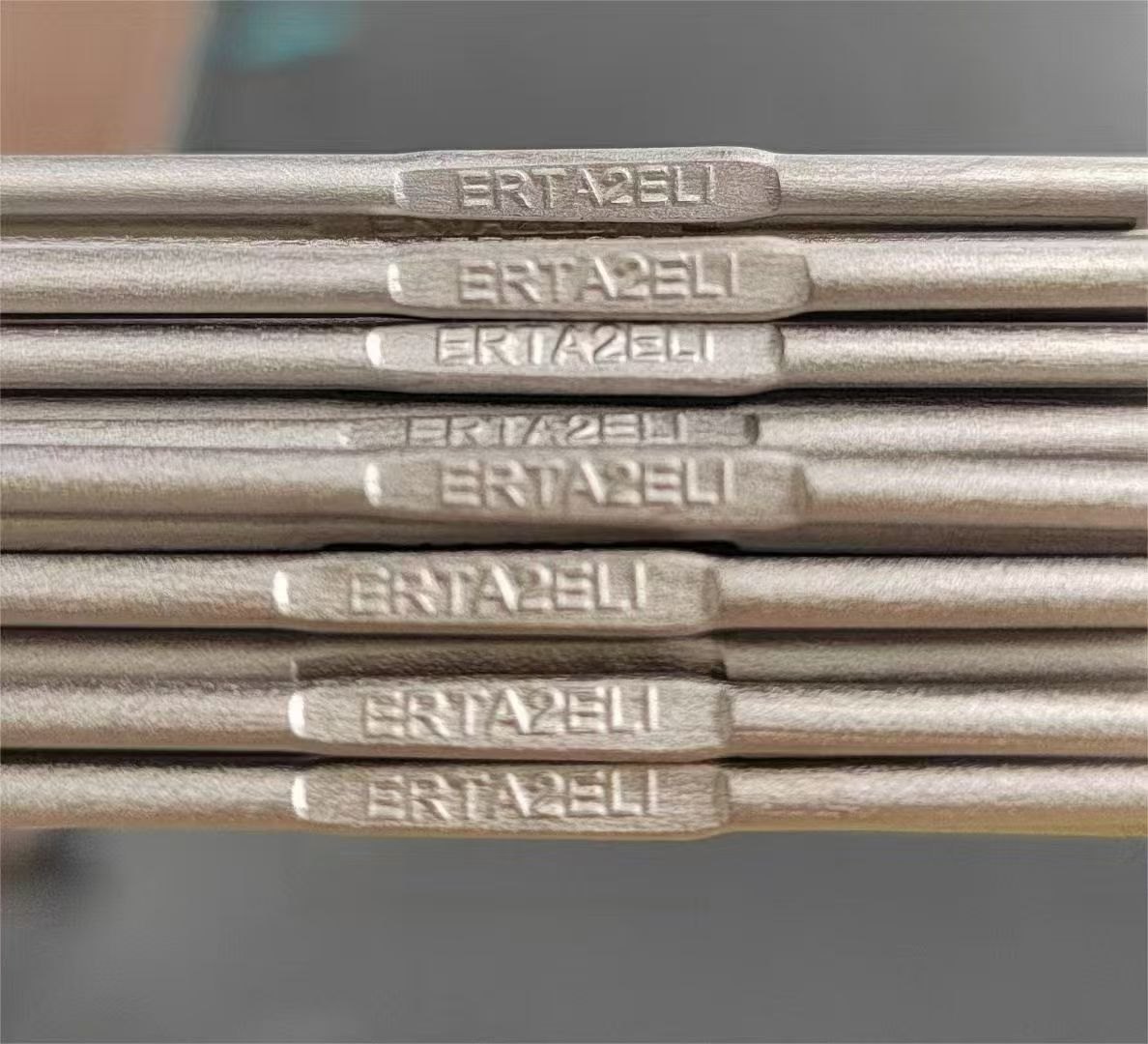
Quick answer: Titanium welding wire comes in graded chemistry — ERTi-2 for general commercial-purity welds and ERTi-2 ELI (Extra Low Interstitial) for cryogenic and high-purity service — and its single most important handling rule is total argon shielding: titanium absorbs oxygen and nitrogen from air above ~400 °C and the weld turns brittle. Match the wire to the base metal, keep the gas pure, and read weld-bead color as your acceptance test.
What do the "ERTi" designations mean?
AWS A5.16 classifies titanium filler metals as ERTi-1 through ERTi-15, where the number follows the base-metal grade. The common ones:
| Filler | Base grade | Use |
|---|---|---|
| ERTi-1 | Gr 1 (softest CP) | Thin, formable welds |
| ERTi-2 | Gr 2 (CP) | The general-purpose filler — most Ti welding |
| ERTi-5 | Gr 5 (Ti-6Al-4V) | Aerospace, high-strength joints |
| ERTi-23 | Gr 23 (Ti-6Al-4V ELI) | Aerospace, low-interstitial |
The "ELI" suffix means Extra Low Interstitial — oxygen, nitrogen, carbon and iron are held to a tighter band. Lower interstitials give better toughness at cryogenic temperature, which is why Gr 23 / ERTi-23 and Gr 2 ELI are specified for subzero and medical work.
ERTi-2 vs ERTi-2 ELI: which one do I need?
For most commercial-purity welding — chemical plant, seawater, general fabrication in Gr 2 or Gr 3 — ERTi-2 is the default and the cost-effective choice. Step to ERTi-2 ELI only when:
- The service temperature is cryogenic (LNG, aerospace, superconducting).
- Toughness margins are tight (medical implants, rotating parts).
- A customer spec explicitly calls for ELI chemistry.
Using ELI where standard will do adds cost for no functional gain; using standard where ELI is specified risks a failed toughness test. The base metal usually dictates the answer.
The one rule that governs titanium welding
Oxygen and nitrogen in the weld are the enemy. Titanium's passive film protects it cold, but above ~400 °C it reacts with air and the heat-affected zone sucks in interstitial elements, embrittling the joint. The practice is therefore:
- Trailing gas shield behind the torch to keep the hot weld cooling in argon.
- Back purge of the root for full-penetration welds.
- Pure argon (or argon-helium mixes for hotter penetration), not CO2 or mixed-gas stainless routines.
- Clean base and filler — degreased, free of oxide; titanium wire is shipped sealed for exactly this reason.
How to read the result without a lab
The weld bead color is the field acceptance test:
- Bright silver / straw — clean, acceptable.
- Blue / purple — light contamination, borderline.
- White / grey / chalky — heavy oxygen/nitrogen pickup, reject and re-weld.
This is a faster, cheaper QA than any coupon for most jobs — and it only works because titanium's reaction is visible.
What should the titanium-wire RFQ include?
- Filler designation: ERTi-2 or ERTi-2 ELI (or the matching grade for Gr 5/23).
- Form and size: straight TIG rods (typically 1.0–3.2 mm × 1000 mm) or MIG spools.
- Quantity, in sealed original packaging — humidity ruins the surface.
- Certificate: chemistry per heat per AWS A5.16, plus traceability to the base-metal melt where code requires it.
- End use — "welding Gr 2 vessel, 40 °C seawater" confirms ERTi-2 and the shielding level to quote.
FAQ
Q: Can I weld titanium with my normal stainless TIG setup? A: The torch and machine are fine, but you must add trailing and back shielding with pure argon and ban steel wire or spatter from the area. Welding titanium with a "standard" open-air stainless procedure produces brittle, cracked joints.
Q: Why is ERTi-2 wire stamped with the grade? A: Because titanium grades look identical and are easy to mix; the stamped ERTi-2 / ERTi-2 ELI marking is the field check before a costly mismatch. PMI on receipt is still wise on high-value jobs.
Q: Does titanium wire rust? A: No — but it does form a contamination film if stored unsealed in a humid shop, which causes porosity. Keep it in original sealed packs and use FIFO.
Q: Is ERTi-2 the same as Grade 2 wire? A: Effectively yes for CP titanium — ERTi-2 is the filler wire form of Grade 2. The "E" prefix (ER) marks it as an electrode/rod for welding.
Shanghai Hangbo Alloy Group
🌐 Website: www.hangbo-metal.com
📧 Email: Craliey1382@gmail.com
💬 WhatsApp: +86 19169850074
📞 Tel: +86 19169850074
📍 Address: No. 388 Songhuang Rd, Qingpu District, Shanghai, China
👤 Contact Person: Tiffany Luo