 Hangbo Alloy Group
303 vs 304 vs 316 vs 17-4 PH: How to Choose Stainless Steel Round Bar
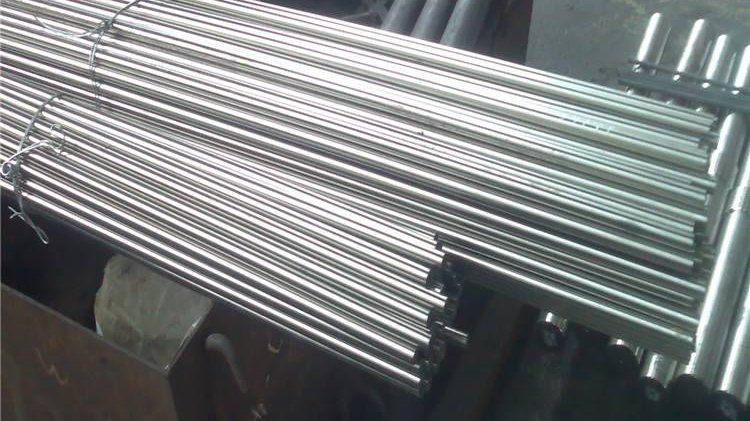
303 vs 304 vs 316 vs 17-4 PH: How to Choose Stainless Steel Round Bar
Quick answer: Choose 304/L as the default general-purpose bar; 316/L when chlorides, salt spray or chemical exposure are present; 303 when parts are machined in volume and corrosion exposure is mild; 17-4 PH when you need two to four times the strength of 304 with usable corrosion resistance after aging. The four grades cover roughly 90% of stainless round bar enquiries, and most selection mistakes come from over- or under-indexing on one of three axes: corrosion environment, machining volume, and strength requirement. Machinability and corrosion resistance pull in opposite directions — the free-machining sulfur addition that makes 303 a pleasure to cut is exactly what undermines its corrosion performance, and no grade wins at everything.
This guide walks through each grade, puts the key numbers side by side, and gives a decision path plus the fabrication notes (welding, heat treatment, finishes) that should feed into a bar specification.
The Four Grades Side by Side
| Property | 303 | 304/L | 316/L | 17-4 PH (H900) |
|---|---|---|---|---|
| UNS | S30300 | S30403 | S31603 | S17400 |
| Metallurgy | Austenitic + S | Austenitic, low C | Austenitic, low C + Mo | Martensitic PH |
| Carbon | ≤ 0.15% | ≤ 0.035% | ≤ 0.035% | ≤ 0.07% |
| Key alloying | S 0.15–0.35% | 18Cr-8Ni | 16Cr-10Ni-2Mo | 17Cr-4Ni-4Cu |
| Tensile (typ. bar) | 520–620 MPa | 515–620 MPa | 515–620 MPa | 1,170–1,310 MPa |
| Yield (typ.) | 240–290 MPa | 205–290 MPa | 205–290 MPa | 1,030–1,170 MPa |
| PREN (pitting index) | ~17–18 | ~18–19 | ~24–25 | ~17 (aged) |
| Machinability rating | 78% (ref. C36000=100) | ~45% | ~40% | ~48% (cond. A) |
| Weldability | Poor–fair | Excellent | Excellent | Good (weld then age) |
| Typical bar standards | ASTM A582 | ASTM A276/A479 | ASTM A276/A479 | ASTM A564 |

303: When Machining Time Is the Budget
303 adds 0.15–0.35% sulfur — sometimes with a selenium assist — which forms soft MnS inclusions that break chips and lubricate the cutting edge. The practical effect is dramatic: a screw-machine part that takes 45 seconds in 303 takes about 80 seconds in 304, with more tool wear.
Specify 303 when:
- Parts are small, complex and produced in volume on automatic lathes (fittings, shafts, bushings, fasteners)
- Service environment is mild: indoor, dry, fresh water at most
- The part is decorative or lightly loaded
Know the trade-offs:
- The MnS inclusions are initiation sites for pitting corrosion — 303 rusts visibly in coastal atmospheres where 304 stays clean.
- Sulfur hurts weldability badly (hot cracking); 303 assemblies are mechanically fastened or silver-brazed, not welded.
- Standards reflect this: 303 appears in A582 (free-machining bar) rather than the general A276/A479 pressure-grade listings, so it is largely excluded from pressure-retaining design.
A middle path exists for parts that need both machining and corrosion: 304 with improved machinability (sometimes sold as "304 Ugima" or 304Plus-style remelted grades) machines noticeably better than conventional 304 without the sulfur penalty — worth pricing when volumes are high but the environment is aggressive.
304/L: The Default That Is Usually Right
304 — 18% chromium, 8% nickel — is the archetype austenitic stainless. The L (low carbon, ≤ 0.035%) version dominates bar supply because it welds without sensitization concerns in most thicknesses.
Specify 304/L when:
- The environment is atmospheric, fresh water, food processing, dairy, or mild chemicals
- The part will be welded
- No chloride concentration worth mentioning is present
- You need good low-temperature toughness (austenitics stay ductile to −196 °C)
Where it struggles: chlorides above roughly 200 mg/L in continuous contact begin pitting 304; coastal outdoor installations show tea-staining; and temperatures sustained at 450–850 °C sensitize non-L grades. 304 also work-hardens rapidly — a factor machinists complain about and fabricators must plan for with sharp tooling and proper feeds.
For most buyers the question is not 304 versus exotic alloys; it is 304 versus 316, and the answer is governed entirely by the chloride question.
316/L: Paying 2–3% Molybdenum for Chloride Insurance
316/L adds 2–3% molybdenum, lifting the pitting resistance equivalent number (PREN = %Cr + 3.3×%Mo + 16×%N) from ~18 to ~24–25. That single metallurgical change is why 316L is the specified grade for:
- Marine and coastal hardware, boat fittings, dock hardware
- Chemical and petrochemical plant piping components
- Pharmaceutical and food plant equipment cleaned with chlorinated agents
- Desalination pre-treatment and brackish water systems
The Mo addition also improves crevice corrosion resistance — the localized attack that happens under gaskets, deposits and biofilm where the bulk chemistry cannot reach. If your part has faying surfaces, O-ring grooves or flange faces exposed to chlorides, the 316 premium is cheap insurance.
Limits to respect: 316L is not a magic alloy. In warm seawater (above ~30 °C) with crevices, even 316L pits; that is duplex 2205 or super austenitic territory. In strong reducing acids it loses to nickel alloys outright. And in machined parts, 316's slightly gummier chips cost a few percent cycle time versus 304.
17-4 PH: Strength Without Stainless-Ness Sacrificed
17-4 PH (S17400) is the outlier in this group: a martensitic precipitation-hardening grade that is solution annealed, machined or formed, then aged (H900, H1025, H1075, H1150) to precipitate copper-rich phases. The result is strength no austenitic bar can approach.
| Condition | Tensile | Yield | Hardness | Charpy at room temp |
|---|---|---|---|---|
| H900 | 1,310 MPa | 1,170 MPa | 40–45 HRC | ~14 J |
| H1025 | 1,170 MPa | 1,070 MPa | 35–39 HRC | ~20 J |
| H1150 | 930 MPa | 725 MPa | 28–32 HRC | ~54 J |
The aging temperature is a strength-toughness dial: H900 for maximum strength (fasteners, pump shafts, aerospace latches), H1150 where toughness and SCC resistance matter more than the last 200 MPa. Intermediate conditions are chosen for most general engineering.
Specify 17-4 when:
- Yield above ~700 MPa is genuinely required with corrosion better than carbon steel
- Parts see combined wear + corrosion (pump shafts, valve stems, hydraulic rods, die holders)
- Tight dimensional stability through hardening matters (aging happens at 480–620 °C, distortion is manageable)
Cautions: 17-4 in the H900 condition has modest fracture toughness and can suffer stress-corrosion cracking in chlorides at high strength levels — offshore specs often mandate H1025 or higher. Embrittlement also develops with prolonged exposure at 370–540 °C, so hot service needs condition review. For nickel-alloy high-temperature fastening applications, our GH4169 vs Inconel 718 equivalents guide covers the step up from 17-4 territory.
Decision Path in Five Questions
- Machined in volume on automatics, mild environment? → 303. Reconsider if the part welds or lives outdoors near the coast.
- Chlorides present (salt spray, brackish water, chemical process)? → 316/L. Above warm-seawater severity, move to duplex or nickel alloys.
- Strength above 500 MPa yield required? → 17-4 PH, choose condition by toughness needs.
- Welded assembly? → Stay with 304/L or 316/L (or weldable 17-4 with re-aging); drop 303.
- None of the above bite? → 304/L. It is the default for good reason.
Bar Conditions, Finishes and Tolerances
Round bar arrives in several conditions, and the condition affects both properties and machining:
- Hot-rolled (black bar): as-rolled oxide surface, cheapest, loosest tolerance (h13-ish or per A276 general). For parts that will be fully machined anyway.
- Peeled/turned: surface layer machined off, clean bright surface, better diameter consistency — the standard for CNC feedstock.
- Ground and polished: tightest tolerance (typically h9/h8/h7 on request), straightness in 0.5–1 mm/m range — for shafts, guide rods, anything running in bearings or seals.
- Cold-drawn: higher yield via work hardening, best surface; mostly for smaller diameters.
When ordering, state: grade + condition + tolerance class + length (random lengths ~3–6 m or fixed), plus test requirements (EN 10204 3.1). For weight and cost estimating per bar, our weight calculation guide for bars, plates and pipes gives the formula and per-grade densities.
If duplex 2205 enters your shortlist for chlorides, note it needs different welding practice and offers roughly double the yield of 316L — see our duplex 2205 bar guide for that branch.
FAQ
Q: Can I substitute 304 for 303 on a drawing that specifies 303? A: Mechanically yes (304 is at least as strong and more corrosion-resistant), but machining cost rises 40–70% on complex parts. For low-volume or non-critical production it is often acceptable; for high-volume automatic work the economics usually force 303 or an improved-machinability 304.
Q: Is 316L always better than 304? A: In chloride corrosion, yes. In everything else they are nearly identical, and 304 is easier to machine and cheaper. Specifying 316L for indoor dry service is wasted budget; specifying 304 for a seawater splash zone is a future warranty claim.
Q: Why does my 17-4 PH part need to be re-aged after welding? A: Welding puts the HAZ through solution-treatment temperatures, dissolving the strengthening precipitates locally. The weldment must be solution treated (1,040 °C) and re-aged in the specified condition to restore uniform properties — otherwise the joint zone is a soft, unpredictable spot in a hardened part.
Q: What is the real corrosion difference between 303 and 304? A: In salt spray testing, 303 shows rust staining within 24–96 hours; 304 typically passes several hundred hours with only light staining. In actual coastal service the difference is visible within months — which is why 303 is rarely specified for outdoor architectural use.
Q: Does bar diameter affect grade choice? A: Indirectly, yes. Large-diameter 17-4 bar has section-size limits for through-hardening (beyond ~150 mm, property gradients develop); very large austenitic bar in corrosive service may show casting segregation if sourced from ingot rather than forged or continuously cast routes — ask about the mill route for heavy sections.
Q: Which grade should I use for food contact? A: 304/L is the standard for most food-contact surfaces; 316/L where salt, brines or aggressive cleaning chemicals are present. Surface finish (Ra ≤ 0.8 µm typical) and crevice-free design matter as much as grade.
Shanghai Hangbo Alloy Group
🌐 Website: www.hangbo-metal.com
📧 Email: Craliey1382@gmail.com
💬 WhatsApp: +86 19169850074
📞 Tel: +86 19169850074
📍 Address: No. 388 Songhuang Rd, Qingpu District, Shanghai, China
👤 Contact Person: Tiffany Luo