 Hangbo Alloy Group
304L vs 316L Plate for Tanks and Pressure Vessels: Which One and Why the L Matters
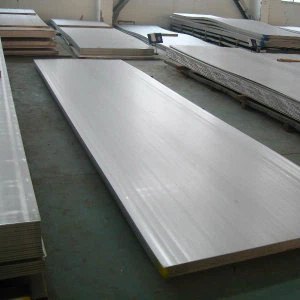
Quick answer: For welded tanks and pressure vessels, 316L is the safer default when chlorides, acids or coastal air are present; 304L wins on cost for dry, neutral service. The "L" matters as much as the grade: low carbon (≤0.03 %) prevents sensitization at weld seams, which is the number-one failure mode in welded plate equipment.
304L vs 316L: The One-Line Difference
The working difference is 2–3 % molybdenum in 316L, which lifts pitting resistance in chloride environments from marginal to dependable. Chromium and nickel are nearly identical between the two grades:
| Property | 304L (S30403) | 316L (S31603) |
|---|---|---|
| Cr / Ni | 18 / 8 % | 16 / 10 % |
| Mo | — | 2.0–3.0 % |
| PREN (pitting index) | ~18–20 | ~24–26 |
| C max | 0.030 % | 0.030 % |
| Typical yield strength | ≥ 170 MPa | ≥ 170 MPa (slightly higher) |
| Relative plate cost | 1.0 | ~1.2–1.4 |
Which Service Conditions Require 316L Plate?
Choose 316L when any of these apply:
- Chloride-bearing water or process fluids above ~200 ppm (brackish, seawater cooling, coastal site spray)
- Organic acids (acetic, formic) or dilute mineral acids
- Tank exteriors within a few kilometers of the ocean
- Pharmaceutical, food-brine or chlorinated cleaning (CIP with hypochlorite) service
Stay with 304L when the tank holds potable water, oils, solvents or dry product in a temperate inland site — 316L adds cost without adding life there. For a broader grade-by-grade view, see 304 vs 316L vs 321.
Why the "L" Matters More in Plate Than in Pipe
Plate equipment is heavily welded: shell seams, nozzles, stiffeners, supports. Each weld pass runs the heat-affected zone through the 450–850 °C sensitization band, where carbon forms chromium carbides and the zone rusts years later. Standard-carbon 304/316 can sensitize; the L grades (C ≤ 0.03 %) are immune for normal welding procedures. If you order plate for a welded vessel, write the grade with the L — "316" flat bar and "316L" plate are not interchangeable in a weldment.
What Should the RFQ for Vessel Plate Include?
- Grade with L-designation and UNS number (e.g. 316L / S31603)
- Standard: ASTM A240 (plate/sheet for pressure vessels) — ASME SA240 if it's code work
- Thickness minimum or nominal with tolerance (see ASTM A480 thickness tolerances)
- Heat treatment condition: annealed; impact-tested plates if design temperature demands
- Specials: PMI on each plate, UT per plate, or Charpy impact testing — state it, it doesn't come by default
FAQ
Q: Can I use 316 plate (not 316L) if the welder uses low heat input? A: Risky. Weld procedure may keep sensitization marginal in thin sections, but plate vessels multiply welds and restraints. The L grade removes the variable entirely for pennies on the dollar.
Q: Is duplex 2205 a better tank material than 316L? A: For hot chloride brines or higher strength needs, yes — duplex 2205 offers roughly double the yield and better pitting resistance. It costs more, needs correct welding practice, and is overkill for ambient potable water.
Q: Does 316L need post-weld pickling? A: Yes — weld oxide and heat tint remove the passive layer locally. Pickling paste or pickling+passivating after welding restores corrosion resistance at the seam; skipping it is a common cause of "rusty stainless" complaints.
Shanghai Hangbo Alloy Group
🌐 Website: www.hangbo-metal.com
📧 Email: Craliey1382@gmail.com
💬 WhatsApp: +86 19169850074
📞 Tel: +86 19169850074
📍 Address: No. 388 Songhuang Rd, Qingpu District, Shanghai, China
👤 Contact Person: Tiffany Luo