 Hangbo Alloy Group
Aluminum Round Bar: 6061 vs 6063 vs 7075 Selection Guide
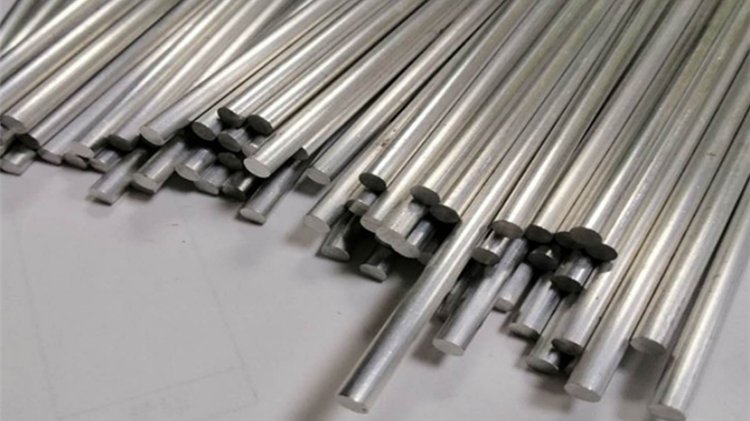
Aluminum Round Bar: 6061 vs 6063 vs 7075 Selection Guide
Quick answer: 6061 is the default structural choice — good strength, weldable, corrosion-resistant and cheap. 6063 is the extrusion alloy: prettier surface and easier pressing, but ~30% weaker, so use it for architectural profiles, not load-bearing shafts. 7075 is the strength champion (nearly double 6061) but is expensive, not weldable and less corrosion-resistant — aerospace and high-stress tooling only. If you're unsure, quote 6061-T6 and only step up or down for a specific reason.
Aluminum round bar looks the same on the rack regardless of alloy, but the differences decide whether your shaft survives, your weld holds, and your budget holds. This guide puts the three most common bar alloys side by side in practical terms.
The Three Alloys at a Glance
| Property | 6061-T6 | 6063-T6 | 7075-T6 |
|---|---|---|---|
| Typical tensile | 310 MPa | 215 MPa | 570 MPa |
| Weldability | Good (4043/5356 filler) | Good | Not recommended |
| Corrosion resistance | Very good | Excellent | Fair (prone to SCC) |
| Machinability | Good | Fair | Excellent |
| Relative price | 1.0× | ~0.9× | ~2.5–3× |
6061-T6: The Workhorse
6061 is the most specified aluminum bar in the world, and for good reason: moderate strength, excellent corrosion behavior in most atmospheres, real weldability, and availability in every size range. It heat-treats to useful strength (T6: ~310 MPa tensile, ~275 MPa yield), machines cleanly, and anodizes well. Shafts, pins, brackets, structural tubes, machine bases — when nobody has specified otherwise, 6061-T6 is the sane default.
One caveat: welding drops the HAZ strength to roughly 165 MPa unless you post-weld heat treat. Design welded 6061 around the annealed-zone strength, or bolt it instead. Our aluminum vs stainless steel decision guide covers when aluminum is the right base material at all.
6063-T6: The Architectural Alloy
6063 extrudes beautifully — smoother surface, sharper profile detail, thinner walls, better anodizing response. That's why window frames, handrails, trim and heat sinks are 6063. But its strength is about two-thirds of 6061's, so it is the wrong alloy for shafts, bolts, or anything carrying concentrated load. Choosing 6063 for structural duty is one of the most common (and expensive) alloy mistakes in fabrication shops.
7075-T6: When Strength Is the Whole Point
7075 (aluminum + zinc) delivers nearly double 6061's tensile strength — 570 MPa, which overlaps some stainless steels. Aerospace structures, high-end tooling plates, tie rods and critical machined parts justify it. The trade-offs are real: it is not fusion-weldable in practice (welds crack and strength collapses), it is more susceptible to stress-corrosion cracking in the short-transverse direction, and it costs several times more than 6061. Machine it, don't weld it.
Tempers: What T6, T651 and T6510 Actually Mean
- T6: solution heat treated and artificially aged — the standard strength condition.
- T651 (plate/bar): stress-relieved by stretching after quench, so machined parts stay flatter and don't warp when you skin mill them.
- For precision-machined parts from bar, ask for T651 where the mill offers it — it costs little and saves re-machining warped parts.
Buying Checklist
- State alloy, temper AND standard (e.g., 6061-T6 per ASTM B221). "Aluminum round bar" alone invites the cheapest substitute.
- Check straightness and diameter tolerance — bar for CNC turning usually wants h9/h10 diameter tolerance; cheap bar can wander.
- Ask for mill test certificates with each heat — our MTR reading guide shows what to verify.
- Weight and cost math: aluminum is one-third the density of steel, so per-metre cost comparisons vs steel bar need the right density — our weight calculation guide covers the numbers.
FAQ
Q: Can I weld 7075 bar? A: Practically, no — fusion welding causes hot cracking and destroys the heat-affected zone. Use mechanical fastening, brazing for some joints, or redesign in 6061 if welding is unavoidable.
Q: Which alloy for marine environment? A: 6063 and 6061 both perform well; 7075 does not — it pits and suffers stress corrosion. For continuous seawater contact, consider copper-nickel or super duplex stainless instead (see our seawater alloy comparison).
Q: 6061-T6 vs 6061-T651 — does it matter for my machined parts? A: If you remove material asymmetrically, yes. T651's stress relief means the bar won't bow after you machine one side. For simple drilled-and-tapped parts, T6 is fine.
Q: Why is my supplier's 6063 cheaper than 6061? A: 6063 extrudes faster and is produced in higher volume for architectural markets — that's the discount. The strength penalty is real; don't let price alone pick the alloy.
Q: Is anodizing necessary for outdoor 6061 bar? A: Not strictly — 6061's oxide film is robust. But anodizing improves abrasion resistance, locks in appearance, and prevents the dull grey oxidation that bare aluminum develops. For visible parts, anodize; for hidden structural parts, skip it.
Shanghai Hangbo Alloy Group
🌐 Website: www.hangbo-metal.com
📧 Email: Craliey1382@gmail.com
💬 WhatsApp: +86 19169850074
📞 Tel: +86 19169850074
📍 Address: No. 388 Songhuang Rd, Qingpu District, Shanghai, China
👤 Contact Person: Tiffany Luo