 Hangbo Alloy Group
Seamless vs Welded Stainless Steel and Nickel Alloy Pipe: How to Choose
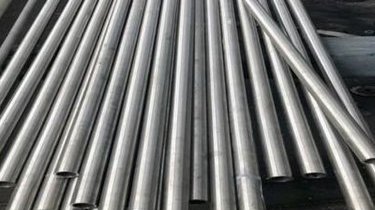
Seamless vs Welded Stainless Steel and Nickel Alloy Pipe: How to Choose
Quick answer: Choose seamless pipe for high pressure, high temperature, thick walls, and critical services where the long seam is a risk you don't want — it is the default for pressure equipment codes above certain limits and for small-bore, high-pressure lines. Choose welded (ERW/laser/SAW) pipe when you need larger diameters, tighter wall uniformity, better surface finish, shorter lead times and meaningfully lower cost — modern welded pipe from a reputable mill, properly tested, serves in the vast majority of low-to-moderate pressure applications without compromise. The choice is not about which is "better" in the abstract; it is about which risk profile fits your service, and what your applicable code allows.
Both routes start from the same melted heat — the difference is entirely in how a flat billet or strip becomes a tube, and that difference shapes the price, the dimensions and the failure modes. Here is how each is made, what each is good at, and how to decide between them with confidence.
How Each Is Made — and Why It Matters
Seamless pipe starts as a solid round billet. The billet is heated to ~1,200 °C, pierced by a rotary piercer (the Mannesmann process) that opens a cavity through the center, then rolled and elongated over a mandrel to reach the finished diameter and wall. The result is a tube with no seam because there never was a seam — the metal is continuous wrought material all the way around.
Welded pipe starts as strip or plate. The strip is roll-formed into a round (or square) profile and the longitudinal joint is closed by welding — ERW (electric resistance welding, no filler) for smaller diameters, plasma/TIG or laser for stainless and nickel alloys, and submerged-arc (SAW) for large diameters. The weld zone is the one place where the material's history differs from the parent strip, which is why standards subject it to heat treatment, non-destructive testing and, in critical specs, destructive testing of the weld.

The Comparison That Actually Drives Decisions
| Aspect | Seamless | Welded (ERW/laser) |
|---|---|---|
| Wall uniformity | ±12.5% typical tolerance | Much tighter (strip gauge) |
| Max practical size | Limited by piercer (OD ≤ ~500 mm common) | Very large OD available |
| Cost | Higher | 20–40% lower typical |
| Pressure integrity | No seam, code-friendly | Depends on weld quality & testing |
| Surface/ID finish | Variable | Better, cleaner ID |
Wall uniformity deserves a second look because it quietly changes engineering math. A seamless tube whose wall varies ±12.5% must be designed on the minimum wall — so the designer effectively buys heavier average material. A welded tube made from precision strip has nearly uniform wall, so the design wall and the real wall agree. On long straight runs, that difference can offset part of the price gap by itself.
When Seamless Is the Right Call
- Code-driven pressure service. ASME and similar codes allow welded pipe freely in most services, but some high-pressure, high-temperature or lethal-service applications either restrict seam welded construction or demand extra testing (100% radiography, seam joint factors below 1.0 in older practice). When in doubt, the line specification decides — read it before quoting.
- Small bore, thick wall. Below NPS 2 with heavy schedules, welded production gets awkward and seamless is both better and often cheaper — the market reality inverts at small sizes.
- High temperature creep service and rotating/pressurized equipment where any weld defect probability is unwelcome.
- Heavy wall for machining stock: thick-wall tube used to machine fittings, and hollow bar for rings and bushings, is typically seamless so the machined part has uniform wrought structure (see also our cast vs forged component guide).
When Welded Wins
- Large diameters. Above roughly 500 mm OD, seamless production ends and welded (or spiral) construction is the only option — and for structural, ducting, water and many process lines, welded is the natural choice anyway.
- Thin-wall and precise dimensions. Heat-exchanger tube, instrumentation lines, architectural tube: welded tube has straighter walls, cleaner ID, and consistent ovality.
- Cost-sensitive volume lines. For the same pressure class where the code permits, welded pipe routinely lands 20–40% cheaper, with shorter lead times because strip is always in production while piercer schedules are not.
- Duplex and high-alloy grades in thin walls: welded tube from strip avoids the heavy hot-working that can disturb duplex phase balance in small lots.
The quality lever for welded pipe is the mill's testing, not the process itself: specify 100% eddy-current or ultrasonic testing of the seam, hydrostatic test, and (for critical lines) weld destructives per lot. A properly tested welded tube from a serious mill is a dependable component; an untested one is a gamble — the same statement, honestly, applies to seamless from a second-tier source.
Nickel Alloy Pipes: A Special Note
In nickel alloys (Inconel 625, Hastelloy C-276, Monel 400), the welded-vs-seamless decision leans seamless more often than in stainless, for two reasons: these alloys serve in the most aggressive media where any weld-zone chemistry change is scrutinized, and their price per kilo makes the pipe's share of total cost smaller. That said, welded nickel alloy pipe from strip with matching-weld qualification is fully accepted in many chemical plants — the decision belongs to your corrosion engineer and the line spec, not to habit. For the alloys' selection logic in seawater and acid service, see our seawater alloy comparison.
The Certificate Tells You What You Actually Got
Whatever route you buy, the mill test certificate distinguishes the product precisely: seamless is certified under ASTM A312 (stainless) / B161–B163, B619, B622 (nickel alloys); welded under the same standards with a "W" suffix in the type designation (e.g., A312 TP316/316L-W). If a certificate is silent on the type, ask — mixing W and S in one line changes inspection planning. Our guide to reading mill test certificates walks through the fields, and our pipe and tube dimensions guide covers how nominal pipe size and schedule map to real dimensions.
FAQ
Q: Is welded pipe allowed in pressure piping? A: Yes, in most ASME B31.3 process services, provided the pipe is made to the relevant standard and the joint quality factor for the seam is applied. Certain services (some high-pressure, lethal, or severe cyclic cases) restrict it — check the line class.
Q: Why is small-size seamless sometimes cheaper than welded? A: At small bores and heavy walls, welded production runs into tooling and handling limits while seamless mills run those sizes natively — market supply then favors seamless.
Q: Can I see the weld on a welded tube? A: On ERW/laser tube the seam is usually invisible after full heat treatment and pickling, though it can be found by etching. That's why NDE records and certificates, not eyeballs, are the assurance.
Q: Does seamless pipe have no defects at all? A: No — piercing can create internal laminations or off-center bores; that's why pressure-grade seamless carries ultrasonic/hydro testing requirements. "Seamless" removes the seam risk, not the need for inspection.
Q: Which is better for bending into coils or u-tubes? A: Both bend well in annealed condition; welded tube must be bent with the seam positioned neutrally or verified by the tube supplier for bending. Heat-exchanger u-tubes exist in both routes.
Q: How do I get consistent wall for machining hollow bar stock? A: Specify seamless hollow bar with tight wall tolerance and UT, and buy slightly oversize to machine clean — the cast-vs-forged guide covers the component logic.
Shanghai Hangbo Alloy Group
🌐 Website: www.hangbo-metal.com
📧 Email: Craliey1382@gmail.com
💬 WhatsApp: +86 19169850074
📞 Tel: +86 19169850074
📍 Address: No. 388 Songhuang Rd, Qingpu District, Shanghai, China
👤 Contact Person: Tiffany Luo