 Hangbo Alloy Group
Stainless Steel Coil and Strip: Thickness, Temper, Edge and Finish Guide
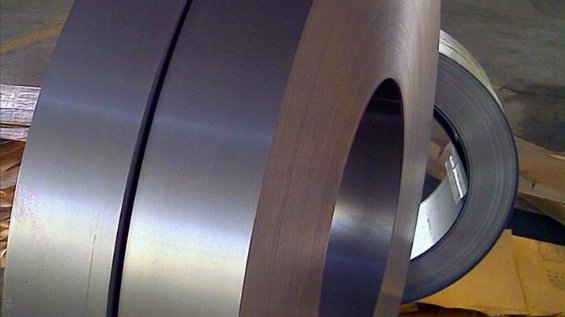
Stainless Steel Coil and Strip: Thickness, Temper, Edge and Finish Guide
Quick answer: When specifying stainless steel coil or strip, lock down five parameters: grade (304, 316L, 301, 430...), thickness and tolerance class (e.g. 0.8 mm ± 0.05 or class B per ASTM A480), temper (annealed, 1/4-hard through full-hard for 301-type), edge condition (mill edge, slit edge, deburred/dressed edge), and surface finish (2B, 2D, BA, or polished). Strip is generally defined as cold-rolled product ≤ 600 mm wide (some standards say 610 mm), and coil is strip or sheet supplied in coiled form. Most quality disputes trace back to one of these five parameters being left implicit in the purchase order — especially thickness tolerance class and temper, which change both price and formability dramatically.
Coil and strip are the workhorses behind stamped parts, rolled tube, fastener strip, spring components, cladding, kitchen equipment and heat exchanger fins. Because the product is thin and high-value per tonne, getting the specification right matters more than with plate — a wrong temper or finish is not recoverable after forming. This guide explains each parameter, the standards behind them, and the checklist to use on your next RFQ.
Coil vs Strip vs Foil: The Vocabulary
Terminology varies slightly between standards, but the practical picture:
| Product | Thickness | Width | Typical supply |
|---|---|---|---|
| Hot-rolled coil (No. 1) | 2–8 mm | 1,000–2,000 mm | Industrial, to be pickled or used as-is |
| Cold-rolled coil (2B/2D) | 0.3–6 mm | 1,000–1,525 mm | Forming, general fabrication |
| Strip | 0.05–3 mm | ≤ 600 mm | Stamping, rolled tube, springs |
| Foil | ≤ 0.2 mm | ≤ 600 mm | Shielding, flexible elements |
Width drives everything downstream: mills produce "mill-edge" coil at standard widths (1,219 mm and 1,250 mm dominate), and service centers slit master coils into your strip widths. That slitting operation is where edge condition is set.
Thickness Tolerance: The Parameter Buyers Forget
ASTM A480 and EN 10051/10088-2 define tolerance classes for cold-rolled thickness. Two "0.8 mm" coils from different suppliers can differ by ±0.08 mm unless the class is specified — and for a progressive die that was set up on one supplier's material, that difference is an instant tooling problem.
- ASTM A480 defines tolerance by thickness range and width, with tighter limits on request (often called "quarter tolerance" or "half standard tolerance").
- EN 10088-2 defines classes A, B, C, D for cold-rolled strip, each specifying a fraction of nominal thickness as the negative tolerance (e.g., class B allows −8% of nominal, class C −5%).
- Springs and rolled tube normally need class C or better; deep-drawing stock often prefers a slightly negative-centered tolerance plus good temper.
Practical rule: state nominal thickness + tolerance class + measuring basis (centerline measurement). "0.8 mm class C per EN 10204 3.1" tells your supplier everything and prevents the classic dispute where a coil averages 0.74 mm but is "within standard tolerance."
Temper: Annealed to Full-Hard
For austenitic grades (especially 301 and 304), cold reduction is used deliberately to raise strength. The temper names map to the amount of cold work:
| Temper (ASTM A666) | Cold reduction (301 typical) | Yield (301, typ.) | Elongation | Use |
|---|---|---|---|---|
| Annealed | 0% | ~205–240 MPa | 55–60% | Deep drawing, spinning |
| 1/16 hard | ~6% | ~310 MPa | ~45% | Light forming |
| 1/4 hard | ~15% | ~515 MPa | ~25% | Structural formed parts |
| 1/2 hard | ~30% | ~760 MPa | ~12% | Springs, clips |
| 3/4 hard | ~40% | ~930 MPa | ~7% | Flat springs |
| Full hard | ~50% | ~1,030 MPa | ~3% | Spring strip, blades |
Three consequences worth knowing:
- Formability trades directly against strength. A full-hard 301 strip can be bent only a few degrees at a generous radius before cracking; annealed strip draws deeply. If your stamping bends more than 90°, you probably need annealed or 1/4-hard, not half-hard.
- Springback grows with temper. Higher-strength strip springs back more after forming — die angles must compensate, and switching temper on an existing die without engineering review causes dimensional drift.
- Temper is not heat-treatable away. Cold-worked temper is destroyed by any welding or brazing that anneals the local zone. Spring parts that get welded lose temper at the joint by design — plan around it (see our stainless and nickel alloy wire guide for the same physics in wire form).

Edge Condition: Mill, Slit, Dressed
When a master coil is slit to strip width, the cut edge has character:
- Mill edge: as-produced by the hot/cold mill — slightly rounded, natural. Available when your width matches a standard mill width.
- Slit edge: cut by rotary knives. Clean but carries a slight burr and a work-hardened rim. Standard for most stamping strip.
- Dressed/deburred edge: slit edge mechanically deburred. Required for parts where the edge contacts seals, or where burr-void corrosion in chloride service is a concern (a burred edge is a crevice).
- Edge for rolled tube: strip destined for tube mills usually specifies a deburred or squared edge — burrs cause weld defects on HF/TIG tube lines.
If your application is stamped gaskets or shims in chloride environments, specify deburred edges and consider passing the blank edges through electrolytic polishing — the edge is where corrosion starts.
Surface Finish: What the Numbers Mean
| Finish | How made | Appearance | Typical use |
|---|---|---|---|
| No. 1 / 1D | Hot rolled + annealed + pickled | Dull, scaled-free gray | Industrial, re-rolled |
| 2D | Cold rolled + annealed + pickled | Uniform matte | Deep draw, glass-to-metal |
| 2B | 2D + light skin pass | Smooth gray-reflective | The general-purpose default |
| BA (bright annealed) | Cold rolled + annealed in controlled atmosphere | Mirror-like, no polish lines | sanitary, decorative, reflectors |
| 8K / mirror | Mechanical polishing | True mirror | Architecture, elevator trim |
| No. 4 / brushed | Abrasive belt 150–180 grit | Directional satin | Kitchen, appliances |
Notes that save money and grief:
- 2B is the workhorse. It machines, stamps, welds and cleans predictably. Unless the drawing says otherwise, assume 2B.
- BA is not polished — it is annealed bright. No directional grain, which matters for sanitary surface cleanability and for appearance consistency between batches.
- Finishes behave differently after forming. Stretched 2B regions (e.g., domed parts) show orange-peel; deep-drawn 2B may need re-pickling to blend. Polished finishes cannot survive deep drawing without visible grain distortion.
- Roughness targets: sanitary specs often demand Ra ≤ 0.8 µm; specify it as a number, not just "2B", when cleanability is regulated.
Traceability and Packing: Why the Labels in the Photo Matter
Every master coil travels with a label set (and a linked EN 10204 3.1 certificate) carrying: grade, heat/slab number, size, standard, tolerance class, finish, and net/gross weight. When strip is slit, good service centers transfer the heat number to every child coil label — this chain is what lets a stamped-part maker trace a failed spring back to its melting heat.
Packing details worth specifying: eye-to-sky vs eye-to-wall orientation, oiled vs dry (VCI paper), wooden skid type for export, and coil inner-diameter (standard 508/610 mm). Thin high-carbon or full-hard strip needs careful banding tension — crushed edges on arrival are the classic last-mile damage.
The RFQ Checklist
Copy this into your enquiries and you will eliminate 90% of coil/strip quality disputes:
- Grade (e.g., 304/L, 316/L, 301, 430) + standard (ASTM A240/A666 or EN 10088-2)
- Thickness nominal + tolerance class + width (or slit width list) + edge condition
- Temper (annealed / 1/4H / 1/2H / full-hard) with property minimums if springs are involved
- Surface finish (2B, BA, No.4, Ra number if relevant)
- Coil ID, max outer diameter, weight per coil, orientation
- Testing: EN 10204 3.1 minimum; add IGC test, hardness per temper, or grain-size for drawing grades
- Special: VCI packing, oiled, laser-marking on child coils,第三方 inspection
For converting strip weight to order tonnage, our weight calculation guide covers coil math explicitly: strip weight = width × thickness × length × density, with 304-family density taken as 7.93 g/cm³ for quick work.
FAQ
Q: What is the minimum thickness available in stainless strip? A: Cold-rolled strip goes down to about 0.05 mm from major mills, and precision-rolled foil to 0.02–0.03 mm from specialty rolling plants. Below roughly 0.1 mm, expect minimum order quantities to rise and width capability to narrow.
Q: Can I order full-hard 316 strip like 301? A: Not practically — 316 work-hardens more slowly than 301, so "full-hard 316" needs very heavy reduction and is rarely offered; high-strength 316 usually tops out around 1/2-hard equivalents. If you need high strength plus corrosion in strip, look at 301 with coating, duplex strip, or reconsider the design around 17-7 PH.
Q: Why did my stamped part crack on the first bend even though the strip is "annealed"? A: Check three things: the actual temper certificate (was it really annealed or 1/16-hard?), bend radius versus thickness (austenitics want inner radius ≥ 1× thickness in annealed temper), and rolling direction — bending across the rolling direction tolerates tighter radii than bending along it. Deep draws want the blank oriented so critical bends run across direction.
Q: What is the difference between 2B and BA in corrosion terms? A: Chemically identical after proper annealing — both are fully pickled/passivated or bright-annealed. The difference is surface topology: BA's smooth glassy surface collects fewer deposits and cleans faster, which is why sanitary equipment upgrades to BA even though 2B would resist corrosion equally.
Q: How much tolerance should I allow on slit width? A: Standard slitting holds ±0.15–0.25 mm on narrow strip; precision slitting lines quote ±0.05–0.10 mm. Tube mills feeding TIG lines usually want ±0.05 mm or better, plus deburring — confirm the line's capability before committing.
Q: Is oiled packing a problem for later laser cutting? A: Mill oil is fine for laser and even helpful against storage staining, but tell your cutting house — oil fumes and spatter behavior change, and some shops pre-wipe. For long storage in humid climates, oiled + VCI is safer than dry packing.
Shanghai Hangbo Alloy Group
🌐 Website: www.hangbo-metal.com
📧 Email: Craliey1382@gmail.com
💬 WhatsApp: +86 19169850074
📞 Tel: +86 19169850074
📍 Address: No. 388 Songhuang Rd, Qingpu District, Shanghai, China
👤 Contact Person: Tiffany Luo