 Hangbo Alloy Group
Super Duplex 2507 vs Duplex 2205: PREN, Chloride Limits and When the Step Up Pays
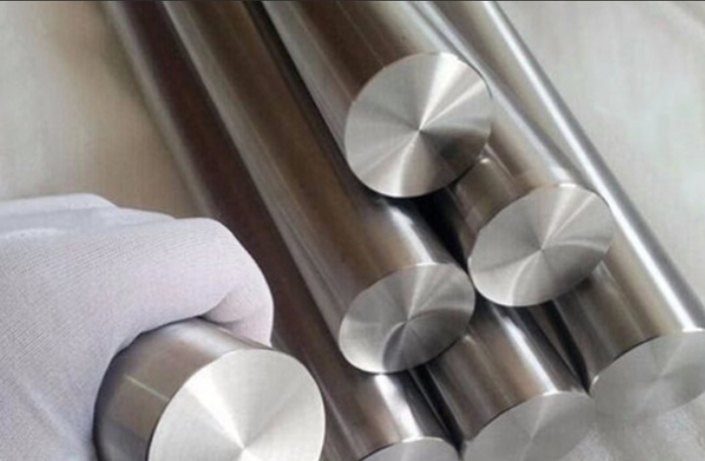
Quick answer: Step up from duplex 2205 to super duplex 2507 when chlorides get hot or aggressive: seawater, brine concentration, or service above ~40 °C where 2205's pitting margin disappears. 2507 carries roughly 3.5 % more chromium, 3 % more molybdenum, more nitrogen and added copper — pushing PREN from ~34 to over 40, which is the industry's line between "duplex" and "super duplex".
2205 vs 2507: The Numbers Side by Side
| Property | Duplex 2205 (S32205/S31803) | Super Duplex 2507 (S32750) |
|---|---|---|
| Cr / Ni / Mo | 22 / 5 / 3 % | 25 / 7 / 3.5–4 % |
| Cu | — | 0.5–1.0 % |
| PREN | ~33–35 | ~40–43 |
| Yield strength (min) | ≥ 450 MPa | ≥ 550 MPa |
| Max recommended chloride temp | ~40–60 °C service | Seawater ambient, brines hotter |
| Relative cost (bar) | 1.0 | ~1.5–1.8 |
Both are ferritic-austenitic, so both carry roughly double the yield of 316L — that lets you slim down walls and save weight, which offsets some of the alloy premium. The full 2205 story is in our duplex 2205 bar guide.
When Does 2205 Stop Being Enough?
- Seawater and splash-zone equipment: 2205 handles brackish and cooling water marginally; direct seawater with crevices wants 2507 — the seawater alloy ranking is in Monel 400 vs Inconel 625 vs Hastelloy C276
- Hot concentrated brines: evaporators, brine heaters, salt processing above ~60 °C
- Acidic chlorides: pickling plant, flue gas scrubbers with acidic condensate
- Spec compliance: NORSOK and many offshore specs effectively demand 25 Cr super duplex for particular services
Stay with 2205 for structural and general corrosion work below 40 °C — 2507's premium buys nothing there, and 2205 is easier to form and weld.
What Welding and QA Differences Should I Plan For?
Super duplex is less forgiving at the weld: phase balance (50/50 austenite/ferrite) needs controlled heat input and often a nitrogen-bearing shielding gas. Ask for ferrite count and corrosion test (e.g. ASTM G48 Method A) on production welds if the spec is critical. For forged or rolled 2507 bar, verify solution annealing at ~1,100 °C and water quench on the MTR — see how to read an MTR. Buying notes on conditions and verification mirror the 17-4 PH condition guide logic: state the condition, verify it on paper and on the part.
What Belongs in the RFQ?
- Grade with UNS (S32750) and the product standard (A479 bar, A790 pipe, A240 plate)
- Service temperature and chloride medium — so the supplier can flag marginal choices
- Corrosion test requirement: G48 Method A, ferrite count range 40–60 %
- UT / PMI scope for pressure-boundary items
- Size and quantity — 2507 runs in fewer mills, so lead time is the binding constraint more often than price
FAQ
Q: Is 2507 harder to machine than 2205? A: Slightly — higher strength and nitrogen make it gummier at low speeds; rigid set-ups and sharp positive tooling handle it fine. Machining cost difference is second-order next to the material premium.
Q: Can I substitute lean duplex 2304 for 2205 to save cost? A: Only where corrosion duty is mild — 2304 sits below 2205 in PREN. For the chloride-limited zone between 316L and 2205, see the 304/316L/321 comparison.
Q: Does 2507 have the 250–300 °C embrittlement limit too? A: Both duplexes lose toughness after long exposure around 250–350 °C (475 °C embrittlement family). Design limits: ~315 °C for 2205, ~250–300 °C for 2507 in pressure applications.
Shanghai Hangbo Alloy Group
🌐 Website: www.hangbo-metal.com
📧 Email: Craliey1382@gmail.com
💬 WhatsApp: +86 19169850074
📞 Tel: +86 19169850074
📍 Address: No. 388 Songhuang Rd, Qingpu District, Shanghai, China
👤 Contact Person: Tiffany Luo