 Hangbo Alloy Group
17-4 PH Round Bar: H900 vs H1025 vs H1150 Conditions and Buying Notes
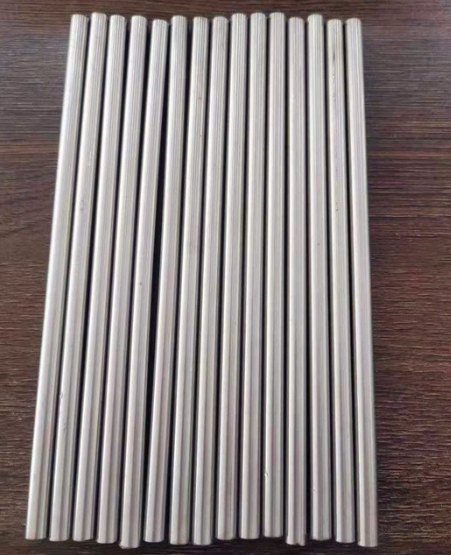
17-4 PH Round Bar: H900 vs H1025 Conditions and Buying Notes
Quick answer: 17-4 PH (UNS S17400, W.Nr 1.4542) bar is bought per ASTM A564 / AMS 5643, and the letters after the grade — H900, H1025, H1075, H1150 — are the aging temperature in °F, which sets the strength-toughness balance. H900 is the strongest (typ. 1310 MPa UTS); H1150 trades strength for toughness and better corrosion performance. State the condition explicitly, because unaged "Condition A" 17-4 is a different (and much softer) product than what most drawings expect.
17-4 PH is the default precipitation-hardening stainless for shafts, pump components, valve stems, fasteners and gun/aerospace hardware: stainless enough to resist mild corrosion, and heat-treatable to double the strength of 316. But it is also the grade where condition confusion causes the most rework — so here is what each condition actually delivers and how to order it.
The Aging Conditions Explained
The H-number is the Fahrenheit aging temperature: the higher the number, the more the hardening precipitates coarsen, softening the alloy but raising toughness and resistance to stress corrosion.
| Condition | Typical UTS | Typical hardness | Best for |
|---|---|---|---|
| Condition A (solution treated, unaged) | ~1100 MPa | ~30–34 HRC | Machining blank, then age after machining |
| H900 | ~1310 MPa | 40–45 HRC | Maximum strength parts, aerospace fasteners |
| H1025 | ~1170 MPa | 35–39 HRC | Balanced strength + toughness |
| H1075 | ~1140 MPa | 33–38 HRC | General shafts, pump parts |
| H1150 | ~930 MPa | 30–33 HRC | Maximum toughness, better SCC resistance, large sections |
Two rules follow. First, never accept "17-4 PH bar" without a condition — Condition A bar will be soft and will drift in service if nobody ages it. Second, if your shop machines complex parts, the common sequence is: buy Condition A, machine fully, then age to the target condition — and discuss the size change (aging shifts dimensions very slightly) before you cut threads. Our 303 vs 304 vs 316 vs 17-4 selection guide covers when 17-4 beats the austenitic grades.
Standards You'll See
ASTM A564 covers hot-rolled and forged 17-4 bar for springs and general use; ASTM A693 covers strip; AMS 5643 is the aerospace bar spec with tighter traceability. On drawings, expect "1.4542" (European) or "S17400" alongside the condition callout. European buyers sometimes write "H1025 (≈547 °C age)" — same thing, converted.
Sizes, Surface and Machining
17-4 bar runs from small sizes up to large forged rounds, typically supplied peeled or ground to h9–h11 — the same tolerance logic as our bar surface and tolerance guide. Machining Condition A is comfortable (comparable to mid-range stainless); machining H900 is hard work and usually reserved for finish grinding. Small-diameter ground 17-4 is standard stock for fastener and instrument manufacturers.
Quality Gates Before You Pay
- MTR per EN 10204 3.1 showing the actual heat treatment: solution temperature, aging temperature and hold, plus mechanicals in the stated condition.
- Hardness verification on delivery — H900 should test 40+ HRC; a 33 HRC reading means the aging never happened.
- PMI to confirm it's really S17400 — 17-4 is a common grade for mislabeled "bargain" bar. Our MTR reading guide walks the certificate.
- For seawater-adjacent service, note that H1150 with a proper hold is the standard answer to chloride stress corrosion — H900 17-4 is not recommended in aggressive chlorides.
Buying Checklist
- "17-4 PH per ASTM A564, Condition A (to age) / H900 / H1025…" — condition is mandatory.
- Diameter, tolerance class, lengths, quantity.
- If buying Condition A to age yourself: state your aging target so the mill's solution-treat record matches.
- NACE MR0175 requirement for oilfield service (usually paired with H1150).
- Certification 3.1; 3.2 if a surveyor must witness tests.
FAQ
Q: Can you supply 17-4 bar already aged to H900? A: Yes — mills age to order, and certified aged bar is routine. Lead time runs a few days longer than Condition A stock.
Q: Why did my H900 part crack in service? A: Most often hydrogen embrittlement from plating without baking, or chloride stress corrosion in a seawater environment that needed H1150. Condition choice and post-plating bake are the two usual suspects.
Q: 17-4 or duplex 2205 for a high-strength shaft? A: 17-4 when you need the higher strength and hardness; 2205 when corrosion resistance matters more than strength and the part will be welded. Our duplex 2205 bar guide covers that side.
Shanghai Hangbo Alloy Group
🌐 Website: www.hangbo-metal.com
📧 Email: Craliey1382@gmail.com
💬 WhatsApp: +86 19169850074
📞 Tel: +86 19169850074
📍 Address: No. 388 Songhuang Rd, Qingpu District, Shanghai, China
👤 Contact Person: Tiffany Luo