 Hangbo Alloy Group
Peeled vs Ground vs Hot-Rolled Round Bar: Tolerances, Surface and Machining Stock
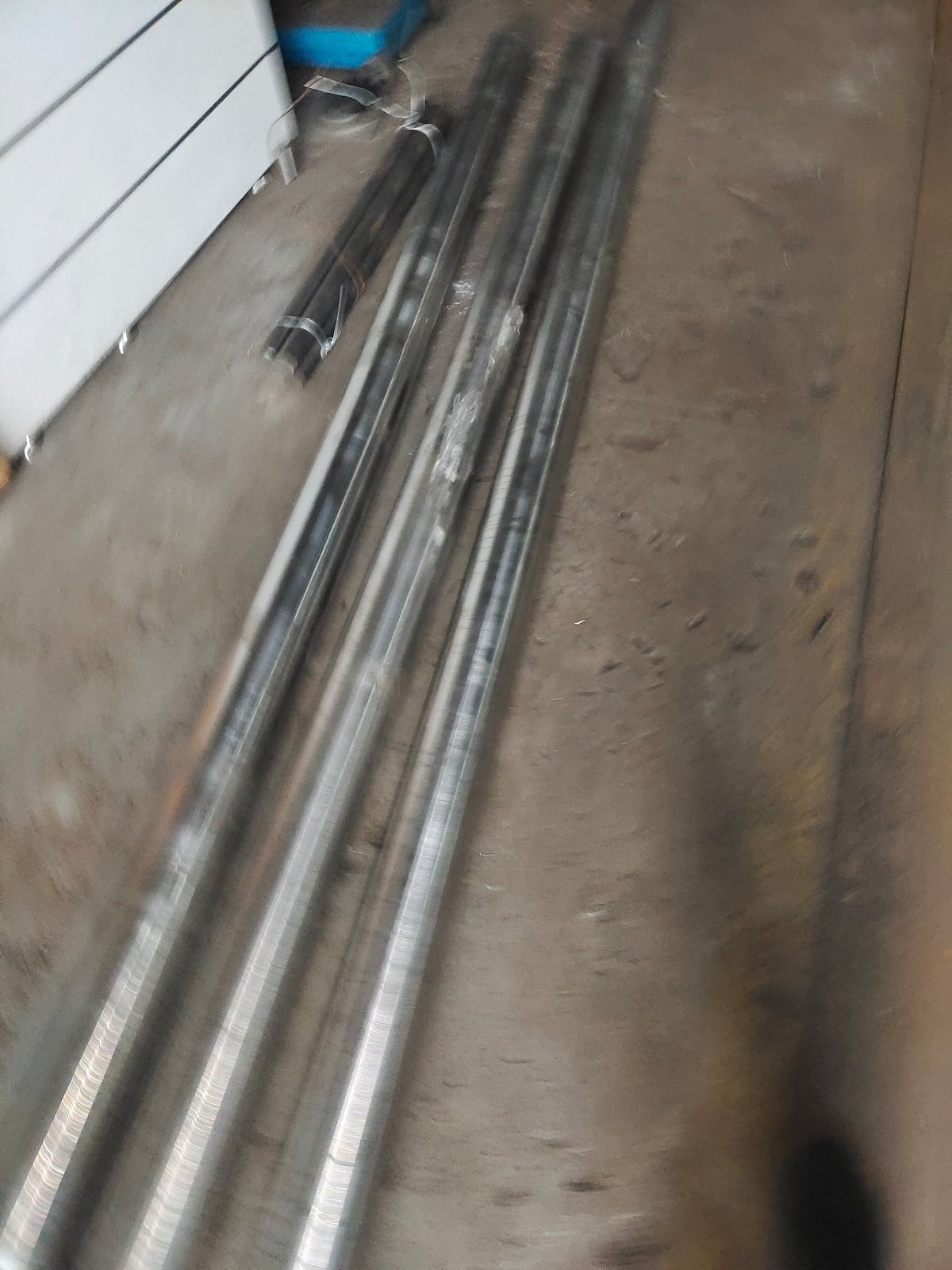
Peeled vs Ground vs Hot-Rolled Round Bar: Tolerances, Surface and Machining Stock
Quick answer: Hot-rolled bar is the cheapest and carries scale plus a decarburized layer you must machine off. Peeled (turned) bar has a clean, uniform surface at h9–h11 tolerance — the default for CNC machining shops. Ground bar reaches h7–h9 with tighter straightness for shafts used as-machined. Pick by next operation: heavy machining → hot-rolled or peeled; precision shafting without a grinding pass later → ground.
The same 316L bar in a supplier's rack can exist in four different surface conditions at four different prices, and quoting the wrong one is a classic RFQ mistake — either you pay for precision you don't need, or you receive rough stock that wrecks your machining plan. Here is what each condition actually is and what tolerance class to write on the RFQ.
The Four Surface Conditions Compared
| Condition | Surface | Typical tolerance | Common sizes | Best for |
|---|---|---|---|---|
| Hot-rolled / forged | Scale, rough | Per ASTM A276 general | 20–500 mm | Forging stock, heavy machining, welding |
| Peeled (turned) | Smooth, uniform, no scale | h9–h11 | 16–400 mm | CNC machining, general shafts, pins |
| Bright drawn | Bright, smooth | h8–h11 | 3–100 mm | Small-size precision work, cold forming |
| Ground | Fine ground, polished | h7–h9 | 5–150 mm | Precision shafts, bearing fits, as-used surfaces |
What h7–h11 Actually Means
Tolerance classes come from the ISO "h" shaft series: the nominal diameter is the upper limit, and the number defines how far below it the bar may run. On a Ø50 mm bar: h7 = 0/−0.025 mm, h9 = 0/−0.062 mm, h11 = 0/−0.160 mm. If your drawing says "Ø50 h9 peeled," any competent mill knows exactly what to ship. If it says "Ø50, nice surface," you will get whatever their stock happens to be. Standards worth knowing: ASTM A276 (stainless bar), ASTM A484 (general requirements), EN 10060 (hot-rolled). Our round bar grade guide covers the material side.
Why Peeled Bars Cut Your Machining Cost
Peeling turns a thin, uniform layer off the bar surface in one pass. Three benefits follow: the diameter is consistent along the whole length (no taper surprises at the tail end), stainless and nickel bars lose any surface defects and scale before they reach your lathe, and your machining plan can assume constant stock. On hot-rolled bar, the surface layer varies batch to batch — shops that plan deep first-pass cuts on hot-rolled stainless budget for the unknown; shops that buy peeled bars don't have to. For grade selection between machinability grades, see our 303 vs 304 vs 316 vs 17-4 comparison.
Straightness, Length and Cut-to-Size
State both, because they price differently. Random mill lengths (typically 3–6 m) are cheapest; cut-to-length with a stated tolerance adds a cutting step. Straightness for peeled bar is commonly a few tenths of a millimetre per metre, and ground bar tighter still — but if you need a shaft to run true without your own straightening or grinding, say so explicitly. Nickel alloy and duplex bars for critical service can also carry an ultrasonic test requirement; that is normal to ask for on forged and rolled stock above roughly 50 mm diameter. Our duplex 2205 bar guide shows a grade-specific example.
What to State in a Bar RFQ
- Grade + standard: e.g. 316L per ASTM A276, condition A.
- Surface condition and tolerance: "peeled, h9" beats "smooth bar" every time.
- Diameter and length: random lengths or cut-to-size with tolerance.
- Straightness requirement if the bar is used without further grinding.
- UT test for forged/rolled heavy sections, and MTR EN 10204 3.1 — always.
- Quantity, and whether ends need protection for shipping.
FAQ
Q: Does peeling remove the decarburized layer? A: Yes — peeling machines the surface off entirely, which is why peeled bar is the default for parts machined all over. Hot-rolled bar's outer layer may be decarburized or scaled and must be removed by your own first pass.
Q: Can you supply 6 m lengths in h9 peeled bar? A: Yes, in most stainless and common nickel grades — peeled bar up to roughly 300 mm diameter is routine. Very tight h7 on large diameters usually means peel first, then grind.
Q: Peeled or bright polished for decorative applications? A: Neither is automatic — peeled bar is machinable and uniform, while bright polished bar is finished for appearance. See our bright and polished round bar guide for the cosmetic grades and finishes.
Shanghai Hangbo Alloy Group
🌐 Website: www.hangbo-metal.com
📧 Email: Craliey1382@gmail.com
💬 WhatsApp: +86 19169850074
📞 Tel: +86 19169850074
📍 Address: No. 388 Songhuang Rd, Qingpu District, Shanghai, China
👤 Contact Person: Tiffany Luo