 Hangbo Alloy Group
Titanium Grade 2 vs Grade 5: Properties, Differences and When to Use Each
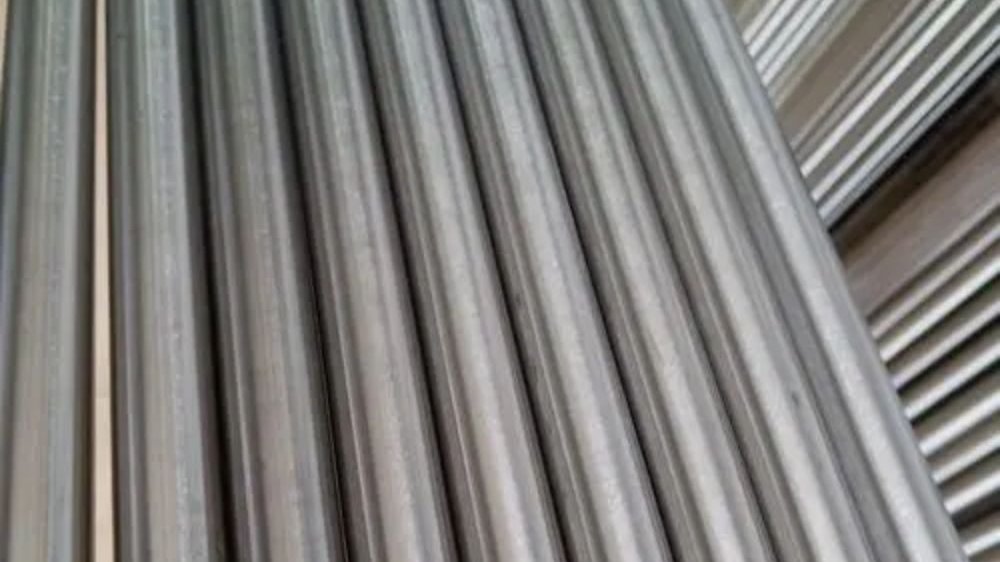
Titanium Grade 2 vs Grade 5: Properties, Differences and When to Use Each
Quick answer: Grade 2 is commercially pure titanium — the general-purpose, corrosion-focused grade with excellent formability and weldability, and the default for chemical equipment, heat exchangers and medical hardware that doesn't carry heavy loads. Grade 5 (Ti-6Al-4V) is the workhorse aerospace alloy — aluminium and vanadium alloyed to roughly double the strength of Grade 2, at the cost of some formability, weldability and thermal conductivity. If your part is a tank liner, cladding, or a seawater-exposed component loaded lightly, Grade 2 does the job cheaper. If it is a shaft, fastener, frame or anything loaded like a structural member, Grade 5 is usually why you considered titanium in the first place.
Titanium's appeal is a rare combination: strength comparable to many steels at 56% of their density, outstanding seawater and oxidizing-acid corrosion resistance, a thick stable oxide film that self-heals, and full biocompatibility. But "titanium" is not one material — the gap between the pure grades and the 6-4 alloy decides both performance and price. This guide compares the two most-specified grades and maps them to real applications.
The Two Grades in Brief
| Grade | UNS | Tensile (typ.) | Yield (typ.) | Elongation | Character |
|---|---|---|---|---|---|
| Grade 2 | R50400 | 430–520 MPa | 275–345 MPa | 20–28% | Pure, ductile, corrosion champion |
| Grade 5 (Ti-6Al-4V) | R56400 | 900–1,000 MPa | 830–880 MPa | 14–16% | Alloyed, strong, aerospace standard |
The numbers tell the story compactly: Grade 5 trades roughly 10 points of elongation for nearly double the strength. Everything else in this guide is an elaboration of that trade.
Grade 2: The Corrosion and Fabrication Workhorse
Grade 2 is ≥ 99% titanium with controlled interstitials (oxygen, iron, nitrogen, hydrogen). Its corrosion resistance comes from the tenacious TiO₂ film that reforms instantly in the presence of oxygen — giving it near-immunity to seawater, wet chlorine, hypochlorites, nitric acid across most concentrations, and organic acids.
Where Grade 2 is the right call:
- Chemical process equipment: reactor liners, heat-exchanger tubes and plates for chloride and oxidizing media. In hot wet chlorine and seawater-cooled condensers, titanium has essentially replaced exotic metals because the film simply holds.
- Desalination and power-plant condensers: titanium tubing outlasts copper-nickel and stainless in brine at economical life-cycle cost.
- Medical and food-contact hardware: pure grades are the biocompatible standard; Grade 2 hardware, implants-adjacent instruments and food machinery use it for inertness.
- Architectural and marine components where forming is heavy: Grade 2 bends, deep-draws and spins far better than Grade 5, so cladding panels, bellows and complex shells start here.
Fabrication notes: Grade 2 welds cleanly with GTAW under argon shielding (including trailing shields) — no preheat, matching or ELI filler. It cold-forms generously. The machining difficulty is real but manageable: sharp tools, slow speeds, heavy feeds, relentless flood coolant — the failures come from heat and galling, not hardness.
Grade 5: Strength Is the Point
Add 6% aluminium and 4% vanadium and you get an alpha-beta alloy that heat-treats and age-hardens into roughly double Grade 2's strength — the highest strength-to-weight ratio among the commonly stocked titanium grades. At 4.43 g/cm³ density, a Grade 5 bar carries steel-class loads at a bit over half the weight, which is why aerospace bought the industry into existence.
Where Grade 5 earns its premium:
- Aircraft and aerospace structure: fittings, lugs, spacers, engine components — anywhere a steel part's weight is unforgivable.
- High-load fasteners and shafts: Grade 5 bolts are standard in motorsport and aerospace; our titanium bar stock in this grade feeds exactly those applications.
- Performance marine and motorsport hardware: parts loaded hard in salt environments, where steel would corrode and aluminum would fatigue.
- Medical implants: Ti-6Al-4V ELI (Grade 23) is the implant variant with tighter interstitials and better fracture toughness.
Trade-offs to plan for:
- Formability: Grade 5 doesn't cold-form like Grade 2; complex shapes come from machining or hot working, not bending sheet.
- Weldability: weldable with proper shielding, but the HAZ loses the aged properties — welded Grade 5 structural parts are usually used in the annealed condition, accepting lower strength than aged stock.
- Notch sensitivity: aged Grade 5 is less forgiving of sharp corners and thread roots than Grade 2 — design radii and cold-rolled threads matter.
- Temperature: useful to about 400 °C long-term (special grades go higher); beyond that, look at nickel superalloys — our GH4169 / Inconel 718 guide covers that territory.

Corrosion: Subtle Differences That Matter
Both grades ride on the same TiO₂ film, and in seawater both are essentially immune — crevice corrosion of titanium in seawater is practically unknown, unlike stainless. But two environments separate them:
- Reducing acids (hydrochloric, sulfuric at mid concentrations) attack the film; Grade 2 and Grade 5 both struggle, with Grade 5 somewhat worse because the alloying elements reduce film stability slightly. Inhibitors (Fe³⁺, Cu²⁺) or lining/titanium-palladium Grade 7 territory begins here.
- Galvanic position: titanium is the most noble common structural metal — in mixed assemblies it corrodes last. If a titanium part is bolted to aluminum or carbon steel in a wet joint, the other metal corrodes. That is the opposite of the aluminum-vs-stainless problem and catches teams the same way.
For chloride duties where titanium's price is hard to justify, our copper-nickel and bronze selection guide covers the cheaper marine middle ground.
The Economics: Why Not Always Grade 5?
Grade 5 stock typically costs meaningfully more than Grade 2, and it machines slower — a double hit on part price. The selection logic mirrors other alloy families: buy properties you will use. A Grade 5 part loaded to 200 MPa is expensive insurance you never collect; a Grade 2 shaft loaded to 800 MPa is a failure waiting to happen. Check the load case first, then the environment, then pick the grade — not the reverse.
One more economic angle: weight-sensitive systems often justify Grade 5 on totals. Fuel, payload and installation labor are where aerospace and motorsport recover the premium; a static bracket in a plant has no such payback and stays Grade 2.
Design and Machining Notes Worth Knowing
- Machining: rigid setups, positive-rake carbide tooling, low cutting speeds (Grade 5 ~30–50 m/min), high-pressure coolant, never let the tool dwell — heat is the enemy of both tool and surface. Expect titanium machining hour rates well above stainless; quote accordingly.
- Threads and fasteners: cold-rolled threads improve fatigue life on Grade 5 significantly over cut threads.
- Hydrogen pickup: titanium absorbs hydrogen at elevated temperature in reducing environments; specify hydrogen limits on certificates for critical service.
- Certification: aerospace and medical buyers should expect AMS 4911 (Grade 5 sheet/bar) / AMS 4902 (Grade 2) traceability and EN 10204 3.1 paperwork; our MTC reading guide explains the certificate fields.
FAQ
Q: Is Grade 5 more corrosion-resistant than Grade 2? A: In seawater and oxidizing media, effectively equal. In reducing acids, Grade 2 holds up slightly better. Choose Grade 5 for strength, not corrosion.
Q: Can I weld Grade 5 to Grade 2? A: Yes, with argon shielding and appropriate filler; the joint will behave like annealed material. Don't expect aged-Grade 5 strength across the weld zone.
Q: Why is my titanium part galling against its own mating part? A: Titanium's oxide films weld together under load and sliding. Use anti-galling compounds, different hardening on mating faces, or dissimilar contact pairs — standard practice for titanium fasteners.
Q: Which grade for a heat-exchanger in seawater? A: Grade 2 tube — it is the industry standard for seawater condensers and brine heaters. Grade 5 adds cost and hardness with no corrosion benefit here.
Q: Does titanium burn in machining? A: Fine chips can ignite at high temperature — a real workshop hazard. Flood coolant, clear chips continuously, and keep a Class D extinguisher at the machine; never use water on a burning titanium chip pile.
Q: Is Grade 5 magnetic? A: Negligibly paramagnetic — effectively non-magnetic for practical purposes, which is why it appears near MRI equipment and in mine-detection-sensitive marine hardware.
Shanghai Hangbo Alloy Group
🌐 Website: www.hangbo-metal.com
📧 Email: Craliey1382@gmail.com
💬 WhatsApp: +86 19169850074
📞 Tel: +86 19169850074
📍 Address: No. 388 Songhuang Rd, Qingpu District, Shanghai, China
👤 Contact Person: Tiffany Luo