 Hangbo Alloy Group
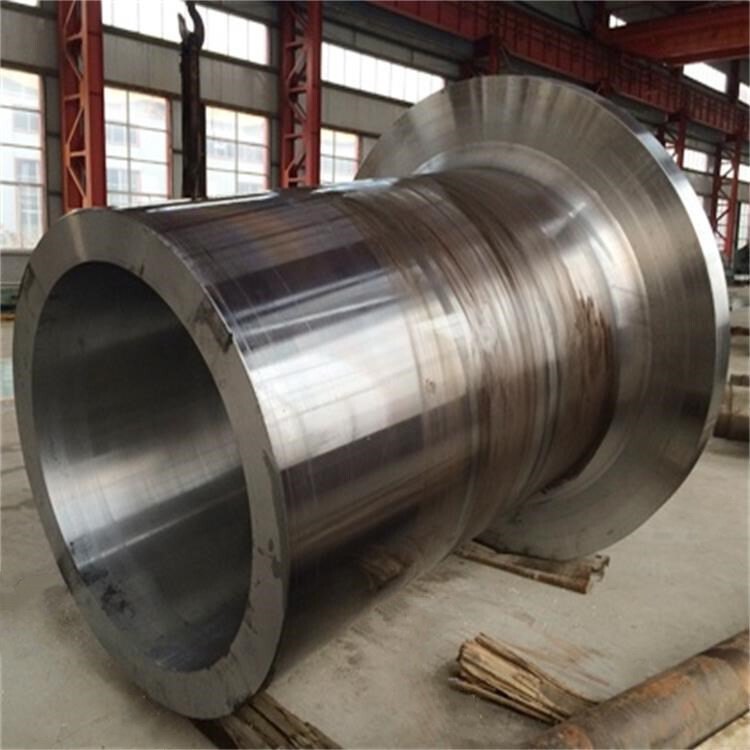
Forged Hollow Cylinders and Bored Forgings: Specs, Tolerances and When to Use Them
Forged Hollow Cylinders and Bored Forgings: Specs, Tolerances and When to Use Them
Quick answer: A forged hollow cylinder (bored or mandrel forging) is the heavy-duty answer for pressure vessel shells, large bearing housings, hydraulic cylinders, sleeve and nut forgings — anywhere a thick-walled round part must carry serious load. Order it by OD × ID × length, material and standard, heat-treat condition, machining allowance, UT acceptance level and certification, and expect to finish-machine it yourself or ask us to.
Between seamless rolled rings (thin-walled) and solid forged blocks sits a family most buyers meet only once they need it: thick-walled hollow forgings. Big hydraulic cylinders, autoclave and reactor shells, wind turbine components, large valve bodies machined from hollow stock — these start life as a forged, pierced and bored cylinder. This guide explains the process, what to specify, and where the money is actually spent.
How a Hollow Forging Is Made
Three routes dominate, and the choice drives both price and properties:
- Bored forging: forge a solid ingot or bloom, heat treat, then bore the center out on a heavy lathe. Maximum integrity and the only answer for very heavy walls, but you pay for machining away metal that was expensive to make.
- Pierced / mandrel forging: punch or pierce the hot billet, then forge it over a mandrel to grow OD and ID together. Much less material waste; the standard route for long cylinders and pressure-retaining shells.
- Machined from thick tube: acceptable for lighter duties, but tube walls carry some directionality and the size ceiling is lower than forging.
The forging routes give grain flow that wraps the wall, which is what fatigue-loaded cylinders — hydraulic rams, autoclaves — need to survive. Our seamless rolled rings article covers the thin-wall end of the same family, and forged discs and blocks the solid end.
What to Specify — the Six Deciders
| Item | Why it drives the job |
|---|---|
| OD × ID × length (and which is critical) | Sets route: bored vs pierced vs rolled-welded alternatives |
| Material + standard (e.g. 316 per ASTM A182 F316L) | Determines heat treatment and test requirements |
| Heat-treat condition | Solution annealed / quenched-tempered per grade — mechanicals depend on it |
| Machining allowance | Add stock per face (scaled to size) or order finish-machined |
| UT acceptance level | Straight-beam plus angle beam for thick walls; standard classes apply |
| Certification | EN 10204 3.1 standard; 3.2 with surveyor for vessels and offshore |
One practical note that saves money: say which dimension is the machining-critical one. If the ID must finish at exactly 400 mm and the OD is free, the mill plans the allowance differently than if both are critical — and the quote reflects it.
Materials and Typical Jobs
Hollow forgings come in every alloy we forge: 304/304L, 316/316L, duplex 2205 and super duplex, 17-4 PH, Inconel 600/625/718, Monel 400, Hastelloy C-276, titanium. Classic applications: hydraulic and pneumatic cylinder barrels, autoclave and reactor shells, large valve and pump bodies, bearing sleeves, flanged nozzle forgings (which tie into our flange range), and offshore equipment built to NACE MR0175.
Inspection and What Certificates Must Show
- UT (straight + angle beam) on walls above roughly 50 mm — the standard gate for pressure-retaining parts.
- Mechanical test from prolongations cut from the actual forging, heat treated with the piece — not "typical values".
- MTR per EN 10204 3.1 referencing the heat number and the heat-treatment record; our MTR reading guide shows the checks.
- Dimensional report after rough machining, especially if finish machining happens on your side.
- Visual and surface crack detection (PT/MT) on critical seats and transitions.
FAQ
Q: Rolled ring or hollow forging for my cylinder? A: Height decides. Rings handle heights up to roughly their wall capability; when the part is long relative to its diameter — hydraulic barrels, long shells — a mandrel-forged hollow is the right tool. See the rolled ring guide for the thin-wall comparison.
Q: Can you supply finish-machined cylinders with flanges and threads done? A: Yes — we routinely rough-machine, heat treat, then finish-machine to drawing with sealing faces and bolt circles, delivering with the full cert package.
Q: What's the biggest hollow forging you can do? A: Large diameters in the metre class and multi-tonne pieces are routine through our forge network — send OD × ID × length and material, and we confirm the route and lead time before quoting.
Shanghai Hangbo Alloy Group
🌐 Website: www.hangbo-metal.com
📧 Email: Craliey1382@gmail.com
💬 WhatsApp: +86 19169850074
📞 Tel: +86 19169850074
📍 Address: No. 388 Songhuang Rd, Qingpu District, Shanghai, China
👤 Contact Person: Tiffany Luo