 Hangbo Alloy Group
Pipe Schedule Explained: SCH 10, SCH 40, SCH 80 and Wall Thickness Selection
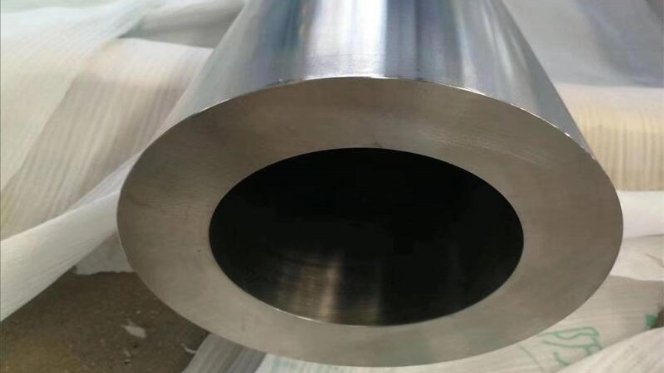
Pipe Schedule Explained: SCH 10, SCH 40, SCH 80 and Wall Thickness Selection
Quick answer: A pipe schedule is a standardized wall-thickness series — SCH 10, 40, 80 and so on — that lets a designer order pipe by nominal size and schedule without specifying millimeters anywhere. Higher schedule = thicker wall = higher pressure capacity at the same nominal diameter. Choose SCH 10 for low-pressure utility lines where you want economy and light weight; SCH 40 as the general-purpose default for process piping; SCH 80 (or heavier) when pressure, temperature, erosion or mechanical protection push the design. The subtlety that catches newcomers: schedule does not mean the same wall thickness at every pipe size — the actual wall grows with the pipe diameter within a schedule, and the outside diameter is the dimension that stays standard.
If you have ever quoted "2-inch pipe" and been asked "which schedule?", this guide is the missing manual: what schedules exist, how wall thickness and pressure rating actually scale, where the stainless and nickel alloy variants differ from carbon steel habits, and a practical selection flow you can apply to your next line list.
The Logic Behind the System
Pipe needs two standard dimensions to be interchangeable with flanges, fittings and supports: the outside diameter and a predictable wall. The American system (ASME B36.19 for stainless, B36.10 for carbon steel) fixes OD per nominal pipe size (NPS) and offers a ladder of walls — the schedules — so that a 2" SCH 40 elbow from any mill fits any 2" SCH 40 pipe from any other mill.
Two consequences follow from how the ladder was built:
- OD is constant per NPS, bore is not. As the schedule climbs, the wall thickens inward — the bore shrinks. A 2" SCH 10 pipe and a 2" SCH 80 pipe have the same OD (60.3 mm) but bores of roughly 57.5 mm and 49.2 mm respectively. Flow calculations must use the actual bore of your schedule, never the nominal size.
- The same schedule number means different millimeters at different NPS. SCH 40 on a 1/2" pipe is 2.77 mm wall; on a 12" pipe it is 9.27 mm. The pressure capability therefore stays roughly in the same class across sizes, which is the entire point.
The Common Schedules and Where They Fit
| Schedule | Typical wall (NPS 2") | Character | Typical duty |
|---|---|---|---|
| SCH 5S / 10S | 1.65 / 2.11 mm | Stainless-only "S" thin walls | Utility, instrumentation, jacketing, low pressure |
| SCH 40S | 3.91 mm | The general default | Process lines, steam, compressed air |
| SCH 80S | 5.54 mm | Heavy default | High pressure, corrosive allowance, threads |
| SCH 160 / XXS | 8.18 mm+ | Extra heavy | Small-bore high pressure, severe service |
A note on the "S": in stainless and nickel alloys you will see SCH 5S, 10S, 40S, 80S — the S distinguishes the stainless schedule series (B36.19) from the carbon steel series (B36.10), and the walls differ slightly. It is a common quoting error to mix the two, so put the S in your RFQ.

How Wall Thickness Converts to Pressure
The design math is the code formula (simplified): required wall = P·D / (2·S·E + P·2y), plus corrosion/erosion allowance and mill tolerance (−12.5% for seamless). You rarely need to derive it by hand, but understanding its levers helps you talk to your supplier:
- Pressure scales with wall and material strength. Doubling the wall roughly doubles the rating at the same diameter; switching 304 to a stronger alloy (or to duplex) raises the allowable stress S.
- Temperature lowers the allowable stress. A line rated comfortably at 20 °C loses margin as design temperature climbs — schedules are picked against design conditions, not nameplate pressure.
- Corrosion allowance is a wall decision. In corrosive media, the extra wall you buy is the life you buy. This is a second path to heavy schedules alongside pure pressure: a corrosive line on SCH 40S may outlast a carbon steel SCH 80 many times over — the seawater and acid alloy comparison covers choosing that alloy.
- Mill tolerance eats margin. Seamless pipe can be 12.5% under wall; your selected schedule must still satisfy the formula at the minimum possible wall, not the nominal.
For weight and tonnage, schedule is decisive: pipe weight = π·(OD − t)·t·length·density, and going SCH 40 → SCH 80 on the same size roughly doubles the steel weight per metre. Our weight calculation guide works a full example.
A Practical Selection Flow
- Start from the line specification, not the schedule table — the design pressure, temperature, media and code decide the required wall. The schedule is the output, not the input.
- If the line spec is yours to write: use SCH 10S for low-pressure stainless utilities and jacket services; SCH 40S as the default for process; SCH 80S where you need pressure margin, erosion allowance, threaded connections, or mechanical robustness (hand traffic, supports, impact).
- Watch the small-bore trap: at NPS 1/2"–1", even SCH 80S is light; high-pressure small bore usually jumps to SCH 160 or XXS, or to tubing with fittings instead.
- Check bore-critical lines: if pressure drop matters (suction lines, long runs), remember higher schedules shrink the bore — an SCH 80 "2 inch" line is closer to 1.94" inside, and your pump curve notices.
- Match fittings and flanges: schedule pairs with fitting class — an SCH 80S line normally calls for 3000# forged fittings and flange ratings per the design pressure (our cast vs forged flanges guide covers the fitting side).
Stainless and Nickel Alloy Specifics
Stainless piping diverges from carbon steel habits in three useful ways:
- Thin walls go further. Stainless's corrosion allowance can be near zero in many media, so SCH 10S lines live comfortably where carbon steel needed heavy walls plus corrosion allowance.
- The 10S/40S/80S series dominates stock. Exotic schedules are mill-order items; if your project runs on standard stainless schedules, lead times shrink dramatically.
- Nickel alloys behave the same dimensionally. Inconel 625 or Hastelloy C-276 pipe follows B36.19 dimensions — the schedule system is alloy-agnostic, so your dimensional habits transfer directly; only the allowable stress and price change. Our seamless vs welded pipe guide covers the manufacturing-route decision that pairs with this one.
FAQ
Q: Does "2-inch SCH 40" mean the same wall everywhere? A: The schedule is standard, so 2" SCH 40 is 3.91 mm wall from any compliant mill — but the same schedule at other NPS sizes is different millimeters. Schedule is per-size, not a fixed thickness.
Q: Is SCH 80 always enough for high pressure? A: Not necessarily — at small sizes and high design pressure you may need SCH 160 or XXS, and at large diameters even SCH 80 may be inadequate. Run the code formula against design conditions; never guess from the number.
Q: Why do stainless schedules have an "S"? A: They come from ASME B36.19 (stainless) rather than B36.10 (carbon steel), and the walls differ slightly at some sizes. Always quote the S for stainless and nickel alloy pipe.
Q: Can I mix schedules on one line? A: Yes, commonly — heavier schedule at exposed or erosive points, lighter elsewhere, with transition fittings. Just keep bore changes in mind for flow and make the connections with proper transition fittings.
Q: How much does going SCH 40 → 80 change my weight? A: Roughly 70–90% more steel per metre on common sizes (the wall nearly doubles while OD stays constant). Quote tonnage with the schedule explicitly, or your freight and cost estimates will drift.
Q: What schedule for threaded connections? A: Threaded joints need wall for the thread depth — SCH 80 is the practical minimum for threaded stainless service, and many specs simply prohibit threading thin schedules.
Shanghai Hangbo Alloy Group
🌐 Website: www.hangbo-metal.com
📧 Email: Craliey1382@gmail.com
💬 WhatsApp: +86 19169850074
📞 Tel: +86 19169850074
📍 Address: No. 388 Songhuang Rd, Qingpu District, Shanghai, China
👤 Contact Person: Tiffany Luo