 Hangbo Alloy Group
How Stainless Bars and Pipes Are Packed for Export: Cases, Sleeves and ISPM 15
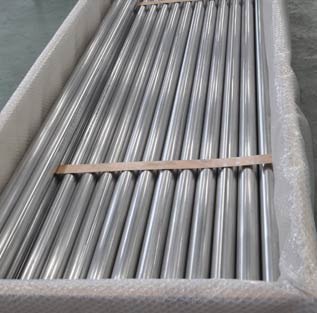
Quick answer: Export packing for stainless bars and pipes means separate steel grades, end caps, moisture barrier, and either bundled-steel-crate or plywood-case packing with heat-treated wood — and it is a quality step, not logistics trivia. Most "rusty stainless" complaints trace to transit contact with carbon steel, salt-water exposure, or condensation inside unventilated wraps, all of which are preventable at the packing stage.
What Are the Standard Packing Methods for Bars and Pipes?
| Method | Typical use | Protection level |
|---|---|---|
| Bundled + steel strapping | Hot-rolled bars, structural lots | Basic — transit scratch acceptable |
| Woven bag / hessian wrap over bundle | Peeled & turned bars | Scratch protection, some moisture barrier |
| Wooden case / plywood box, bars in rows | Ground, polished and precision bars | Full mechanical + moisture protection |
| PVC sleeve per piece + case | Polished shafting, honed tube | Premium — piece-level protection |
Polished and ground bars (h9/h11 tolerance, Ra ≤ 0.8 µm surfaces) should always travel individually sleeved or paper-interleaved inside a rigid case — a single loose strap rub destroys a mirror finish in one ocean crossing.
Why Can Carbon Steel Ruin a Stainless Shipment?
Stainless corrodes where it touches free iron. The classic contamination sources in transit:
- Carbon-steel strapping in direct contact with stainless surfaces — always request stainless or nylon-coated slapping
- Shared handling gear (hooks, forks) that previously carried carbon steel
- Marking paint or stencil ink with iron pigment on the surface
The result is flash rust that looks like a grade failure but is pure contamination — PMI will still read correct chemistry. Specify "no carbon-steel contact" in the PO and hold the supplier to delivery inspection on arrival.
What Does Export-Grade Wood Packaging Involve?
International shipments require wood packaging to ISPM 15 — heat-treated (HT) stamped timber or plywood, no raw bark. Beyond the stamp, good export cases add:
- VCI (vapor-corrosion-inhibitor) paper or desiccant packs for ocean freight
- Plastic end caps on tube and pipe to keep moisture and debris out of the bore
- Ventilation slits or desiccant balance to avoid condensation "greenhouse" inside shrink wrap
- Clear stencil marking: grade, heat numbers, PO, gross/net weight, lifting points
Who Pays When Packing Fails in Transit?
If the PO specified a packing standard (e.g. "individually sleeved, plywood case, ISPM 15"), the supplier owns it and transit damage is an insurance claim against properly packed goods. If packing was left unspecified, disputes get murky — which is why a one-line packing clause costs nothing now and settles every claim later.
FAQ
Q: Does stainless really need VCI desiccant for sea freight? A: For pickled-and-passivated surfaces, generally not — the passive layer handles humidity. For polished, ground or machined surfaces, yes: condensation cycles inside a closed container will spot untreated bright surfaces within weeks.
Q: Can bundles be packed directly inside containers without cases? A: Common for lower-finish bar stock, accepted practice if strapping is non-carbon and dunnage keeps bundles off the container floor. Anything with a finished or machined surface should not travel loose in a shared container.
Q: How do weight limits affect packing choice? A: Plywood cases cap out around 2–3 t per unit for safe handling; heavy forged bars ship in open steel cradles with the finish surfaces bagged. State max unit weight and lifting method (fork pockets, lifting lugs) in the RFQ — see bar weight calculation for planning loads.
Shanghai Hangbo Alloy Group
🌐 Website: www.hangbo-metal.com
📧 Email: Craliey1382@gmail.com
💬 WhatsApp: +86 19169850074
📞 Tel: +86 19169850074
📍 Address: No. 388 Songhuang Rd, Qingpu District, Shanghai, China
👤 Contact Person: Tiffany Luo