 Hangbo Alloy Group
Stainless Steel Pipe Delivery Inspection: What to Check Before You Sign
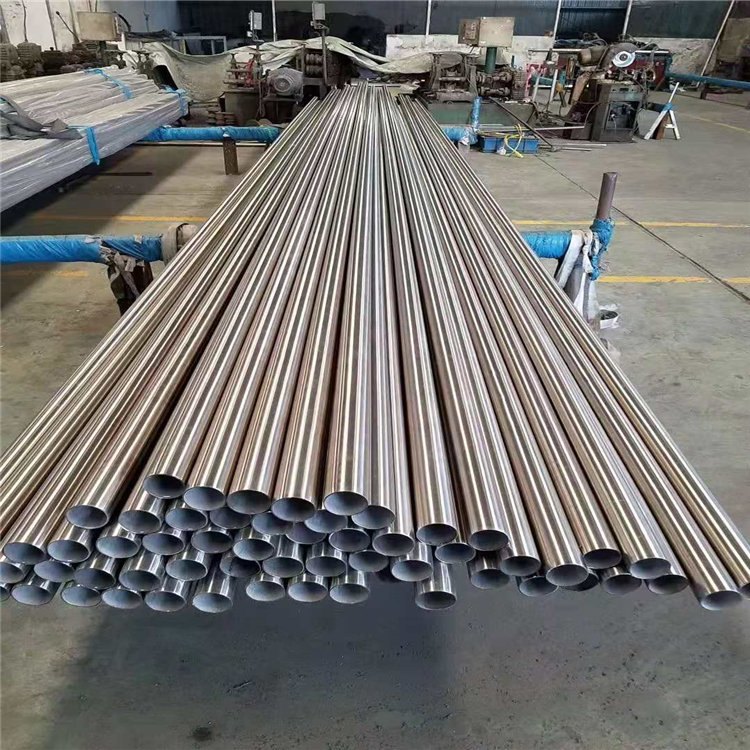
Stainless Steel Pipe Delivery Inspection: What to Check Before You Sign
Quick answer: Before signing for a stainless pipe delivery, check five things: the MTR matches the heat number marked on the pipe (this one catches most fraud), actual dimensions against the standard's tolerance, surface condition (no deep scratches, dents, or carbon-steel contact marks), the specified NDT (eddy current / hydrostatic / UT certificates are present), and the packing (ends capped, grades not mixed). Fifteen minutes at the dock prevents the classic disputes — and most of them are unarguable once you've photographed the heat numbers.
Stainless pipe is the product most often replaced with look-alike material in this industry, and the dispute always starts the same way: the buyer signed the delivery note, and six months later a welder asks why the "316L" pipe rusts. Inspection at delivery is cheap insurance, and none of it needs a lab — a tape measure, a magnet, a camera and the paperwork discipline below.
1. Paperwork First: MTR to Heat Number Traceability
Every length or bundle should carry a stamped or painted heat/batch number. Before anything else, pick random pieces, note the numbers, and match them to the EN 10204 3.1 MTR: the certificate's heat number must be the one on the metal, and the grade, standard (ASTM A312 for pipe, A269 for tubing) and delivery condition must match your PO. If the numbers don't line up, the delivery note gets signed "subject to verification" and nothing gets cut. A magnet helps as a crude first screen — austenitic 304/316 should be essentially non-magnetic (some pickup on cold-worked ends is normal) — but PMI is the real check: a handheld XRF reading in two minutes settles grade questions. Our MTR reading guide shows the certificate line by line.
2. Dimensions: Measure Against the Standard, Not Against the Sales Sheet
| Check | How | Typical acceptance |
|---|---|---|
| OD | Caliper / pi-tape at two positions | ASTM A530 general tolerances |
| Wall thickness | Ultrasonic gauge at 4+ points around the pipe | ±10 % on wall (A530) — not "nominal" |
| Length | Tape, against PO (random vs cut lengths) | Per order |
| Straightness | Sight down the pipe or straightedge | Standard mill straightness |
| Ovality / ends | Visual + caliper; ends square-cut or beveled per order | Per order / standard |
Wall thickness is where the money hides: a 10 % thin wall on 20 % of your order is a real discount the seller kept and you didn't agree to. Measure several pieces from different bundles, not just the one on top.
3. Surface and Handling Damage
Look for deep scratches and gouges (beyond the standard's depth limits on the pressure wall), dents, weld spatter, and the silent killer: carbon-steel contamination — grey rub marks or embedded particles from carbon-steel rollers, slings or improper storage. That contamination rusts first and stains the whole installation, and it's fixable at delivery (pickling/passivation at supplier's cost) but a warranty argument later. Ends should be capped or plugged; the inside of the pipe should be clean and dry, especially if it's specified for instrumentation or high-purity service — check with a flashlight.
4. NDT and Test Certificates
If your order specified eddy-current testing (ASTM E426 or similar), hydrostatic test, or ultrasonic inspection, the certificates name the method, acceptance level and actual results — a certificate that just says "tested, OK" is worth questioning. For seamless A312 pipe, confirm the specified NDT type appears with the heat reference; for welded pipe, check whether the weld was tested (E426) and what the weld factor in the pressure rating assumes. The difference between seamless and welded routes is covered in our seamless vs welded pipe guide, and schedule/pressure basics in the pipe schedule explained article.
5. Packing, Marking and Storage on Arrival
- Grade and size marked every bundle or length per the standard — mixed bundles are a rejection trigger.
- Ends capped; bundles strapped with non-marring bands; no direct carbon-steel pallet contact (use wood or plastic dunnage).
- Store off the ground, carbon steel tools and wire brushes banned from the stainless area — most "mystery rust" on stainless is picked up in the buyer's own yard after acceptance.
FAQ
Q: The magnet sticks slightly to my "316L" pipe — is it fake? A: Not proof either way. Light magnetic response at cold-worked ends is normal austenite behavior; what matters is an XRF PMI reading and a matching MTR. A strongly magnetic pipe labeled 304/316 deserves immediate rejection.
Q: Who pays if wall thickness is under tolerance? A: If it's within the standard's ±10 % but below the nominal you ordered, that's a contract question — which is why the PO should say "min wall" or nominal with tolerance explicitly. Measure before signing and you keep the leverage.
Q: Do I need to inspect if the supplier is certified? A: Yes — certification covers the mill's process, not the logistics chain after it. Deliveries get mixed, swapped and dented by handlers who never saw your MTR. Fifteen minutes of checks is the industry-standard practice for a reason.
Shanghai Hangbo Alloy Group
🌐 Website: www.hangbo-metal.com
📧 Email: Craliey1382@gmail.com
💬 WhatsApp: +86 19169850074
📞 Tel: +86 19169850074
📍 Address: No. 388 Songhuang Rd, Qingpu District, Shanghai, China
👤 Contact Person: Tiffany Luo