 Hangbo Alloy Group
Inconel 625 Round Bar: UNS N06625 Specs, Standards and Buying Notes
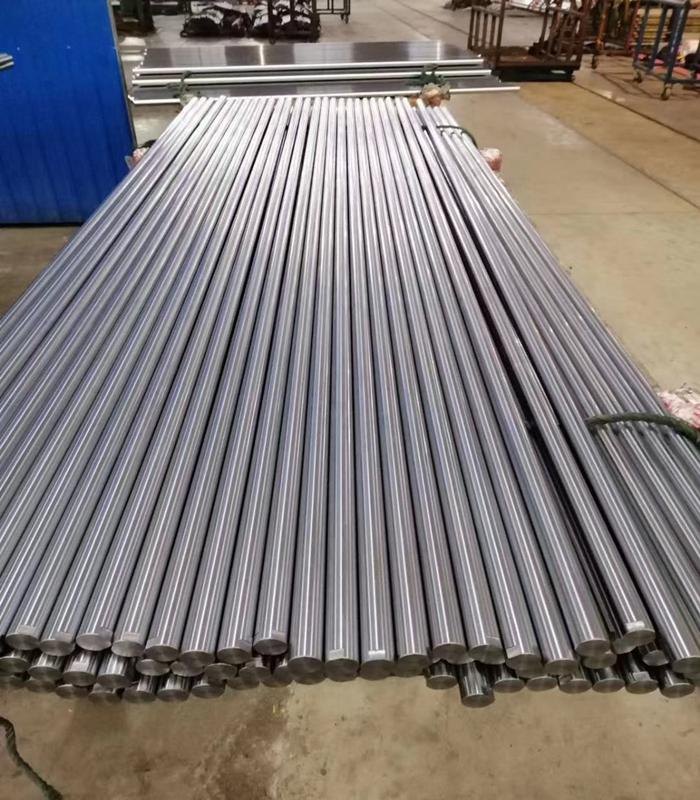
Inconel 625 Round Bar: UNS N06625 Specs, Standards and Buying Notes
Quick answer: Inconel 625 (UNS N06625, W.Nr 2.4856) bar is bought to ASTM B446 for general use or AMS 5665/5666 for aerospace, in the annealed condition — 625 is unusual among nickel superalloys because it needs no aging treatment to reach spec strength. State grade + standard, condition (annealed), diameter with tolerance class, UT level if required and EN 10204 3.1 certification, and the quote comes back right the first time.
Where 718 is the strength superalloy, 625 is the corrosion and temperature workhorse: seawater components, chemical and flue-gas equipment, aerospace ducting, weld overlays. It is also one of the most quoted nickel bars — and one of the easiest to overpay for, because "625 bar" without a standard can be anything from certified B446 stock to an uncertified look-alike. Here is the vocabulary that keeps the quote honest.
Standards and Equivalents
| Standard | What it covers |
|---|---|
| UNS N06625 | Unified numbering system designation |
| ASTM B446 | Rod, bar and forgings — the general-purpose spec most industrial buyers need |
| AMS 5665 / 5666 | Aerospace bar in annealed / stress-relieved conditions |
| W.Nr 2.4856 | European material number |
| NA 21 / NiCr22Mo9Nb | Older/EN designations you may still see on drawings |
A useful quirk: 625's strength comes from solid-solution strengthening and the molybdenum-plus-niobium chemistry, not from precipitation hardening — so unlike 718 there is no aging step to specify, and "annealed" is the normal delivery condition. Grade 2 (higher annealing temperature, ~1150 °C) exists for cryogenic and extra-ductile applications; unless your drawing says Grade 2, assume Grade 1 annealed. Our nickel alloys family guide places 625 among its peers.
What 625 Is Chosen For
Three properties drive every 625 RFQ: near-immunity to pitting and crevice corrosion in chloride and seawater service (PREN above 50), strength retention to roughly 980 °C, and weldability without the cracking worries of harder superalloys. Pumps and valves for offshore service, heat-treatment fixtures, chemical reactor internals and aerospace exhaust components are the classic calls. For a head-to-head with other seawater options, see our Monel 400 vs Inconel 625 vs Hastelloy C-276 comparison.
Sizes, Tolerance and Surface
B446 bar is routinely supplied from about 12 mm to 300 mm diameter, hot-forged or hot-rolled and then peeled or ground to h9–h11 tolerance. As with stainless, "peeled, h9" on the RFQ beats "smooth bar" — the logic is identical to our bar tolerance guide. Random mill lengths or cut-to-size both work; note that 625 machines slowly, so if your shop will turn it all over, buying peeled stock genuinely saves money.
Quality Gates Before You Pay
- MTR per EN 10204 3.1 with heat-by-heat chemistry — check the molybdenum content: B446 allows 8.0–10.0 % Mo, and the low end costs less to produce. Standard practice for demanding service is to specify Mo ≥ 9 % on the RFQ, which is what most offshore buyers do.
- Ultrasonic test to AMS 2631 or your drawing's class for rotating or pressure parts.
- Mechanical values on the certificate must be for the annealed condition — if someone quotes unusually high strength "as delivered", ask what they actually did to the bar.
- PMI on delivery if the bar enters a traceability-controlled build; our MTR reading guide shows the line-by-line checks.
Buying Checklist
- "Inconel 625 per ASTM B446, annealed" — not just "625".
- Diameter, tolerance class (e.g. h9 peeled), length or cut sizes, quantity.
- Mo ≥ 9 % if chloride or seawater service is involved.
- UT requirement and acceptance class, plus NACE MR0175 if it's oilfield hardware.
- Certification: EN 10204 3.1 minimum, 3.2 with surveyor for offshore builds.
FAQ
Q: 625 or 718 for a high-temperature fastener? A: 718 when you need the strength — it carries roughly twice the strength of annealed 625. 625 when corrosion, oxidation and weldability dominate; our 718 vs 316L article explains the strength side of that decision.
Q: Can I weld 625 bar stock into fabricated parts? A: Yes — that's one of 625's selling points. Match the filler with ERNiCrMo-3, and note the joint strength matches the parent metal without post-weld heat treatment in most thicknesses.
Q: Why do 625 quotes vary so much for the "same" bar? A: Usually three things: uncertified remelt stock versus certified B446 heat, Mo content at the low or high end of the range, and peeled-versus-as-rolled surface. Ask for all three explicitly and the quotes become comparable.
Shanghai Hangbo Alloy Group
🌐 Website: www.hangbo-metal.com
📧 Email: Craliey1382@gmail.com
💬 WhatsApp: +86 19169850074
📞 Tel: +86 19169850074
📍 Address: No. 388 Songhuang Rd, Qingpu District, Shanghai, China
👤 Contact Person: Tiffany Luo