 Hangbo Alloy Group
Pipe Surface Finish Explained: Pickled, Polished Grits, Mirror and Electropolished
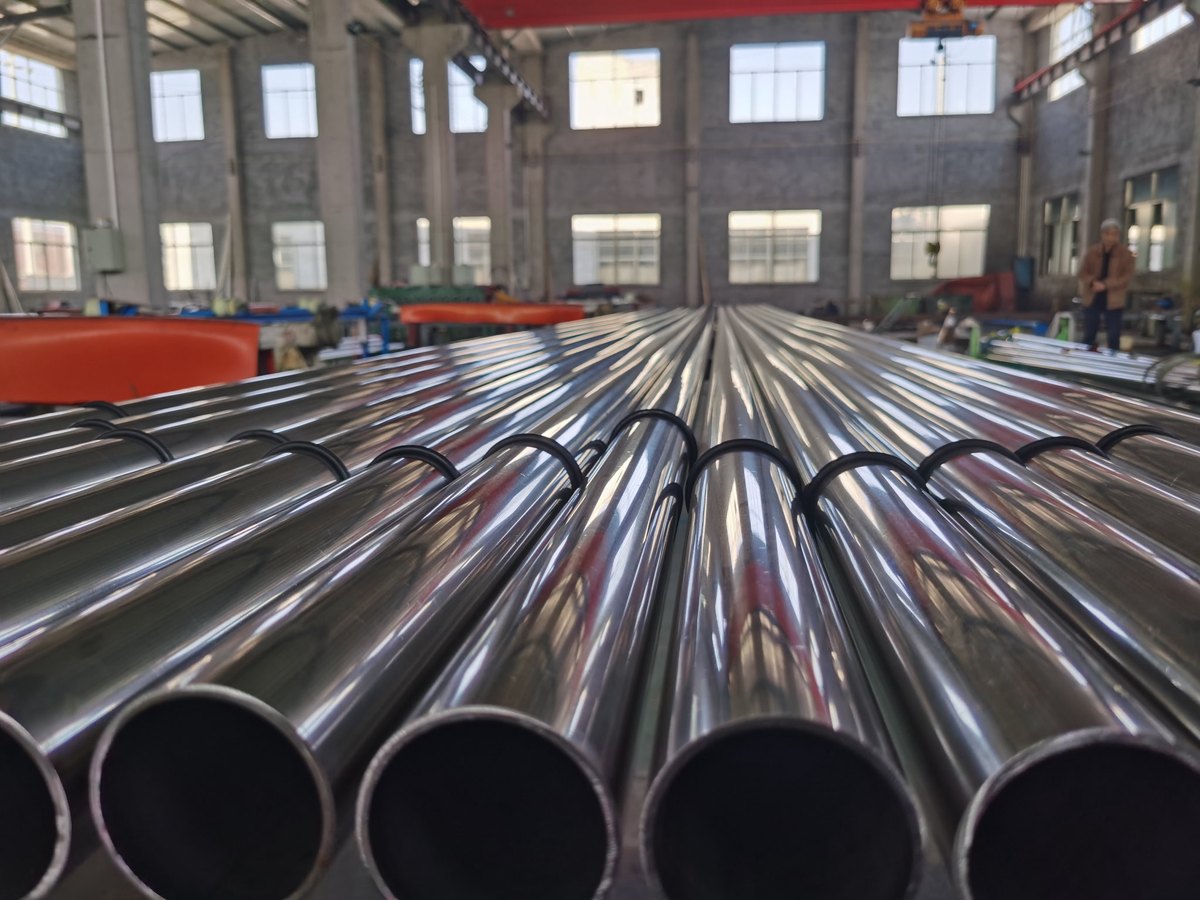
Quick answer: Pipe surface finish is a procurement decision, not cosmetics: pickled (ASTM A269 as-welded/annealed standard) for industrial service, mechanically polished in 180/240/320 grit for sanitary, or electropolished for semiconductor-grade Ra ≤ 0.4 µm — and architectural tube is usually 180-grit or mirror by eye. Specify grit or Ra in the RFQ, because "polished" alone means whatever the polisher felt like that day.
What Are the Standard Pipe and Tube Finishes?
| Finish | Typical Ra | Where it's used |
|---|---|---|
| Pickled & annealed | ~0.8–1.5 µm, matte | Industrial process pipe, invisible service |
| Mechanical polished 180 grit | ~0.5–0.8 µm, satin | Architectural railing, dairy externals |
| Mechanical polished 240–320 grit | ~0.3–0.5 µm | Sanitary externals, visible process lines |
| Buffed / mirror | ~0.1–0.3 µm | Decorative, pharma clean exteriors |
| Electropolished (EP) | ≤ 0.4 µm, often ≤ 0.25 | Product-contact sanitary lines, semiconductor gas |
Electropolishing removes a thin layer electrochemically: it smooths and enriches the surface in chromium, so it resists bacteria adhesion and cleaning chemistry better than any mechanical polish — which is why pharma and food product-contact specs demand EP rather than "just polished".
Why Does Grit Number in the RFQ Matter So Much?
"Polished pipe" arriving at 120 grit when your spec sheet shows 240 grit samples is one of the most common cosmetic disputes. Grit numbers map loosely to Ra, and customers judge by eye under different light. Procure with both: grit number + Ra max, and ask for a finish sample approval on first article for architectural work. Interior finish is a separate callout — sanitary lines polish ID and OD independently, and ID polishing costs far more.
How Does Finish Interact With Welding?
Every orbital weld on a polished line interrupts the finish. Sanitary practice: weld first, then re-polish the weld zone to match, or accept a visible weld bead zone on architectural tube. For product-contact EP lines, weld zones need field re-finishing procedures agreed up front — a welded-in spool with raw ID weld beads fails a pharma audit regardless of how good the tube was.
Which Service Needs Which Finish — One-Line Rules
- Utility/process lines nobody sees: pickled, spend nothing on polish — seamless vs welded basics
- Food/dairy exterior-visible lines: 240 grit OD
- Pharma product contact: EP with Ra certificate per lot — verify on the MTR
- Architecture/railings: 180 grit satin, with film protection per export packing rules
FAQ
Q: Is a lower Ra always better? A: For cleaning and hygiene, generally yes, with diminishing returns below ~0.3 µm. For cost, no — each step down roughly doubles polishing labor. Specify the cleanest finish the process justifies, no cleaner.
Q: Does polishing affect corrosion resistance? A: Mechanical polishing can smear free iron from abrasives onto the surface; proper practice re-passivates after polishing. Electropolished surfaces are actually the most corrosion-resistant finish available.
Q: How do I verify finish on delivery? A: Ra profilometer spot checks (or a comparator plate), visual against approved samples, and grit-direction consistency. The receiving checklist in our pipe delivery inspection guide includes finish verification steps.
Shanghai Hangbo Alloy Group
🌐 Website: www.hangbo-metal.com
📧 Email: Craliey1382@gmail.com
💬 WhatsApp: +86 19169850074
📞 Tel: +86 19169850074
📍 Address: No. 388 Songhuang Rd, Qingpu District, Shanghai, China
👤 Contact Person: Tiffany Luo