 Hangbo Alloy Group
Stainless Steel Plate Cutting: Laser vs Plasma vs Waterjet vs Saw — How to Choose
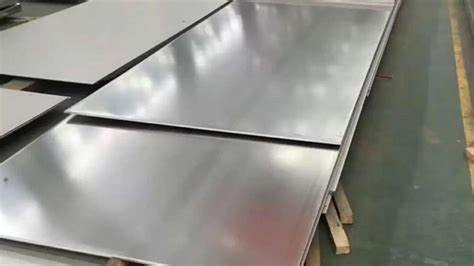
Stainless Steel Plate Cutting: Laser vs Plasma vs Waterjet vs Saw — How to Choose
Quick answer: For stainless plate up to roughly 20 mm where edge quality matters, fiber laser is the default. Waterjet wins on thick plate, heat-sensitive alloys and jobs that cannot tolerate any heat-affected zone. Plasma is the fast, economical option for thick plate where edge cosmetics don't matter. Band saw handles straight-line cuts and blanks at the lowest cost. Tell your supplier the thickness, finished dimensions, tolerance and end use — a good one will pick the process for you.
Cutting is where most plate RFQs quietly go wrong. Two suppliers can quote the "same" 316L plate cut to 400 × 400 mm blanks and deliver very different parts: one with clean square edges ready for welding, one with dross, a bevel and an oxidized edge that pits in service within months. This guide explains what each process actually delivers, so you can specify what you need instead of paying for what you don't.
Why the Cutting Method Changes What You Get
Three things differ between processes: edge quality (burr, dross, squareness), heat input (heat-affected zone and sensitization risk on stainless), and cost per part (cutting speed plus consumables plus handling). A cut edge on stainless is not cosmetic — an overheated or contaminated edge is where corrosion starts first, especially on thinner parts that see moisture or chlorides.
| Method | Practical thickness | Edge quality | Heat-affected zone | Best for |
|---|---|---|---|---|
| Fiber laser (N₂ assist) | 0.5–20 mm | Excellent, burr-free, square | Minimal | Precision parts, cut-to-size plate, thin–mid plate |
| Plasma | 3–50 mm | Fair, slight bevel, some dross | Moderate | Fast, economical cutting of thicker plate |
| Waterjet | 1–100 mm+ | Good, no dross, slight taper on thick | None | Thick plate, nickel alloys, titanium, no-heat jobs |
| Band saw | Any (straight cuts) | Good, needs deburring | None | Blanks, strips, blocks, rectangular stock |
Laser Cutting: Speed and Clean Edges
Modern fiber lasers cut stainless from thin sheet up to about 20 mm at high speed with an excellent edge. The detail that matters for buyers is the assist gas: nitrogen cutting leaves a bright, oxide-free edge that can go into service as-cut, while oxygen cutting is faster and cheaper but leaves a dark oxide layer that must be pickled, machined or welded over. For parts that stay exposed to corrosive media, specify nitrogen-cut edges — it costs a little more per metre and saves the entire passivation argument later. Our plate and sheet grade guide covers the base material itself.
Plasma and Waterjet: When Thickness or Heat Decides
Plasma cuts thick plate fast and cheap, but expect a slight bevel, a heat-tinted edge and looser tolerances — fine for brackets and parts that get machined afterwards, wrong for finished edges. Waterjet is the opposite trade: slower and pricier per part, but zero heat input and no practical thickness limit. It is the only sensible answer for heavy plate, for nickel alloys and titanium where a HAZ is expensive to fix, and for parts that are fully machined after cutting anyway. Both processes pair well with the plate production route — thicker plate cuts more predictably after proper annealing and flatness control.
Saw Cutting for Blanks and Strips
Never overlook the band saw. For straight-line cuts — blanks, strips, bars sliced from plate, blocks for machining — a saw gives clean square edges with no heat at all, at the lowest cost per cut. Tolerances are looser than laser (think ±1 mm rather than ±0.1 mm) and edges need deburring, but for anything headed to a lathe or machining center, sawn blanks are exactly what your machinist wants.
What to Put in a Cut-to-Size RFQ
- Material grade and standard: e.g. 316L per ASTM A240, heat number traceable.
- Thickness × length × width, and quantity — state whether sizes are final or machining blanks.
- Tolerance: ±0.5 mm is typical general cutting; tighter needs laser and a price premium.
- Edge requirement: as-cut acceptable, deburred, or clean nitrogen-cut edge for corrosion service.
- Certification: EN 10204 3.1 MTR — our MTR reading guide shows what to check line by line.
- Packing: interleaved sheets, edge protection, no carbon-steel contact in transit.
Use the weight calculation guide to sanity-check quoted weights against theoretical — cutting services are normally priced on final piece weight plus process cost.
FAQ
Q: Will laser cutting ruin the corrosion resistance of my stainless plate? A: Not if it's done right. Nitrogen-assisted laser cutting leaves an essentially oxide-free edge; oxygen-cut or plasma-cut edges carry heat tint that should be pickled or passivated (ASTM A967) before service in corrosive media.
Q: Can you cut Inconel, Hastelloy or titanium plate? A: Yes — waterjet is the standard route for nickel alloys and titanium because it introduces no heat; laser works on thinner sections with the right parameters. Conventional oxygen cutting is not suitable for these alloys.
Q: How flat will my cut pieces stay? A: Cutting relieves rolled-in stresses, so thin pieces can bow. For parts under ~5 mm with tight flatness needs, ask about stress-relieved plate or post-cut flattening — it's cheaper than discovering the warp at assembly.
Shanghai Hangbo Alloy Group
🌐 Website: www.hangbo-metal.com
📧 Email: Craliey1382@gmail.com
💬 WhatsApp: +86 19169850074
📞 Tel: +86 19169850074
📍 Address: No. 388 Songhuang Rd, Qingpu District, Shanghai, China
👤 Contact Person: Tiffany Luo