 Hangbo Alloy Group
Stainless Steel Tubing: ASTM A269 / A213 Buyer's Guide
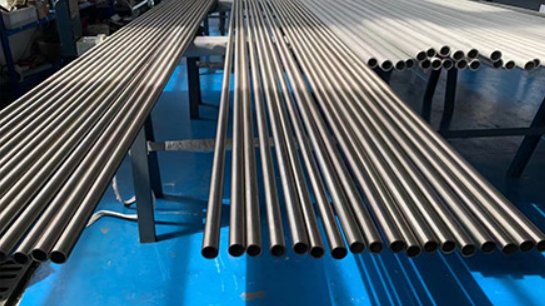
Stainless Steel Tubing: ASTM A269 / A213 Buyer's Guide
Quick answer: ASTM A269 covers general-service stainless tubing; ASTM A213 covers tubing for boilers, superheaters and heat exchangers, adding stricter testing and high-temperature requirements. Both govern seamless and welded austenitic tube in small-to-medium ODs with precise tolerances. If your tube goes into a heat exchanger, specify A213; for instrumentation, hydraulic and general process lines, A269 is the standard citation — and always state grade (TP304/TP316L), size, wall and whether seamless or welded.
"Stainless tube" is a deceptively short phrase hiding a long list of standards. This guide untangles the two you'll meet most often — A269 and A213 — and shows what to put on your RFQ so quotes come back comparable.
A269 vs A213: Who Covers What
ASTM A269 is the general-service specification for austenitic stainless tubing (nominal wall, 6.4 mm OD and smaller up to larger sizes under some revisions) for corrosion-resistant service: instrumentation lines, hydraulic circuits, sample lines, general process tubing. It requires hydrostatic or eddy-current testing and covers both seamless and welded product.
ASTM A213 covers seamless and welded ferritic and austenitic tube for boiler, superheater and heat-exchanger service. It adds mandatory considerations for elevated temperature: tighter chemical control in some grades, grain-size requirements, and per-batch mechanical testing aimed at pressure-part duty. If a datasheet, code case or TEMA contract references your tube, A213 is almost always the citation.
In practice: heat exchanger = A213, everything else = A269. Many mills supply tube certified to both when dimensions overlap — asking for dual certification costs little and simplifies stock.
Our broader pipe vs tube guide explains how tube differs from pipe in ordering logic (OD × wall vs NPS + schedule).
The Grades You'll Actually Quote
| Grade (ASTM) | Typical use | Key point |
|---|---|---|
| TP304 / TP304L | General process, instrumentation | The default; L for welding |
| TP316 / TP316L | Chemical, marine, pharma | +2–3% Mo for chloride resistance |
| TP321 / TP347H | Heat exchangers, high temp | Ti / Nb stabilized against sensitization |
Comparison of 304-family chemistry and when to step up to 316L is covered in our 304 vs 316L vs 321 comparison.
Seamless or Welded for Tube?
At tube sizes, the seamless-vs-welded decision differs from pipe economics. Welded A269 tube (especially from a quality mill with 100% eddy-current testing) is cheaper and dimensionally more consistent, and dominates instrumentation and decorative markets. Seamless remains preferred for high-pressure, high-temperature and critical heat-exchanger duty, and is mandatory in some specs. Our seamless vs welded decision guide covers the pipe side of the same question.
What to Put on the RFQ
- Standard + grade: "TP316L per ASTM A269" — not just "316 tube".
- Size as OD × wall, e.g., 19.05 × 1.65 mm (3/4" × 16 SWG). Tube is ordered by OD and wall, never by schedule — the schedule system applies to pipe.
- Seamless (SML) or welded (WLD), and if welded: as-welded, annealed, or welded-and-drawn (the cleanest ID).
- Surface: annealed-and-pickled (standard), bright-annealed (BA) for high-purity or instrumentation.
- Testing: hydrostatic pressure, eddy current, and for critical duty, tensile + flattening + grain size per the standard.
- Lengths: random mill lengths vs fixed (e.g., 6.1 m) — fixed lengths cost more but save cutting scrap.
Heat-Exchanger Specifics
If the tube is for a shell-and-tube exchanger, add: U-bending capability (state leg length and bend radius), delta-ferrite limits if specified, and intergranular corrosion testing for sensitization-sensitive service. For chloride-bearing cooling water on the shell side, consider stepping up to duplex — our duplex 2205 guide introduces the family.
FAQ
Q: Is A269 tube OK for steam? A: For steam tracing and low-pressure lines, usually yes. For boiler pressure parts and superheaters, spec A213 — the code (ASME I) requires it, and A213's testing is built for temperature duty.
Q: What does "TP" mean in TP316L? A: "Tube, Plate" — the prefix distinguishing the tube-grade chemistry in A213/A269 from the plate-grade (e.g., 316L plate per A240). Chemistries are similar but certification differs; cite the TP form on tubing RFQs.
Q: Why is my instrumentation tube blue-tinged inside? A: Bright-annealed tube is furnace-cooled in hydrogen, giving the clean ID instrumentation fittings need. A bluish or straw tint indicates poor atmosphere control — reject the batch for instrument service.
Q: Can A269 welded tube replace seamless to save money? A: Often yes for general service — modern welded tube with 100% ECT is extremely reliable, and our welded-vs-seamless guide explains the risk trade-off. But check your spec: many end-user standards still mandate seamless for process lines.
Q: How is tube pressure rated? A: By the wall-thickness formula under the design code (with mill tolerance), not by a schedule table. Give your supplier design pressure and temperature, and they'll propose OD × wall options that satisfy it.
Shanghai Hangbo Alloy Group
🌐 Website: www.hangbo-metal.com
📧 Email: Craliey1382@gmail.com
💬 WhatsApp: +86 19169850074
📞 Tel: +86 19169850074
📍 Address: No. 388 Songhuang Rd, Qingpu District, Shanghai, China
👤 Contact Person: Tiffany Luo