 Hangbo Alloy Group
Welding Thin Stainless Sheet Without Warping: Heat Control, Sequencing, Back Purging
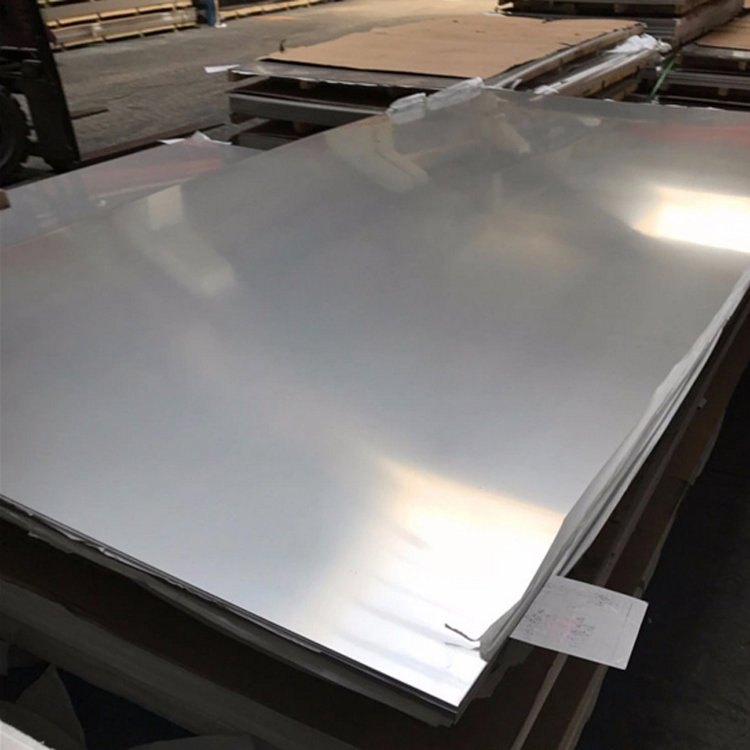
Quick answer: To weld thin stainless sheet (under ~2 mm) without warping: keep heat input low (TIG with 1.0–1.6 mm filler, fast travel), clamp against a copper or steel backing bar, sequence welds to spread heat, and back-purge where the root matters. Distortion comes from thermal expansion — austenitic stainless expands ~50 % more than carbon steel and holds heat, so the same job that works on mild steel will banana a 304 sheet.
Why Does Thin Stainless Warp More Than Mild Steel?
Three physical facts stack up:
| Factor | 304/316L vs carbon steel | Consequence |
|---|---|---|
| Thermal expansion | ~17 vs ~12 µm/m·K (≈ +45 %) | More growth per degree of heat |
| Thermal conductivity | ~16 vs ~50 W/m·K (≈ 1/3) | Heat stays local, bigger gradients |
| Yield strength at temp | Higher | Stresses stay locked in as buckles instead of relaxing |
A long continuous weld on 1.5 mm sheet is therefore a geometry-changing operation by default. The fix is managing how much metal gets hot and where.
What Technique Changes Actually Matter?
- TIG over MIG for under 2 mm: precise, low-current TIG (40–80 A, 1.6 mm wire) beats spray-transfer MIG on heat control. Pulse TIG helps further on thin decorative work
- Copper backing bar: clamps the joint flat and sucks heat out — the single most effective anti-distortion fixture
- Stitch first, then seal: tack every 25–50 mm, let it cool, then run the beads between tacks — this keeps shrinkage distributed instead of cumulative
- Back-step or balanced sequence: weld short sections opposite to the travel direction so each new bead's shrinkage cancels the last
- Back purging (argon) when the root is exposed: prevents sugaring (oxidized weld ID), which matters for anything carrying fluid — filler selection per joint is covered in our welding wire guide
- Match filler to base: 308L for 304, 316L for 316 — under-filler grades lose corrosion resistance at the seam, the same logic as choosing L-grades for vessels
Does Laser Welding Solve It?
Mostly yes — laser's heat-affected zone is a fraction of TIG's, so 1 mm sheet can be joined nearly distortion-free, and it's the standard for cosmetic and medical sheet assemblies. Cost: machine time is pricier per meter, and fit-up must be tight (no filler gap forgiveness). For repair work and one-offs, pulsed TIG with copper backing is the practical route.
Can I Fix a Bowed Panel Afterward?
Press-flatten between platens, or planish the weld zone lightly — but every rework moves stress somewhere else, and heat-straightening thin sheet usually makes the finish wavy. On cosmetic work, prevention is genuinely cheaper: order levelled sheet with the flatness class stated, and design the assembly so welds are short and symmetric.
FAQ
Q: What current for 1.5 mm 304 TIG? A: Roughly 50–70 A with 1.6 mm 308L filler at fast travel; start low, increase until penetration is stable. Pulse settings (background ~30 % of peak) help on autogenous or thin decorative seams.
Q: Do I always need back purging? A: Only where the weld root is exposed to corrosion, product, or view. Structural brackets without back purge are fine; anything sanitary, pressurized or visible from inside needs it.
Q: MIG or TIG for 3 mm sheet? A: Either works — short-circuit MIG with 0.8–1.0 mm wire and low heat is faster for production; TIG wins on control and appearance. Above 3 mm, MIG takes over on economics.
Shanghai Hangbo Alloy Group
🌐 Website: www.hangbo-metal.com
📧 Email: Craliey1382@gmail.com
💬 WhatsApp: +86 19169850074
📞 Tel: +86 19169850074
📍 Address: No. 388 Songhuang Rd, Qingpu District, Shanghai, China
👤 Contact Person: Tiffany Luo