 Hangbo Alloy Group
Hot-Rolled vs Cold-Rolled Stainless Steel Plate: What Buyers Should Know
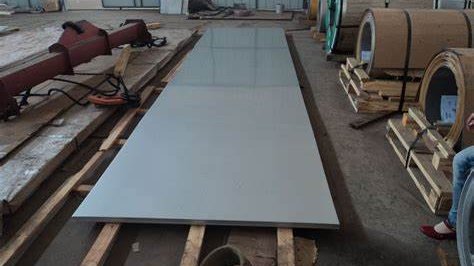
Hot-Rolled vs Cold-Rolled Stainless Steel Plate: What Buyers Should Know
Quick answer: Both start as the same melt, but hot-rolled (HR) plate is finished above recrystallization temperature while cold-rolled (CR) sheet is rolled below it. HR gives you thicker sections, looser tolerances and lower cost; CR gives you tighter thickness control, a brighter, smoother surface and higher strength from work hardening. Buy HR for structural thickness and machined parts; buy CR for visible surfaces, thin gauges and anything that needs tight flatness or finish.
If you have ever quoted "10 mm 304 plate" and been asked "hot-rolled or cold-rolled?", this guide explains where the line sits, how the two routes change the material, and how to specify the right one without paying for properties you don't need.
Where the Line Between Plate and Sheet Actually Sits
The industry convention (ASTM A480): material ≥ 3/16 in. (about 4.76 mm) thick is "plate", thinner material is "sheet". That line tracks the manufacturing routes: plate is almost always hot-rolled, while sheet and thin strip are cold-rolled. So in practice, "hot-rolled vs cold-rolled" usually means "plate vs sheet" — but thin hot-rolled strip exists, and some mills cold-roll plate up to about 6 mm for customers who need both thickness and a premium surface.
Our stainless steel plate and sheet guide walks the full product landscape, and the hot rolling, annealing and pickling process guide shows what happens to the steel at each step.
How the Two Routes Differ in Production
Hot rolling: slab is reheated to 1,100–1,250 °C and rolled down to thickness. The high temperature keeps the steel soft, so large thickness reductions are cheap — but the surface oxidizes, forming a scale that must be removed by pickling or shot blasting. The result is a matte, greyish surface with visible rolling marks, and tolerances measured in tenths of a millimetre.
Cold rolling: hot-rolled, pickled coil (called "No.1 / HRAP" stock) is rolled at room temperature. Each pass thins the strip a few percent and simultaneously work-hardens it, so intermediate anneals are needed for heavy reductions. The payoff: thickness tolerances 2–4× tighter, a smooth bright surface that polishes to 2B, BA or No.4 finishes, and tensile strength typically 15–25% higher than annealed hot-rolled stock of the same grade.
The Numbers Side by Side
| Property | Hot-rolled plate | Cold-rolled sheet |
|---|---|---|
| Typical thickness | 4.76–200 mm | 0.3–6 mm |
| Thickness tolerance | ±0.25–0.60 mm | ±0.03–0.10 mm |
| As-delivered surface | Matte, pickled (No.1) | Smooth 2B / BA / No.4 |
| Strength (304, annealed) | ≥ 515 MPa tensile | 15–25% higher (harder tempers) |
| Flatness | Coarser, may need leveling | Tight, ready for laser cutting |
Surface and Finish Consequences
HR plate arrives pickled-and-annealed (No.1 finish): functional, weldable, ready for machining — but not for anything decorative. If your part will be seen, plan for post-processing: grinding, or cladding a CR sheet over an HR frame.
CR sheet is the starting point for the whole finish family — 2B for general work, BA for bright decorative panels, No.4 brushed for architecture and food equipment. The sheet finish guide compares them in detail. If you laser-cut CR sheet, the smooth 2B surface also gives cleaner edges and less dross than pickled plate.
Strength, Forming and Machining
Cold work raises strength but costs ductility: annealed 304 sheet forms deeply and stretch-flanges well, while full-hard CR temper rolls spring back aggressively and may crack on tight radii. Specify temper (1/4H, 1/2H, full hard) only when you need the spring or strength — otherwise buy annealed and let the fabricator form it.
For machining, HR plate is the usual choice: the coarser tolerance doesn't matter once you're cutting, and the price per tonne is lower. Note that 303 is the free-machining alternative for high-volume turned parts — our round bar grade selection guide covers the machinability spread.
Which One to Specify
- Structural bases, machinery frames, tanks ≥ 5 mm wall: HR plate — thickness is cheap and surface doesn't matter.
- Architectural panels, kitchen equipment, cladding: CR sheet — finish and flatness are the point.
- Laser-cut brackets and gaskets 0.5–4 mm: CR — tight tolerance means fewer nesting surprises.
- Machined flanges and blocks: HR — buy oversize, machine to size.
- Anything you'll paint or line: HR — the matte surface grips coatings better anyway.
FAQ
Q: Is cold-rolled stainless "stronger" than hot-rolled? A: As delivered, usually yes — 15–25% higher tensile from work hardening. But once you weld it, the heat-affected zone anneals back to baseline properties, so for welded structures the difference largely disappears. Don't pay a temper premium for welded parts.
Q: Can I get cold-rolled plate in 8 mm? A: Some mills cold-reduce plate up to about 6 mm for tight-tolerance or bright-surface applications; above that, it's a special order with a matching price. For most 8 mm work, hot-rolled plus machining is the economical route.
Q: Why does my HR plate have white patches after pickling? A: Residual scale or over-pickling. Properly pickled No.1 plate is uniform matte grey. Ask for the pickling certificate and, if appearance matters, a shot-blasted plus pickled surface.
Q: Which is better for a 3 mm food-equipment panel? A: Cold-rolled 2B or No.4 finish. The smooth, passivated surface is cleanable and the tight thickness keeps press-brake parts consistent across the production run.
Q: Do the two routes change corrosion resistance? A: Marginally. A well-pickled, passivated surface of either route resists corrosion equally; the risk is a poor pickle leaving scale or chrome-depleted zones on HR plate. Buy from mills that certify pickling and passivation per ASTM A967.
Shanghai Hangbo Alloy Group
🌐 Website: www.hangbo-metal.com
📧 Email: Craliey1382@gmail.com
💬 WhatsApp: +86 19169850074
📞 Tel: +86 19169850074
📍 Address: No. 388 Songhuang Rd, Qingpu District, Shanghai, China
👤 Contact Person: Tiffany Luo