 Hangbo Alloy Group
Inconel 718 Round Bar: AMS 5662 Specs, Heat Treatment and Buying Checklist
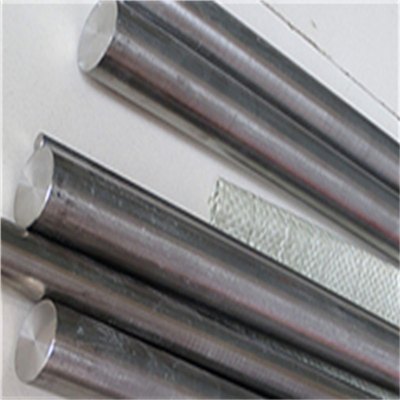
Inconel 718 Round Bar: AMS 5662 Specs, Heat Treatment and Buying Checklist
Quick answer: Inconel 718 (UNS N07718, W.Nr 2.4668, Chinese GH4169) bar is normally bought to AMS 5662 — solution treated and precipitation hardened — or to ASTM B637 for general high-temperature service. On the RFQ, state the specification and condition, diameter with tolerance class, ultrasonic test level if required, and certification (AMS-heat MTR). And remember: nearly all of 718's famous strength comes from its double-aging treatment, so condition is not optional — it is the product.
Inconel 718 is the most specified nickel superalloy bar in the world: gas turbine shafts and fasteners, rocket engine components, oilfield tooling, nuclear hardware. It is also one of the most mis-quoted materials, because "718 bar" without a specification can mean anything from soft solution-treated stock to fully heat-treated aerospace bar at three times the price. This guide fixes the vocabulary.
Standards and Equivalents
| Standard | What it covers |
|---|---|
| UNS N07718 | Unified numbering system designation |
| AMS 5662 | Bar, forgings and rings — solution treated + aged (the workhorse aerospace bar spec) |
| AMS 5663 | Bar in a modified heat-treat condition — ship only when your drawing calls it out |
| ASTM B637 | General specification for 718 bar, forgings and rings |
| W.Nr 2.4668 | European material number |
| GH4169 | Chinese equivalent grade |
On GH4169 vs Inconel 718: same nominal chemistry, and for most industrial use they are interchangeable — but the certification chain differs. Our GH4169 vs Inconel 718 equivalents guide walks through when the equivalence is clean and when an aerospace buyer will insist on the AMS-certified route.
Condition and Heat Treatment
The standard condition for AMS 5662 bar is solution treatment around 940–980 °C followed by a double age: hold near 718 °C, controlled cool, then a second age near 621 °C. The double age precipitates the gamma-double-prime and gamma-prime phases that give 718 its strength — without it, the bar is a fraction of its rated strength and will fail acceptance immediately. Two practical rules: never accept "as-rolled" 718 against an AMS 5662 callout, and if you plan to fully machine the part before aging, discuss sequencing with us — machining solution-treated bar is easier, but the finished part must then be aged. The full process is explained in our Inconel 718 heat treatment guide.
Sizes, Tolerance and Surface
718 bar is commonly supplied from roughly 12 mm to 300 mm+ diameter, hot-forged or hot-rolled and then peeled or ground to h9–h11 tolerance depending on size. Random mill lengths are standard; cut-to-size is normal for machining shops. Because 718 work-hardens aggressively, most buyers prefer peeled bar so their first pass is predictable — the reasoning is the same as for stainless, covered in our bar tolerance guide.
Quality Gates Before You Pay
- MTR per EN 10204 3.1 with full heat-by-heat chemistry and mechanicals — verify against the AMS limits, not just "meets spec". Our MTR reading guide shows what each line means.
- Ultrasonic inspection to AMS 2631 at the class your drawing requires — routine for aerospace and rotating parts, optional elsewhere.
- Heat-treatment record showing the actual solution and aging cycles, not just "aged".
- PMI verification on delivery if the bar enters a traceability-controlled build.
Buying Checklist
- Specification + condition: "Inconel 718 per AMS 5662, solution treated and aged" — not just "718".
- Diameter, tolerance class, length or cut sizes, quantity.
- UT requirement and acceptance class, if any.
- Certification language: AMS-traceable MTR, EN 10204 3.1 minimum, 3.2 if your customer demands it.
- For oilfield tools, note any NACE MR0175 service requirement up front.
FAQ
Q: Is GH4169 acceptable when my drawing says Inconel 718 / AMS 5662? A: For general industrial use, yes with a matching MTR; for aerospace builds, most primes require the AMS-certified chain. Confirm before ordering — see the equivalents guide.
Q: Why is 718 so hard to machine? A: Its strength stays high at cutting temperature and it work-hardens the surface instantly, so dull tools or slow speeds glaze the surface and the next pass chews inserts. Rigid setups, sharp positive-rake carbide, constant surface speed and plenty of coolant are the recipe.
Q: 718 or 625 for my high-temperature part? A: 718 when you need the strength (fasteners, shafts, high-pressure hardware); 625 when corrosion and oxidation resistance dominate over strength. The nickel alloys guide compares the families, and our 718 vs 316L article shows what you gain over stainless.
Shanghai Hangbo Alloy Group
🌐 Website: www.hangbo-metal.com
📧 Email: Craliey1382@gmail.com
💬 WhatsApp: +86 19169850074
📞 Tel: +86 19169850074
📍 Address: No. 388 Songhuang Rd, Qingpu District, Shanghai, China
👤 Contact Person: Tiffany Luo