 Hangbo Alloy Group
Choosing Round Bar Diameter: Stock Sizes and Machining Allowance That Save Money
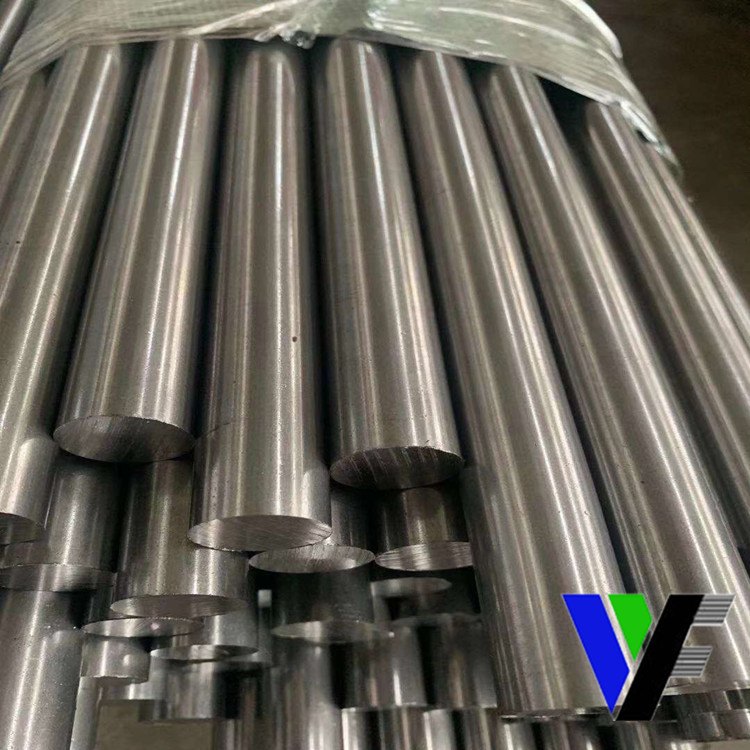
Quick answer: Choose bar diameter by working backwards from the finished part: finished dimension + machining allowance on each side + tolerance band. Buying a stock size just under the finished size saves metal but leaves zero cleanup; the standard rule is 2–5 mm total diameter allowance for turned parts, more for long or thin parts where deflection and straightness eat stock.
What Are the Standard Stock Diameters?
Bar mills and stockists carry stepped sizes, not continuous ranges:
| Size family | Typical steps | Notes |
|---|---|---|
| Small bright bar | 3–25 mm in 0.5–1 mm steps | Drawn/ground, h9–h11, minimal allowance needed |
| Peeled & turned bar | 16–300 mm in 2–5 mm steps | The workhorse for machined shafts |
| Hot-rolled bar | 10–130 mm in 3–5 mm steps | Cheapest, black surface, most allowance |
| Forged bar | 150–500 mm+ in 10–25 mm steps | Large diameters — see forged vs rolled |
Non-standard steps exist but price and lead time jump. Before specifying an odd diameter like Ø73 mm, check whether Ø75 mm stock plus turning beats the special-size price — usually it does.
How Much Machining Allowance Should I Leave?
Rules of thumb per side (i.e. half the diameter allowance):
- Small parts under 100 mm long: 1–1.5 mm per side
- Medium shafts 100–1,000 mm: 2–3 mm per side
- Long or slender parts: add 0.5–1 mm per side for straightness/deflection, or specify straightness on the bar
- Ground-finished shafts: turn to +0.3–0.5 mm over final, then grind
Under-allowing is the expensive mistake: a bar 0.5 mm too small for cleanup on a Ø60 finished journal means scrapping a part worth 20× the bar. Over-allowing quietly inflates cost — every extra mm of diameter on a 2 m shaft is roughly 0.8 kg of extra metal and turning time.
Peeled, Ground or Hot-Rolled for My Job?
Match surface condition to the process that follows:
- CNC turning with real stock removal: hot-rolled or peeled — peeled gives cleaner, more uniform cut and better UT response
- Minimal stock, collet work, centerless finishing: bright/ground bar in h9/h11 — see the full peeled vs ground vs hot-rolled comparison
- Free-machining small parts: consider 303 — machinability comparison in 303 vs 304 vs 316 vs 17-4
What Should the RFQ Say About Diameter?
State stock diameter with tolerance class (e.g. "Ø80 h11 peeled"), not just "80 mm bar". Add: length (random vs fixed with over/under), straightness if long parts follow, and surface condition. If you machine many part sizes from one bar size, tell the supplier the finished diameters — a good stockist will pick the stock size that minimizes your removal volume.
FAQ
Q: Can I buy exactly Ø62.5 mm if that's my perfect stock size? A: Mills will quote it as a special with minimum order quantity (often 1–3 t per size) and 4–10 week lead. For small quantities, take Ø63 or Ø65 stock and turn down — stock availability beats theoretical yield.
Q: Does allowance include the decarburized or peeled-uneven layer? A: Peeled bar surface is uniformly clean, so allowance is pure machining. Hot-rolled bar can carry surface defects and decarb — that's part of why its allowance is larger.
Q: How do I budget weight for the bar I need? A: Diameter² × 0.00623 = kg per meter for austenitic stainless (Ø80 → ≈ 40 kg/m). Full formulas across bar, plate and pipe: weight calculation guide.
Shanghai Hangbo Alloy Group
🌐 Website: www.hangbo-metal.com
📧 Email: Craliey1382@gmail.com
💬 WhatsApp: +86 19169850074
📞 Tel: +86 19169850074
📍 Address: No. 388 Songhuang Rd, Qingpu District, Shanghai, China
👤 Contact Person: Tiffany Luo