 Hangbo Alloy Group
Bar Straightness: How It's Measured, What Each Bar Type Delivers, What to Specify
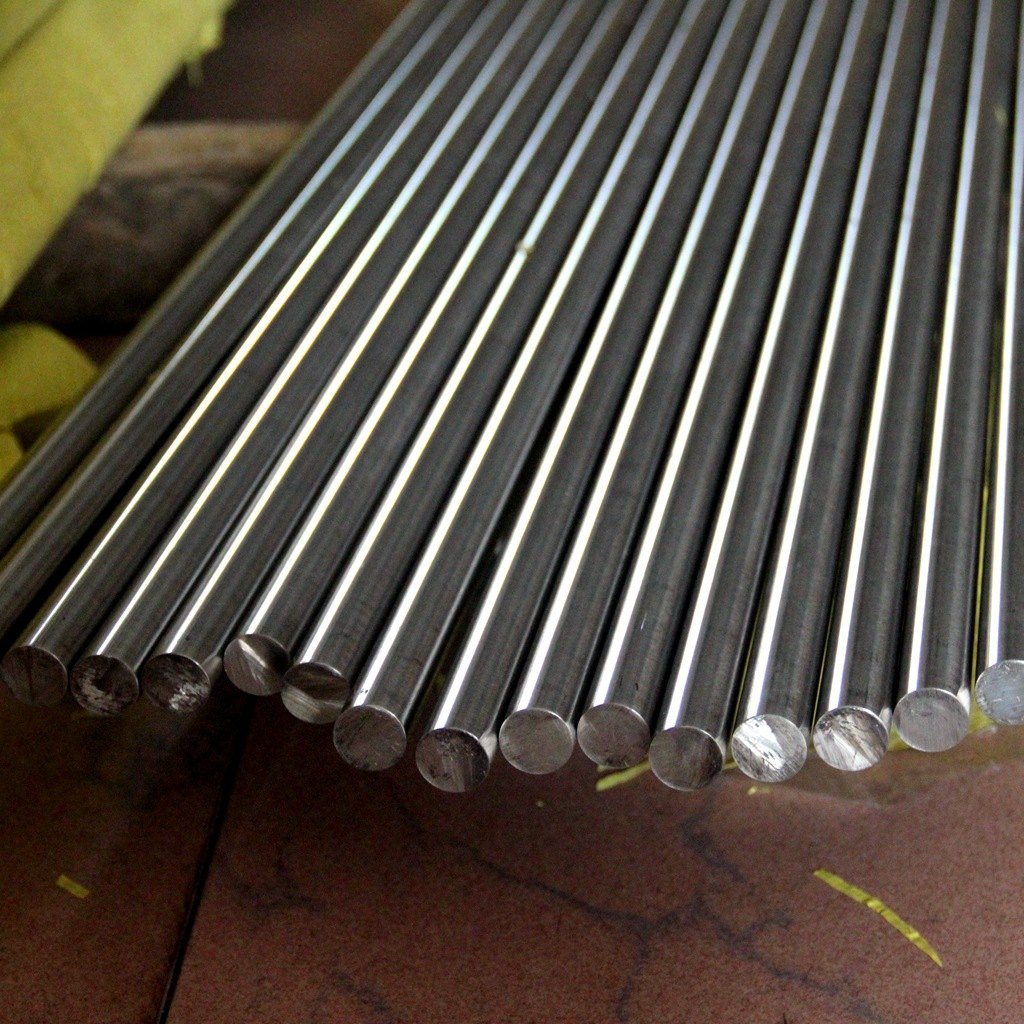
Quick answer: Bar straightness is specified as maximum deviation over a given length — commonly ≤ 1 mm per meter for general machined bars, ≤ 0.5 mm/m (or tighter) for ground and polished stock, and custom limits for long shafts. The trap: straightness is a separate purchase requirement from diameter tolerance, and h9/h11 classes control size only. If your lathe needs straight bars, write it on the PO.
How Is Bar Straightness Actually Measured?
Three shop methods, from quick to rigorous:
| Method | What it gives | Typical use |
|---|---|---|
| Roll-check (dial gauge while bar rotates on rollers) | Runout (TIR) at gauge points | Production receiving check |
| Straightedge + feeler on a flat table | Deviation from a chord | Quick incoming inspection |
| Supported-at-ends gauge (mid-span deflection) | Deflection per stated span | Contracts and supplier certs — the standard PO basis |
Note the subtlety: runout (TIR) is roughly twice the straightness deviation of a uniformly bowed bar — a bar showing 1.0 mm TIR is about 0.5 mm out of straight. Confusing the two is the most common argument with suppliers.
What Straightness Can Different Bar Types Deliver?
| Bar type | Typical straightness | Why |
|---|---|---|
| Hot-rolled | 2–5 mm/m untreated | Rolling and cooling distortion; needs straightening |
| Peeled & straightened | ≤ 1–2 mm/m | Straightened after peeling; good for chucking |
| Ground & polished | ≤ 0.5–1 mm/m | Straightened before grinding, checked after |
| Precision shafting (shelf goods) | ≤ 0.2–0.5 mm/m | Straightened, sometimes post-ground |
See how these surface/tolerance families compare in peeled vs ground vs hot-rolled bar and stock size selection.
Why Do Long Bars Warp After I Machine Them?
Straightness is not a permanent property. Machining cuts off a stressed layer asymmetrically, and the bar springs toward the side you cut — a classic on 3 m shafts turned down one side. The cures:
- Take balanced passes (rotate the part or cut both sides alternately)
- Buy stress-relieved bar if the drawing needs dead-straight finish machining
- Leave the final straightening (or grinding) to a last operation after roughing
- For long slender shafts, order oversize diameter per the machining allowance rules
What Should the PO Say?
One line does it: "Straightness ≤ 0.5 mm/m and ≤ 2 mm total over 3 m, measured mid-span deflection, certified on 3.1 MTR." Also state whether straightness is required before or after your machining — the two are different products and different prices. Packing matters for transport: bundles that sag on a 40-day voyage arrive bent, which is why finished bars ship in rigid cases per our export packing guide.
FAQ
Q: Can I straighten a bent bar myself? A: Yes for hot-rolled stock — press against a flat, check with the gauge, repeat. For ground and polished bars, no: bending marks the surface and re-introduces stress that springs back after machining.
Q: Does a bar that passes at delivery stay straight? A: If stresses were balanced (properly straightened and stress-relieved), yes. Cheap straightening (bend-and-hold) relaxes within weeks — one more reason certified straightness beats "it looked straight when it left."
Q: Is straightness or concentricity my problem? A: Concentricity (OD vs bore, on hollow bar) is a separate geometric callout. Check both on delivery inspection when the bar is pre-drilled or hollow.
Shanghai Hangbo Alloy Group
🌐 Website: www.hangbo-metal.com
📧 Email: Craliey1382@gmail.com
💬 WhatsApp: +86 19169850074
📞 Tel: +86 19169850074
📍 Address: No. 388 Songhuang Rd, Qingpu District, Shanghai, China
👤 Contact Person: Tiffany Luo